Deconstructing the Sovereign: A Fabric Analysis of the Two Pound Piece
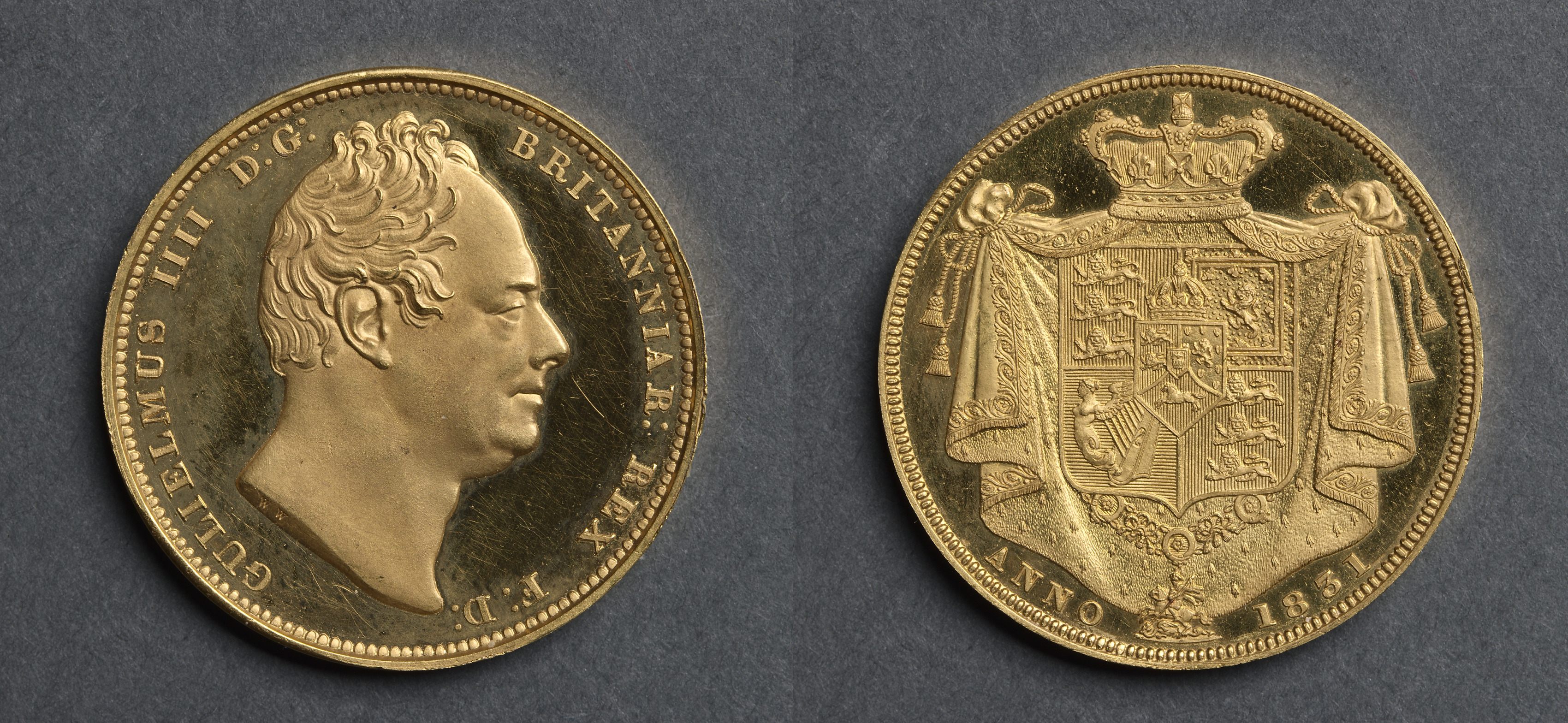
At Zoey Fashion Lab, our methodology transcends the mere examination of textiles. We deconstruct the architectural narrative of materials, seeking the tension between their physical form and their symbolic resonance. The subject of this analysis—the Two Pound Piece of William IV, bearing the obverse of George IV and the reverse of the Shield of Arms—presents a paradox of metallic stasis and dynamic storytelling. Minted in gold between 1830 and 1837, this coin is not a currency of transaction but a capsule of historical friction. Its technical purity (gold) and its dual-faced iconography (a monarch’s portrait versus a heraldic emblem) invite us to interpret it as a garment of power, worn by a nation in transition.
Our analysis is anchored by the Archive Resonance: “一面是光洁银镜上以黄金镶嵌的纷繁棕叶纹,另一面是冰冷石棺板上以浮雕诉说的生命叙事——《Mirror with Split-Lea...” This poetic description—a mirror of gold filigree on one side, a stone sarcophagus of life narratives on the other—mirrors the coin’s own duality. The obverse (George IV) is the mirror, reflecting the polished, idealized surface of monarchy. The reverse (Shield of Arms) is the stone sarcophagus, a frozen relief that encodes the lineage, conflict, and mortality of the state. We will deconstruct this object as a bifacial textile, where each face is a distinct fabric woven from the same golden thread.
Obverse: The Mirror of George IV – A Surface of Gilded Stasis
The obverse presents the profile of George IV, a monarch whose reign was marked by extravagance and a stark disconnect from the populace. In fabric terms, this face is a highly polished satin—smooth, reflective, and impenetrable. The gold is worked into a cameo-like relief, but the texture is one of cold perfection. The laurel wreath, the classical drapery, the idealized features—all are rendered with the precision of a machine-embroidered appliqué on a rigid ground. This is not a portrait of a man; it is a symbol of authority rendered in a language of timelessness.
The Archive Resonance’s “光洁银镜” (bright silver mirror) is apt. The obverse acts as a reflective surface that deflects scrutiny. The gold filigree of the “纷繁棕叶纹” (intricate palm leaf patterns) is the decorative border that frames this mirror, suggesting a gilded cage of tradition. The coin’s technical gold here is not just a metal; it is a fabric of denial. It denies the economic turmoil of the 1830s, the political reform movements, and the personal scandals of George IV’s life. Instead, it presents a static, idealized garment—a royal robe that has been starched into eternity. The texture is one of unyielding hardness, a barrier against the tactile, the human, the flawed. In avant-garde fashion terms, this is the armor of the ancien régime, a corset of gold that suffocates the body beneath.
Reverse: The Shield of Arms – A Sarcophagus of Narrative Relief
Flip the coin, and the fabric changes entirely. The reverse—the Shield of Arms—is the stone sarcophagus of the Archive Resonance: “冰冷石棺板上以浮雕诉说的生命叙事” (a life narrative told in relief on a cold stone coffin). Here, the gold is no longer a polished mirror but a chiseled, textured surface. The shield is quartered with the lions of England, the fleur-de-lis of France (a historical claim), and the harp of Ireland. This is not a static symbol; it is a compressed narrative of conquest, union, and division. The relief is sharper, more angular than the obverse’s smooth curves. It feels like a linen canvas that has been over-embroidered with the weight of history.
The “生命叙事” (life narrative) is encoded in the hierarchical arrangement of the heraldic elements. The crown above the shield is the final stitch, binding the whole. But the texture is funereal. The gold here is not warm; it is the cold gleam of a tomb. The coin’s reverse becomes a memento mori for the British Empire, a reminder that power is built on the bones of the past. The split-leaf motif from the Archive Resonance (the “Split-Lea”) can be interpreted as the fracture lines in this shield—the divisions between England, Scotland, Ireland, and the contested claim to France. These are not decorative flourishes; they are scars in the metallic fabric. In our deconstruction, this reverse is a deconstructed garment—a coat of arms that has been ripped and reassembled by time, each heraldic charge a patch of a different history.
Bifacial Tension: The Gold Thread as a Unifying Fabric
The genius of this coin—and its resonance for Zoey Fashion Lab—lies in the dialectical relationship between its two faces. They are not separate; they are a single garment worn by the state. The gold thread that weaves both faces is the constant. But the handling of that thread creates two opposing textures: the smooth, reflective weave of the obverse versus the rough, narrative pile of the reverse. This is a double-faced fabric, where the front is a mask and the back is the truth.
In avant-garde fashion, this duality is the essence of deconstruction. Rei Kawakubo’s work at Comme des Garçons often plays with the inside-out garment, where the structural seams become the decoration. Here, the coin’s reverse—the “inside” of the state’s power—is exposed as the primary narrative. The obverse is the public face, but the reverse is the memory. The gold is the common thread, but the tension between the two faces creates a fabric of instability. The coin cannot be viewed as a single entity; it must be turned over, rotated, and examined in its totality. This act of turning is analogous to the deconstructive gesture in fashion—the zipper that is left open, the seam that is exposed, the lining that becomes the outer shell.
Conclusion: The Coin as a Worn Narrative
The Two Pound Piece of William IV is not merely a historical artifact; it is a textile of power that we can re-stitch for contemporary understanding. The obverse’s mirror is the fabric of illusion, the reverse’s sarcophagus is the fabric of memory. Together, they form a garment of sovereignty that is both rigid and fragile. The gold is the thread of value, but the narrative tension is the true material.
For Zoey Fashion Lab, this analysis informs our deconstructive practice. We take this coin as a pattern for a garment that is two-faced: one side polished and impenetrable, the other rough and narrative-laden. The split-leaf motif from the Archive Resonance becomes a cut line in our fabric, a deconstructive seam that reveals the hidden history beneath the surface. The coin teaches us that power is a fabric that must be turned over to be understood. In the hands of the Chief Fabric Deconstructionist, this sovereign is unraveled, re-threaded, and re-worn as a statement of critical fashion—a garment that refuses to be a mirror, insisting instead on being a stone sarcophagus that speaks.