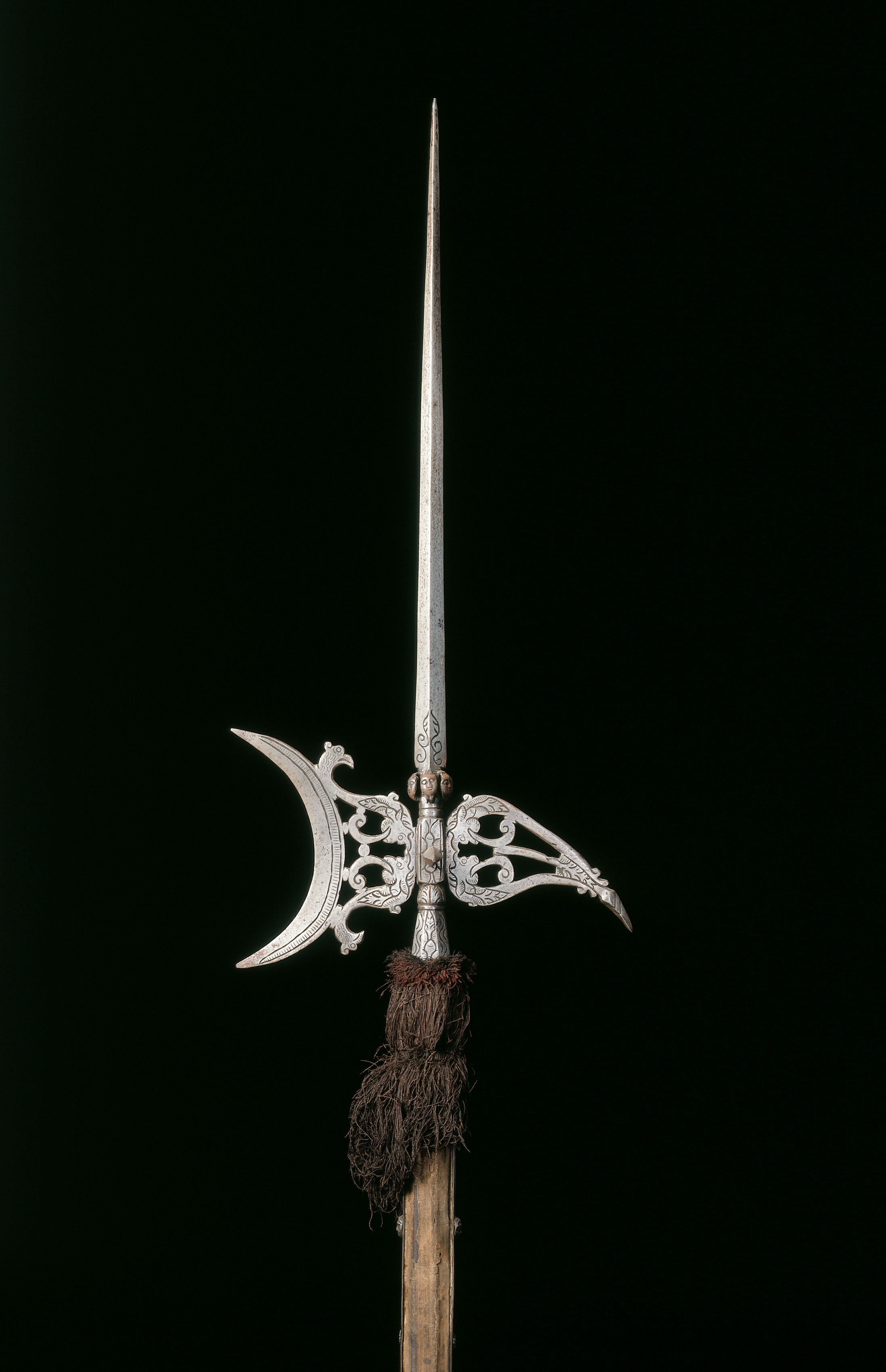
Deconstructing the Parade Halberd: A 17th-Century Italian Artifact as Avant-Garde DNA
At Zoey Fashion Lab, our mission is to extract the structural, symbolic, and material DNA from historical artifacts and re-engineer them into contemporary, avant-garde fashion statements. The 17th-century Italian Parade Halberd—a weapon of ceremony, power, and intricate craftsmanship—presents a rich, multi-layered source code. This analysis dissects the halberd not as a tool of war, but as a sculptural object, a signifier of status, and a precursor to modern deconstructivist aesthetics. The resulting "New DNA Strand" is a blueprint for garments that challenge silhouette, materiality, and the very definition of wearable art.
Material DNA: Steel, Wood, and the Alchemy of Contrast
The halberd’s primary materials—engraved steel and rectangular wood haft with planed corners—offer a foundational dialectic of hardness and organic warmth. The steel head, forged and then meticulously etched, speaks to durability, precision, and a reflective surface that captures light. The wood, by contrast, is tactile, grain-rich, and shaped by human hands. This binary is the first strand of our new design language.
Steel as Textile: In avant-garde fashion, steel is often translated into rigid, architectural forms—corsets, shoulder armor, or structural crinolines. However, the halberd’s engraved surface suggests a more nuanced approach. We can reinterpret this as laser-cut leather or metallic-coated organza with intricate, filigree-like patterns. The engraving—perhaps floral motifs, heraldic symbols, or geometric abstractions—becomes a digital print or embossed texture on fabric. Imagine a jacket where the lapels mimic the halberd’s blade, with etched patterns that catch light like a steel surface, but are soft to the touch.
Wood as Structure: The rectangular wood haft with planed corners is not merely a handle; it is a structural element that defines the weapon’s linearity. In fashion, this translates to rigid, boxy silhouettes—a coat with sharp, planed shoulders, or a skirt with a flat, wooden-like panel that extends from hip to hem. The planed corners suggest a deliberate, almost architectural precision. We can use shaped wood veneers, molded bio-resins, or stiffened canvas to create these forms, integrating them into garments as removable components or permanent structural accents.
Symbolic DNA: The Halberd as Ceremony and Power
The Parade Halberd was not a battlefield weapon; it was a ceremonial object, carried by guards or courtiers to signify authority, wealth, and theatrical display. This symbolic weight is crucial for avant-garde fashion, which often operates as wearable theater. The halberd’s form—a long, vertical shaft topped with a multi-pronged blade—creates a vertical line of power that elongates the body and commands space.
Verticality as Silhouette: This DNA strand manifests as exaggerated proportions. Think of a floor-length coat with a single, asymmetrical shoulder panel that extends into a sharp point, mimicking the halberd’s blade. Or a dress with a built-in, detachable “shaft” that runs from the back of the neck to the floor, creating a dramatic train. The halberd’s multi-pronged head—typically a spear point, an axe blade, and a hook—can be deconstructed into layered, overlapping panels on a garment, each with a different function or texture. A cape, for instance, could have three distinct, detachable sections: a sharp, pointed hood (spear), a wide, sweeping shoulder piece (axe), and a trailing, hooked train (hook).
Ceremonial Detail: The halberd’s engraved motifs often included heraldic symbols, scrollwork, or religious iconography. In the New DNA Strand, these become embroidered or appliquéd motifs on garments, but with a subversive twist. Instead of literal heraldry, we use deconstructed, abstracted forms—fragmented crests, distorted letters, or biomorphic shapes that echo the original engravings. This creates a sense of ritualistic power without being overtly historical.
Technical DNA: Construction, Weight, and Movement
The halberd’s technical construction—a steel head mounted on a wood haft—implies a balance of weight and leverage. The head is heavy, the haft is long, and the weapon is designed to be held, swung, and displayed. This dynamic of weighted elements and extended lines is directly translatable to fashion.
Weighted Garments: Avant-garde fashion often plays with gravity and suspension. The halberd’s steel head suggests a weighted focal point—a heavy collar, a pendant-like front panel, or a weighted hem that pulls the garment downward. We can use metal chains, weighted beads, or embedded lead-free weights inside fabric channels to achieve this effect. The wood haft, by contrast, suggests balance and extension. A garment might have a long, rigid sleeve that extends beyond the hand, or a skirt panel that projects outward like a shaft, stabilized by internal boning or lightweight armatures.
Movement and Rigidity: The halberd is both rigid (the haft) and articulated (the head’s multiple edges). This translates to garments that combine structured, unmoving sections with fluid, drape-able parts. A dress could have a stiff, corseted bodice (the haft) and a flowing, multi-layered skirt (the head’s prongs). The planed corners of the wood haft suggest a preference for clean, geometric lines over organic curves. This influences our pattern cutting: we use sharp, angular darts, flat-felled seams, and geometric paneling to create a sense of architectural precision.
Avant-Garde Synthesis: The New DNA Strand in Practice
The 17th-century Italian Parade Halberd, when deconstructed, yields a design language rooted in material contrast, ceremonial verticality, and structural weight. The New DNA Strand is not a literal costume; it is an abstracted, wearable architecture that evokes the halberd’s essence without mimicking its form.
Garment Concepts: A primary concept is the "Halberd Coat": a floor-length, double-breasted coat in black wool with a steel-like, laser-cut leather collar that extends into a sharp, asymmetrical point. The lapels are engraved with a digital print of 17th-century scrollwork, but distorted into a glitch pattern. The coat’s shoulders are planed—flat, square, and rigid—while the body is fitted, with a single, weighted chain running from the collar to the hem, echoing the halberd’s vertical line.
A second concept is the "Ceremonial Gown": a gown with a multi-layered, detachable train that mimics the halberd’s three-pronged head. The bodice is a rigid, wood-like corset made from molded, bio-based resin, with planed edges. The skirt is composed of three overlapping panels: one sharp and pointed (spear), one wide and sweeping (axe), and one trailing with a subtle hook shape (hook). The entire garment is embroidered with abstracted heraldic symbols in metallic thread, catching light like engraved steel.
Conclusion: From Weapon to Wardrobe
The Parade Halberd, stripped of its martial history, becomes a sculptural blueprint for power, precision, and ceremony. By deconstructing its material, symbolic, and technical DNA, Zoey Fashion Lab transforms a 17th-century Italian artifact into a contemporary, avant-garde vocabulary. The resulting garments are not merely clothing; they are wearable statements that challenge the wearer’s relationship to space, weight, and history. The New DNA Strand is a testament to the enduring relevance of historical craftsmanship, reimagined through the lens of radical design.