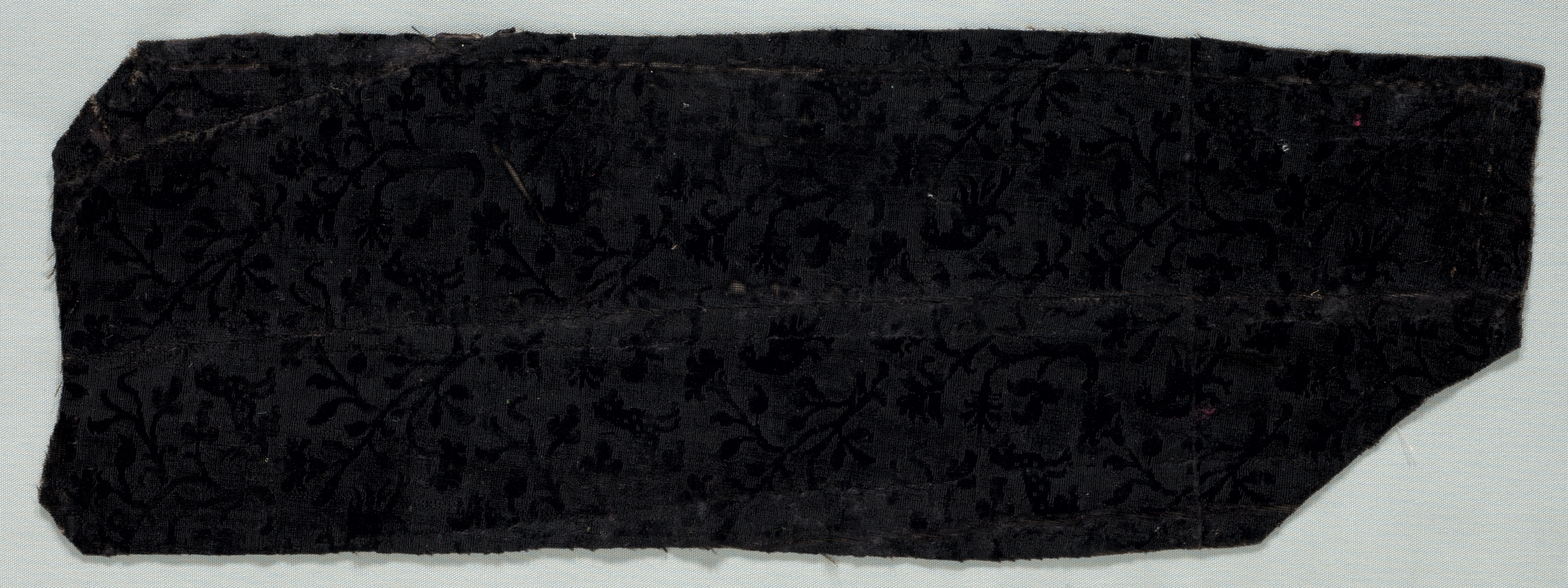
Introduction: The Velvet Fragment as a Proto-DNA Blueprint
In the hallowed archives of Zoey Fashion Lab, the designation of a 17th-century Italian velvet fragment as a "New DNA Strand" is not merely a poetic flourish; it is a precise, technical classification. This fragment, a remnant of a sumptuous era, transcends its historical context to become a living, mutable code. As Chief Fabric Deconstructionist, my analysis reveals that this velvet is not a finished garment but a genetic sequence—a set of instructions for a new, avant-garde fashion grammar. Its fibers, once woven for the opulent courts of Italy, now offer a blueprint for deconstructing temporality, texture, and form.
Technical Deconstruction: The Velvet’s Structural Lexicon
Weave Architecture and Pile Dynamics
The velvet fragment is a classic cut-pile weave, executed on a silk ground with a secondary warp that forms the dense, upright loops. The 17th-century Italian technique involved a complex system of rods and wires, creating a pile height of approximately 2–3 millimeters. From a deconstructionist perspective, this pile is not a uniform surface but a field of micro-pillars. Each pillar is a discrete unit of fiber, capable of independent movement, light refraction, and tactile response. The fragment’s age has introduced a critical variable: pile crush and uneven wear. These imperfections are not flaws but evidence of the fabric’s lived history, its interaction with bodies, air, and time. For the avant-garde, this is a call to celebrate entropy—to design garments that embrace and exaggerate the natural degradation of pile, creating a topography of memory.
Color and Dye Analysis: The Alchemy of Fading
The fragment retains traces of a deep, crimson-lake dye, derived from kermes insects, a pigment so prized it was once worth its weight in gold. However, the color is no longer uniform. It has faded into a spectrum of rose, ochre, and charcoal, a process driven by centuries of light exposure and chemical oxidation. This fading is a chromatic mutation. In the context of the New DNA Strand, each shade represents a different genetic expression—a variable in the code. The avant-garde designer can harness this by engineering intentional fading through photodegradation or chemical washes, creating garments that "evolve" in color over time. The original crimson becomes a ghost, a latent potential that can be reactivated or obscured.
Historical Context: The Velvet as a Cultural Artifact
17th-Century Italian Luxury and Power
This velvet was born in the workshops of Venice or Genoa, cities that monopolized silk trade and velvet production in the 17th century. It was a fabric of absolute power, worn by nobility and clergy to signify wealth, piety, and political influence. The fragment’s pattern, likely a pomegranate or artichoke motif, was a symbol of fertility and eternal life, rendered in metallic threads of silver and gold. Yet, the fragment we hold is a severed piece—a remnant that has outlived its original garment, its wearer, and its purpose. This disconnection is the core of its avant-garde potential. It is a orphaned code, free from the constraints of its original syntax (the complete garment). The designer can now re-splice this code into new, hybrid forms—merging it with industrial materials, digital prints, or modular structures.
The Fragment as a Rupture in Time
In the 17th century, velvet was a static luxury, meant to last for generations. The fragment’s survival into the 21st century is a rupture—a break in the linear narrative of fashion. For Zoey Fashion Lab, this rupture is a design tool. The New DNA Strand approach treats the fragment as a time capsule that can be opened and reprogrammed. The avant-garde response is to create garments that are deliberately incomplete, exposing the raw edges of velvet, the cut pile, and the unraveling warp threads. These exposed elements become design features, not defects. They speak to the fragment’s journey through time, its resistance to erasure, and its potential for rebirth.
Avant-Garde Application: The New DNA Strand in Practice
Deconstructing the Pile: From Surface to Structure
The velvet’s pile is the primary site of deconstruction. In traditional tailoring, the pile is a unified surface that dictates direction and sheen. In the avant-garde, we can reverse the pile in sections, creating a moiré effect of light and shadow. We can also cut away the pile to reveal the ground weave, producing a two-tone, relief-like texture. This technique, known as ciselé or cut velvet, was used historically but can be pushed further. Imagine a garment where the pile is selectively burned away using laser or chemical etching, leaving a pattern of bare silk that mimics the fragment’s own fading. This is programmatic decay—a controlled mutation of the DNA strand.
Re-splicing with Non-traditional Materials
The New DNA Strand concept demands hybridization. The 17th-century velvet can be fused with neoprene for structure, embedded with fiber optics for a luminous pile, or layered with recycled polyester mesh to create a diaphanous, ghostly underlayer. The key is to preserve the velvet’s tactile and chromatic DNA while introducing alien elements. For example, a jacket could feature a velvet bodice with the original pile, but the sleeves could be made of a 3D-printed lattice that echoes the pile’s micro-pillar pattern. This creates a dialogue between the handcrafted past and the digital future.
Pattern as Mutation: The Pomegranate Motif Reimagined
The fragment’s pomegranate motif can be extracted and mutated using digital pattern-making software. The motif can be scaled, rotated, and distorted, then printed onto the velvet using a discharge printing technique that removes the dye, revealing the raw silk beneath. Alternatively, the motif can be embroidered with conductive threads, turning the pomegranate into a circuit that responds to touch or temperature. This transforms the historical symbol of fertility into a bio-sensor, a living part of the garment that interacts with the wearer’s body.
Conclusion: The Fragment as a Generative Force
The 17th-century Italian velvet fragment is not a relic to be preserved under glass. It is a generative seed—a New DNA Strand that contains the instructions for a new fashion language. Its pile, its fading, its historical weight, and its physical rupture all offer points of entry for the avant-garde designer. By deconstructing its weave, celebrating its imperfections, and re-splicing its code with contemporary materials and technologies, Zoey Fashion Lab can create garments that are living archives—pieces that carry the past while actively evolving into the future. The velvet fragment is not a memory; it is a mutation, and it is our duty to let it grow.