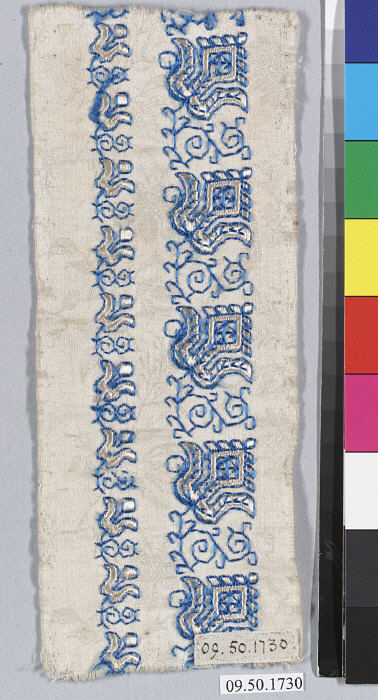
Fragments (2): Deconstructing the Global Frontier for SS26
The second installment of Zoey Fashion Laboratory’s Fragments series represents a seismic shift in the lexicon of avant-garde couture. Where the first iteration explored the raw, unpolished edges of deconstruction, Fragments (2) refines the chaos into a disciplined, almost surgical, architectural language. This standalone study, anchored by the paradoxical marriage of silk on linen, serves as a definitive manifesto for the SS26 season. It is not merely a garment; it is a proposition for how the human form interfaces with the future—a future defined by fragmentation, resilience, and the deliberate erosion of traditional silhouettes.
The collection’s Global Frontier origin is not a geographic location but a conceptual territory—a liminal space between the industrial and the organic, the digital and the tactile. Here, the designer operates as a cartographer of the body, mapping new topographies of form. The silk-on-linen composite is the critical pivot: linen, with its earthy, rigid structure, acts as the foundation—the bedrock of the frontier. Silk, conversely, is the volatile element, the fluid, almost liquid, overlay that suggests movement, decay, and regeneration. This material dialectic is the engine of the collection’s structural innovation.
The Architecture of the Fragment
The central thesis of Fragments (2) is the fragment as a complete form. The silhouette is no longer a continuous, singular line. Instead, it is assembled from discrete, non-sequential panels that float, overlap, and disconnect. The shoulder, for instance, is not a seam but a lacuna—a deliberate void where the silk separates from the linen, creating a negative space that redefines the body’s outline. This is not a deconstruction born of decay but of volitional disruption. The designer has amputated the expected, leaving only the essential.
The structural innovation lies in the asymmetric tension system. A single, raw-edged linen panel anchors the torso, while a cascade of silk fragments—some bonded with a micro-fusion technique, others left to fray—is suspended from a single, off-center shoulder point. The effect is a silhouette that defies gravity and proportion. The waist, traditionally a locus of cinching, is instead a zone of controlled release. A series of internal, invisible wire structures, reminiscent of architectural trusses, push the silk outward, creating a bell-like volume that is both fragile and formidable. This is the futuristic silhouette of SS26: not a body-hugging cyborg aesthetic, but a body-expanding, space-claiming form that asserts presence through absence.
Material Alchemy: Silk on Linen
The material choice in Fragments (2) is not decorative; it is functional and philosophical. Linen, in its raw, unbleached state, is the memory of the frontier—a fabric of labor, of earth, of time. Its coarse, irregular weave is left exposed, with no lining to soften its impact. The silk, a high-gloss, liquid charmeuse, is applied in fractal patterns. These are not mere appliqués; they are laser-cut, chemically treated fragments that are fused to the linen at specific stress points, creating a hybrid textile that is both rigid and fluid.
The thermal bonding process is a breakthrough. The silk is not sewn but adhered using a heat-reactive polymer that allows for a seamless, almost holographic, integration. Where the silk meets the linen, a third texture emerges—a translucent, scar-like membrane that speaks to the healing of the fragment. This is not a patch; it is a scarification of the fabric, a deliberate marking of the frontier’s violence and beauty. The result is a surface that changes with movement: under direct light, the silk glows with an ethereal sheen; in shadow, it recedes, leaving the linen’s texture as the dominant narrative.
Silhouette as Narrative: The Futuristic Body
The futuristic silhouette of SS26, as defined by Fragments (2), rejects the monolithic. The body is not a mannequin to be draped but a scaffold for kinetic architecture. The key piece—a floor-length, asymmetrical coat—exemplifies this. The left side is a solid, sculpted linen form, almost armor-like, with a high, collarless neckline that rises like a wall. The right side is a cascade of silk fragments that begin at the waist and fall in a diagonal, layered waterfall to the hem. The asymmetry is not balanced; it is dissonant. The coat appears to be in a state of permanent collapse, yet it is held together by a single, magnetic clasp at the sternum.
This is the structural innovation that defines the season: the use of magnetic tension points instead of buttons or zippers. These are not hidden; they are exposed, polished silver discs that act as both fasteners and sculptural elements. They create a modularity that allows the wearer to reconfigure the garment’s volume. The silk fragments can be detached and reattached, transforming the coat from a full silhouette to a cropped, fragmented vest. This is wearable deconstruction—a garment that is never finished, always in a state of becoming.
The Global Frontier: A New Context
The Global Frontier origin is not a nostalgic nod to exploration but a critique of contemporary mobility. In a world of digital nomadism and geopolitical fragmentation, the garment becomes a portable territory. The silk-on-linen composite is lightweight yet protective, fluid yet structural. The fragments are not random; they are cartographic references. The silk panels are printed with topographical lines of real-world border zones—the DMZ, the Green Line, the Line of Control—but these lines are distorted, broken, and reassembled into abstract patterns. The garment is a map of a world that has been shattered and pieced back together.
The standalone context of this study allows for a purity of vision. There is no collection narrative to distract; Fragments (2) is a singular, concentrated exploration. The color palette is stark: raw linen’s beige, silk’s pearl white, and the silver of the magnetic clasps. This is not a season of prints or embellishment; it is a season of form and material honesty. The only color accent is a single, hand-dyed indigo thread that runs through the linen’s weave—a subtle, almost invisible, marker of the human hand in the machine.
Conclusion: The Future of Fragmentation
Fragments (2) is not a collection for the timid. It demands a new kind of wearer—one who understands that incompleteness is a form of power. The SS26 season, as defined by this study, is a rejection of the seamless, the polished, the finished. The future is fragmented, and Zoey Fashion Laboratory has given it a silhouette. The silk on linen is not a fabric; it is a manifesto for resilience. The structural innovations—the magnetic tension points, the thermal bonding, the asymmetric truss—are not technical tricks; they are philosophical tools for reimagining the body’s relationship to space and time.
In this standalone study, the designer has achieved what few can: a garment that is both a speculative artifact and a wearable reality. The Global Frontier is not a place to be conquered; it is a condition to be inhabited. And Fragments (2) is the armor for that journey. The future of couture is not whole—it is broken, beautiful, and brazenly incomplete.