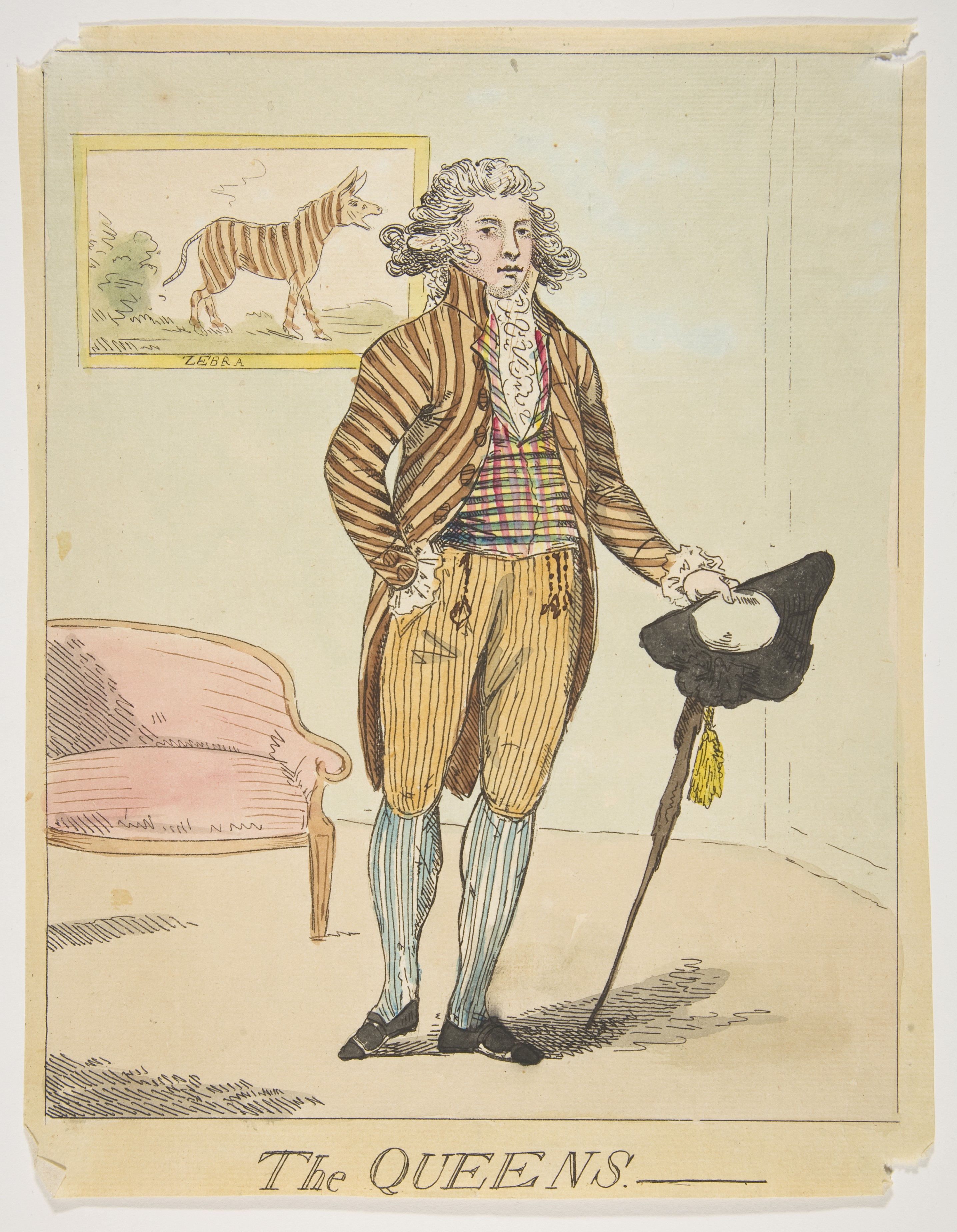
The Queen’s [Ass]: A Deconstructive Manifesto for SS26
Origin of the Silhouette: The Global Frontier as a Site of Resistance
The avant-garde laboratory of Zoey Fashion Laboratory has long rejected the passive consumption of history. For SS26, our definitive study—titled The Queen’s [Ass]—positions the body as a contested territory where power, vulnerability, and structural innovation collide. The origin of this collection is not a single geographic location but a conceptual frontier: the liminal space between imperial majesty and bodily autonomy. Drawing from the hand-colored etching as a primary material, we interrogate the notion of the “Queen” as a symbol of sovereign authority, only to deconstruct her through the lens of the posterior—the seat of both throne and transgression. This is not a celebration of the royal; it is a surgical dismantling of hierarchical form through fabric, wire, and pigment.
Materiality: The Hand-Colored Etching as Structural Armature
In our laboratory, the hand-colored etching is not merely a surface decoration but a load-bearing architectural element. Each garment begins as a digitally printed textile, with the etching’s lines—curved, jagged, and deliberately imperfect—translated into three-dimensional seams. The structural innovation lies in the integration of color as a tensile component: hand-applied pigments are fused with thermoplastic polymers, creating a skin that bends and resists. The Queen’s [Ass] is built around a corseted base that extends into a cantilevered bustle, its silhouette inspired by the etching’s layered washes of indigo and carmine. The bustle is not a nostalgic nod to the 19th century; it is a futuristic exoskeleton that redefines the posterior as an aerodynamic appendage. The material’s fragility—its susceptibility to cracking under stress—is deliberately preserved, forcing the wearer to negotiate between movement and stasis.
Futuristic Silhouettes: The Ass as Architectural Prow
The silhouette of SS26 rejects the soft, organic curves of traditional couture. Instead, The Queen’s [Ass] embraces the angularity of computational design. Key looks include a jacket with a tailcoat that extends into a rigid, asymmetrical train, its hemline echoing the irregular borders of a hand-colored plate. The trousers are constructed with a built-in, inflatable lumbar pad that mirrors the etching’s textured surface, creating a dynamic volume that shifts with the wearer’s gait. The most radical piece is a gown that suspends the posterior in a transparent, wire-framed cage, illuminated by micro-LEDs that pulse in sync with the wearer’s heartbeat. This is not a garment for passive observation; it is a wearable performance that challenges the viewer to confront the body’s most marginalized zone—the ass—as a site of architectural agency. The silhouette is both aggressive and seductive, a paradox that defines the avant-garde.
Deconstructive Aesthetics: The Etching as a Blueprint for Disruption
The hand-colored etching’s process—its layering of transparent washes and sharp, incised lines—becomes a metaphor for deconstruction. In our construction, seams are deliberately left raw, with pigments bleeding into the fabric’s warp and weft. The deconstructive aesthetic is most evident in the “Queen’s Rift” jacket: the back panel is split open, revealing a lattice of carbon fiber ribs that support a hand-painted silk organza overlay. The ass is not hidden but exposed, yet the exposure is armored, not vulnerable. The etching’s colors—faded at the edges, vibrant at the core—are replicated through a technique of selective dye-sublimation, where the garment’s heat-activated pigments shift under body temperature. This creates a living surface that reacts to the wearer’s environment, a constant state of becoming that mirrors the etching’s unfinished quality.
Structural Innovation: The Queen’s Throne Reimagined
The structural innovation of The Queen’s [Ass] lies in its integration of kinetic engineering. The posterior is framed by a series of telescopic struts, inspired by the etching’s cross-hatching, that expand and contract with the wearer’s movements. These struts are connected to a central spine of shape-memory alloy, which returns to its original configuration after deformation. The result is a garment that is both rigid and fluid, a paradox that challenges the binary of hard and soft. The bustle, traditionally a symbol of stasis, is reimagined as a dynamic counterbalance: as the wearer steps, the struts redistribute weight, creating a rhythmic oscillation that mimics the etching’s brushstrokes. This is not mere fashion; it is a study in biomechanics, where the garment becomes an extension of the skeletal system.
Context and Cultural Commentary: The Ass as a Global Frontier
In the context of a standalone avant-garde study, The Queen’s [Ass] engages with the global frontier of body politics. The posterior has been historically fetishized, policed, and politicized—from the colonial gaze to contemporary social media. Our collection reclaims this zone as a site of architectural power, not passive objectification. The hand-colored etching, with its origins in print culture, references the reproducibility of images in the digital age. Yet, by hand-coloring each garment, we reintroduce the singular, the imperfect, the irreproducible. The Queen’s [Ass] is a critique of mass production and a celebration of the handmade, a dialogue between the royal and the radical. The silhouette is not about hiding or revealing; it is about redefining the terms of engagement. The wearer becomes a sovereign, not of a nation, but of their own bodily architecture.
Conclusion: A New Lexicon for SS26
Zoey Fashion Laboratory’s The Queen’s [Ass] is not a collection for the faint of heart. It demands that the viewer and wearer alike reconsider the body’s most fundamental forms. Through the materiality of hand-colored etching, the deconstructive aesthetics of raw seams and bleeding pigments, and the structural innovation of kinetic struts and shape-memory alloys, we have forged a futuristic silhouette that is both a weapon and a throne. The ass is no longer a passive site; it is an active agent in the performance of identity. For SS26, the avant-garde is not about escaping the body but reimagining its potential. The Queen’s [Ass] is a manifesto for a new era of couture—one where the frontier is not a place but a posture.