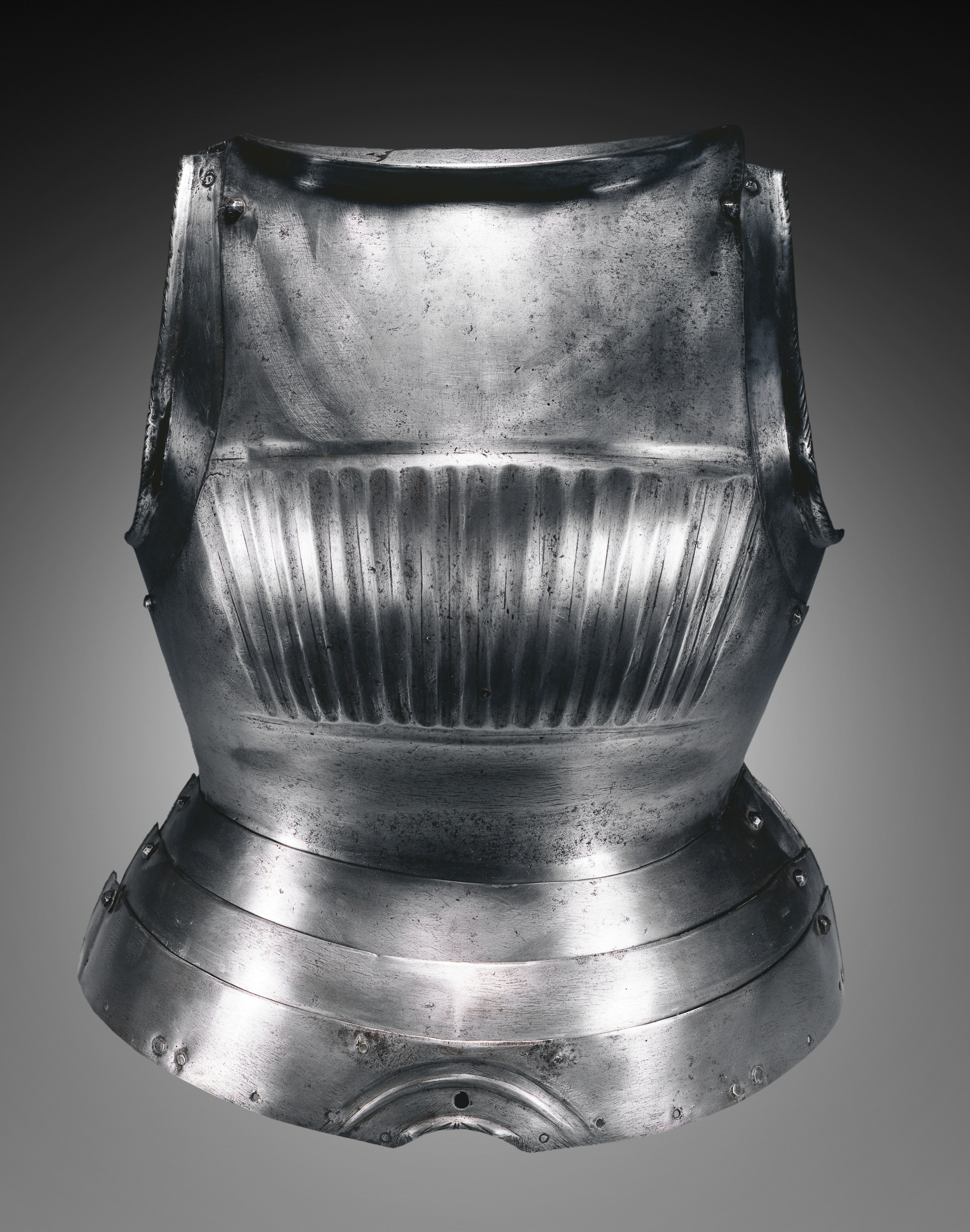
Deconstructing the Armored Silhouette: A Zoey Fashion Lab Analysis of the Maximilian Breastplate
At Zoey Fashion Lab, we approach historical artifacts not as relics, but as living blueprints. The breastplate in the Maximilian style, originating from early 16th-century Germany—likely Nuremberg—represents a pinnacle of both metallurgical craft and aesthetic ambition. Forged from steel and secured with brass rivets, this piece is more than a defensive shell; it is a sculpted declaration of power, proportion, and technological mastery. Our analysis deconstructs this artifact through an avant-garde lens, extracting its core principles to inform a new DNA strand for contemporary fashion.
Technical Analysis: The Steel and Brass Architecture
The breastplate’s primary material, steel, offers a paradoxical narrative. It is rigid yet form-fitting, cold yet protective. In the Maximilian style, steel is not merely functional; it is the canvas for a complex interplay of light and shadow. The surface is typically polished to a high sheen, creating a reflective quality that distorts and amplifies the surrounding environment. This is not a passive material—it actively engages with its context. The brass rivets serve as both structural anchors and decorative accents. Their warm, golden tone contrasts sharply with the cold steel, introducing a chromatic tension that disrupts the monochrome armor tradition. Each rivet is a deliberate punctuation mark, a point of stress and release in the overall composition.
From a deconstructionist perspective, the breastplate’s construction reveals a deep understanding of human anatomy. The steel is shaped to follow the pectoral muscles, the sternum, and the ribcage, creating a second skin that is both protective and expressive. The fluting—a hallmark of Maximilian armor—adds structural rigidity while creating a rhythmic, linear pattern that guides the eye across the form. This is not mere decoration; it is a functional aesthetic that anticipates modern architectural principles of load distribution and visual flow. The brass rivets, often placed at the intersections of these flutes, act as nodes that anchor the design, preventing the visual energy from dissipating.
Avant-Garde Reinterpretation: The New DNA Strand
To translate this breastplate into an avant-garde fashion statement, we must extract its DNA—the core elements that define its identity. The first strand is material juxtaposition. The steel-brass combination is a dialogue between industrial strength and artisanal warmth. In our lab, we experiment with replacing steel with carbon fiber or laser-cut aluminum, and brass with hand-hammered copper or even resin-embedded gold leaf. The goal is to preserve the visual tension while updating the weight and wearability. The second strand is anatomical mapping. The Maximilian breastplate is a perfect example of form following function, but with an exaggerated, almost theatrical fidelity to the human body. We translate this into garments that use boning, corsetry, or 3D-printed panels to create similar structural lines—not to restrict, but to amplify the wearer’s silhouette.
The third strand is rhythmic surface treatment. The fluting of the Maximilian style is a precursor to modern pleating, shirring, and laser-cut patterns. We explore these techniques using unconventional materials like silicone, leather, or recycled plastics. The flutes become channels for airflow, light, and even sound, turning the garment into a sensory interface. The brass rivets inspire our approach to deliberate fastening. Instead of hidden zippers or invisible seams, we expose and celebrate closures—using oversized snaps, chunky zippers, or hand-tied knots that function as both utility and ornament.
Deconstructing the Historical Context
To innovate, we must first understand the original purpose. The Maximilian breastplate was designed for the battlefield, but its aesthetic was deeply tied to courtly display. It was a status symbol, a piece of wearable architecture that announced the wearer’s wealth, martial prowess, and connection to the Holy Roman Empire. The fluting and brass rivets were not just functional; they were visual codes that signaled membership in a specific elite class. In our avant-garde reinterpretation, we strip away this hierarchical context and focus on the universal language of protection and projection. The breastplate becomes a metaphor for emotional armor, a shell that shields vulnerability while projecting strength.
The choice of Nuremberg as a possible origin is significant. This city was a center of innovation, known for its precision metalworking and early capitalist trade networks. The breastplate, therefore, is a product of both art and commerce, a fusion of artisan skill and market demand. For Zoey Fashion Lab, this inspires a hybrid production model—combining traditional craftsmanship with digital fabrication. We envision garments that are hand-finished but algorithmically designed, where each piece is unique yet scalable. The brass rivets, once hand-forged, could be replaced by custom-printed connectors that allow for modular assembly, enabling the wearer to reconfigure the garment’s structure.
Application to Contemporary Design
How does this analysis manifest in a tangible collection? Consider a structured bodice made from laser-cut steel mesh, with brass-toned grommets that lace up the back. The fluting is reinterpreted as vertical pleats in a high-density neoprene, creating a similar visual rhythm without the weight. The overall silhouette is exaggerated—broad shoulders, cinched waist, and a pronounced chest—echoing the Maximilian breastplate’s theatrical proportions. Accessories include articulated shoulder guards made from layered leather and brass, inspired by the overlapping plates of the original armor.
Another piece could be a deconstructed vest that mimics the breastplate’s anatomy but is cut asymmetrically, with one side exposing the wearer’s skin while the other is fully encased in a steel-and-brass composite. This plays with the concept of vulnerability versus protection, a core theme in avant-garde fashion. The brass rivets are replaced with magnetic closures that allow the vest to be assembled in multiple configurations, echoing the modularity of historical armor.
Conclusion: Forging the Future
The Maximilian breastplate is not a static artifact; it is a dynamic source of inspiration. By deconstructing its materials, construction, and cultural context, Zoey Fashion Lab extracts a new DNA strand that bridges the 16th century and the 21st. The result is a fashion that is both armor and art, protection and expression. In our lab, steel becomes a whisper, brass a punctuation, and the human form a battleground for innovation. This is not nostalgia—it is evolution.