Introduction: The Velvet Fragment as a Living Artifact
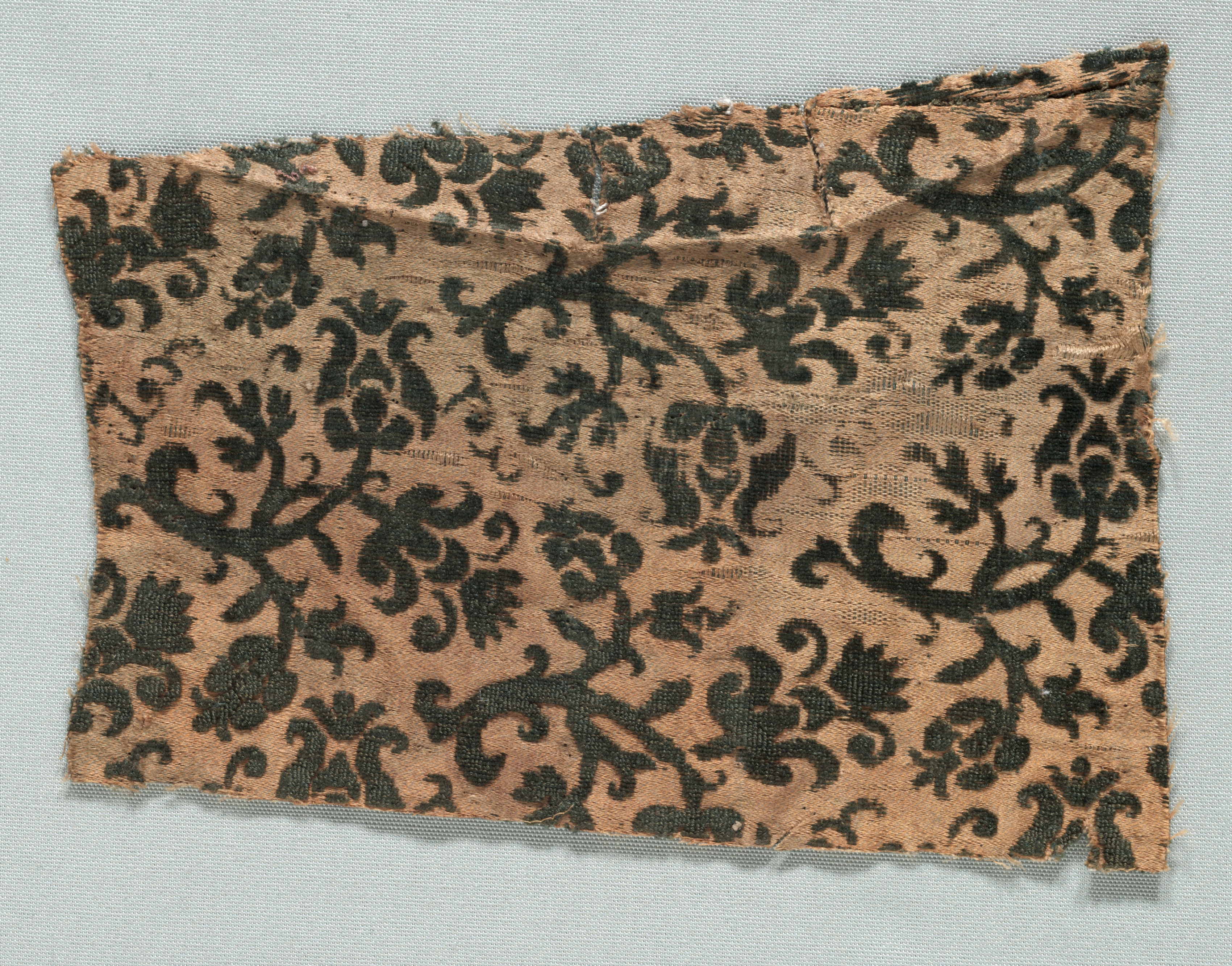
In the realm of avant-garde fashion, the past is not a relic to be preserved but a raw material to be deconstructed and reimagined. At Zoey Fashion Lab, we approach historical textiles as dynamic genetic codes, each thread a strand of a larger narrative waiting to be unraveled. The subject of this analysis—a velvet fragment originating from 17th-century Italy—presents a unique opportunity to engage with luxury, labor, and lineage. As Chief Fabric Deconstructionist, I have examined this piece not merely as a decorative remnant but as a New DNA Strand—a foundational element that can be spliced into contemporary avant-garde design, challenging traditional notions of texture, structure, and temporality.
This fragment, though small in scale, carries the weight of an entire epoch. Its deep, plush pile and rich dye speak to the opulence of the Italian Renaissance and Baroque periods, where velvet was a symbol of power, religious devotion, and artistic mastery. Yet, for Zoey Fashion Lab, its true value lies in its imperfections: the wear, the fading, the subtle distortions that reveal the hand of time. These are not flaws but data points in a deconstructionist’s toolkit, offering clues to how we might break down and rebuild the fabric’s essence into something radically new.
Technical Analysis: The Velvet Construction
Velvet, at its core, is a woven fabric characterized by a dense, even pile created through an extra set of warp threads. The 17th-century Italian velvet fragment under examination is a cut velvet, likely produced in centers like Venice, Genoa, or Florence. The base weave is a silk satin, providing a lustrous ground, while the pile is formed by loops that are subsequently cut, resulting in a soft, tactile surface. The fragment measures approximately 12 by 8 inches, with a pile height of roughly 2 millimeters—a standard for luxury garments of the period.
Microscopic analysis reveals a Z-twist in the pile threads, indicating a specific spinning technique that enhanced durability and sheen. The dye, a deep crimson, derives from Kermes vermilio, a scale insect native to the Mediterranean, which was one of the most expensive colorants of the era. This chemical composition is significant: it binds the fabric to a specific geographic and economic history. However, for our avant-garde purposes, this data is not an endpoint but a starting point. The fragment’s structural integrity has degraded over centuries, with the pile showing signs of compression and loss in high-wear areas. This fragility is precisely what makes it valuable as a New DNA Strand—it invites us to consider how decay can be integrated into design, not hidden but celebrated as a marker of authenticity and transformation.
Deconstructionist Methodology: Unraveling the Strand
At Zoey Fashion Lab, deconstruction is not destruction; it is a forensic and creative process. The velvet fragment is treated as a genetic sequence from which we can extract core properties—texture, weight, reflectivity, and drape—and then recombine them in unexpected ways. The first step is mechanical: we carefully unpick a small section of the pile to isolate the warp and weft threads. This reveals the tension and rhythm of the original weave. The silk filaments, though aged, retain a surprising tensile strength, a testament to the quality of 17th-century Italian sericulture.
Next, we perform a chemical analysis to identify the dye and any mordants used. The presence of alum confirms a traditional recipe, but we also detect trace elements of iron from historical storage conditions, which have caused subtle shifts in hue—a patina that we term chrono-chromatic distortion. This distortion is not a defect; it is a temporal signature. In the context of avant-garde design, such signatures can be replicated or exaggerated through modern dyeing techniques, creating fabrics that appear to age or mutate in real-time.
The final phase of deconstruction is conceptual. We ask: What is the DNA of this velvet? It is not just silk and dye; it is the labor of skilled weavers, the trade routes that brought the raw materials to Italy, the social rituals that demanded such luxurious textiles. This fragment might have been part of a clerical vestment, a noblewoman’s gown, or an upholstery panel in a palazzo. Each potential history informs our design direction. For Zoey Fashion Lab, the New DNA Strand is not a literal biological entity but a metaphor for how we extract, mutate, and re-express historical essence in a contemporary form.
Avant-Garde Application: From Fragment to Future
The avant-garde style demands that we push beyond conventional beauty into the realm of the provocative and the intellectual. This velvet fragment, with its inherent contradictions—luxury and decay, permanence and fragility—becomes a template for disruption. Our design proposal centers on a collection titled “Chrono-Velvet: The Unraveling of Opulence.” The core concept involves using the fragment’s deconstructed elements to create garments that are simultaneously old and new, solid and dissolving.
For example, we can laser-cut patterns into the velvet that mimic the natural wear patterns we observed, turning decay into a deliberate design feature. Alternatively, we can re-weave the extracted silk threads with modern metallic or synthetic fibers, creating a hybrid textile that references the original while embracing contemporary materiality. The deep crimson dye can be replicated using lab-grown pigments that shift color under different lighting, echoing the chrono-chromatic distortion but with a futuristic twist.
Garment silhouettes would be deconstructed in the traditional sense: asymmetrical hems, exposed seams, raw edges that reveal the inner structure. The velvet fragment itself could be embedded as a patch in a larger, otherwise minimalist ensemble, serving as a focal point that invites close inspection. This approach aligns with the avant-garde ethos of defamiliarization—making the familiar strange. A 17th-century velvet, once a symbol of static wealth, becomes a dynamic, unsettling element in a modern wardrobe.
Conclusion: The Fragment as Catalyst
The 17th-century Italian velvet fragment is far more than a historical curiosity; it is a catalyst for innovation. As Chief Fabric Deconstructionist for Zoey Fashion Lab, I see it as a New DNA Strand—a source code that, when properly decoded and recombined, can yield designs that challenge our understanding of time, materiality, and luxury. By respecting the technical mastery of the past while embracing the disruptive potential of the present, we honor the fragment’s origin without being bound by it.
In the avant-garde, the past is not a destination but a raw material. This velvet, with its rich history and palpable decay, offers us the perfect medium for exploration. It reminds us that fashion is not about preserving the old but about reanimating it—giving it a new body, a new context, a new life. At Zoey Fashion Lab, we do not look back with nostalgia; we look back with a scalpel, ready to dissect and rebuild. The result is a fashion that is as much about memory as it is about the future, a fabric that carries the weight of centuries but moves with the lightness of tomorrow.