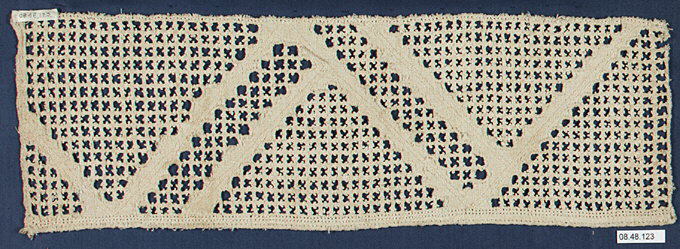
The Deconstruction of Line: A Study in Strip, Cutwork, and the Future of Silhouette
The avant-garde is not a destination; it is a perpetual state of becoming. For the SS26 season, Zoey Fashion Laboratory turns its analytical gaze upon the most fundamental unit of garment architecture: the strip. Stripped of ornament, stripped of context, the strip becomes a pure vector of design potential. This is not a collection about fabric; it is a manifesto on negative space, engineered tension, and the radical redefinition of the human form through controlled absence. The subject, Strip, is examined through the lens of Cutwork, a technique that elevates removal to a generative act. The origin is the Global Frontier—a liminal space where digital fabrication meets hand-crafted precision, where the future of couture is not sewn but carved.
I. The Strip as Structural Grammar
In traditional tailoring, the strip is a seam allowance, a hidden structural element. In the Zoey Fashion Laboratory paradigm, the strip is the primary structure. We reject the notion of a continuous textile surface. Instead, the garment is conceived as a lattice of interlocking strips, each one a load-bearing member in a tensile architecture. The cutwork is not decorative; it is the skeleton. The process begins with a digital simulation of the body's kinetic landscape. Using parametric modeling, strips are algorithmically placed to follow lines of maximum tension and minimum constraint. The result is a second skin that breathes, flexes, and deforms with the wearer, yet maintains a rigid, almost sculptural integrity when static.
The futuristic silhouette emerges from this logic. Gone are the soft drapes and organic folds of the past. In their place, we see sharp, angular trajectories—a zigzag of exposed skin and engineered fabric. The strip becomes a ribbon of light, a conduit for architectural shadow. For SS26, the shoulder is not padded; it is a cantilevered bridge of intersecting strips. The waist is not cinched; it is defined by a negative space, a void carved by the precise removal of material. This is the Global Frontier aesthetic: a synthesis of cybernetic precision and artisanal brutality. The strips are cut from high-density thermoplastics fused with recycled microfibers, creating a material that is both rigid and pliable, capable of holding a sharp edge while conforming to the body's micro-movements.
II. Cutwork as a Generative Act of Removal
To understand Cutwork in this context, one must abandon the notion of fabric as a canvas. Here, the canvas is the void. The cut is the mark. The technique is a form of subtractive sculpture, where the garment is defined by what is removed, not what remains. Each strip is a boundary line, a contour of the body's potential. The process is iterative: a laser cutter etches a grid of potential cuts onto a composite textile. The artisan then manually excises the negative spaces, leaving only the strips. This hybrid process—digital precision married to human intuition—is the hallmark of the Global Frontier. The result is a garment that appears to be in a state of perpetual deconstruction, yet is structurally self-supporting.
The silhouette generated by this method is inherently futuristic. It rejects the classical hourglass or the modernist box. Instead, it proposes a new topology: the fractal silhouette. The strips create a visual rhythm that repeats at multiple scales—from the macro-level of the overall form to the micro-level of the individual cut. The eye is drawn into a labyrinth of line and shadow. The body is no longer a solid mass but a field of force lines. For example, a floor-length gown is not a column of fabric; it is a series of parallel strips that flare outward at the hem, creating a kinetic fringe that moves like a living organism. The cutwork allows for transparency without exposure, structure without weight.
III. Engineering the Future: Silhouette and Structural Innovation
The structural innovation for SS26 lies in the integration of active tensioning systems. The strips are not static; they are connected by micro-ratchets and elasticized conduits that allow the wearer to adjust the garment's silhouette in real-time. A twist of a wrist can tighten the lattice, creating a more rigid, armor-like form. A release can soften the structure, allowing the strips to cascade into a fluid, waterfall-like drape. This is adaptive couture—a garment that responds to the environment and the wearer's intent. The futuristic silhouette is therefore not a fixed shape but a range of possibilities, a spectrum from geometric precision to organic chaos.
The Global Frontier origin is critical here. The materials are sourced from post-industrial waste streams—reclaimed carbon fiber, recycled polyester from ocean plastics, and bio-degradable polymers. The cutwork process minimizes waste, as the removed material is repurposed into smaller accessories or structural reinforcements. The aesthetic is raw, almost industrial. The edges of the strips are left unfinished, revealing the layered composition of the composite materials. This is not a polished, finished look; it is a look in process, a declaration of the garment's own making.
IV. The Avant-Garde Imperative: Strip as Statement
In the context of a standalone avant-garde study, the strip is a provocation. It challenges the very notion of what a garment is. Is it a covering? A structure? A performance? The Zoey Fashion Laboratory answers: it is all of these, and none. The strip is a line in space, a boundary between the wearer and the world. The cutwork is the act of drawing that line. The silhouette is the resulting equation of volume and void. For SS26, the collection is not about fashion as adornment; it is about fashion as architecture, as engineering, as a dialogue with the future.
The Global Frontier is not a place; it is a mindset. It is the recognition that the next evolution of couture will come from the intersection of technology, sustainability, and radical conceptual thinking. The strip, in its most elemental form, is the building block of this new language. It is the line that connects the digital to the physical, the past to the future. The Zoey Fashion Laboratory invites you to strip away your preconceptions and see the garment not as a surface, but as a system. The future is not woven; it is cut.