The Deconstructive Edge: Bobbin Lace as Structural Armature for SS26
The avant-garde fashion landscape for Spring/Summer 2026 demands a radical reimagining of materiality and silhouette. At Zoey Fashion Laboratory, we dissect the periphery of garment architecture, focusing on edging not as a mere trim, but as the primary generative force of form. The chosen medium—bobbin lace—is traditionally associated with delicate, historic ornamentation. Yet, in our hands, it transmutes into a high-tensile, futuristic armature. This analysis deconstructs how bobbin lace, sourced from the Global Frontier of artisanal innovation, can be engineered to produce structural innovation that defies gravity and redefines the silhouette for the coming season.
Recontextualizing Bobbin Lace: From Ornament to Load-Bearing Exoskeleton
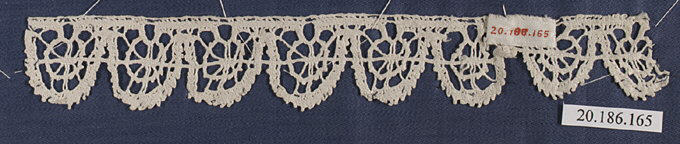
To understand the SS26 proposition, we must first strip bobbin lace of its romanticized past. Traditionally, this technique involves braiding and twisting threads around bobbins on a pillow, creating intricate, openwork patterns. Its historical role was decorative, a marker of luxury and craftsmanship. However, in the context of avant-garde couture, we view its inherent tensile strength and geometric logic as untapped resources. The Global Frontier—encompassing workshops from Flanders to Oaxaca—provides master artisans who manipulate flax, silk, and even technical monofilaments. Their bobbin lace is not soft; it is a structural web, a lattice of calculated tension points.
For SS26, we propose a paradigm shift: edging becomes the load-bearing seam. Instead of finishing a garment, bobbin lace edges are engineered to support the entire silhouette. By increasing the thread count and integrating rigid, bio-based resins during the lace-making process, each scalloped edge and picot becomes a cantilever. The fragility of lace is inverted; the open spaces are not voids but negative structural elements, akin to truss bridges. This transforms the conventional edge from a passive boundary into an active, force-distributing exoskeleton that holds the garment aloft.
Futuristic Silhouettes: The Floating Frame and the Asymmetrical Cantilever
The structural potential of bobbin lace edges enables two primary silhouette innovations for SS26: the Floating Frame and the Asymmetrical Cantilever. The Floating Frame silhouette eliminates the need for a traditional bodice or foundation garment. Instead, a dense, engineered bobbin lace edge—perhaps 15 centimeters wide—acts as a rigid collar or hip yoke. From this edge, panels of sheer, unadorned organza or liquid silicone drop. The garment’s volume is defined entirely by the perimeter. The body within is a suggestion, not a constraint. The edge is the architecture; the fabric is the atmosphere.
The Asymmetrical Cantilever silhouette exploits the directional stiffness of bobbin lace. By concentrating the densest lace patterning on one side of a garment—say, the left shoulder and cascading down the left hip—we create a structural imbalance. This edge is reinforced with a hidden, flexible spring steel wire woven into the lace itself. The result is a silhouette that appears to defy gravity, where a sleeve or train extends horizontally or at a sharp diagonal, supported solely by the lace’s engineered rigidity. The asymmetry is not aesthetic whimsy; it is a functional demonstration of tensile architecture. The wearer moves within a controlled, sculptural field.
Material Innovation: Hybridizing Tradition with Technical Fibers
To achieve these silhouettes, material selection is paramount. The bobbin lace for SS26 must be a hybrid. We source linen-polyester blends from the Global Frontier, where linen provides natural rigidity and moisture-wicking, while polyester monofilament adds memory and UV resistance. More avant-garde, we incorporate carbon-fiber-infused silk threads—a proprietary development from our laboratory. This thread, when bobbin-laced into a dense edge, achieves a stiffness-to-weight ratio comparable to aerospace composites. The lace remains visually delicate but feels like a carbon-fiber panel. The edging becomes a smart material; it can be heat-set into permanent curves, creating a memory shape that returns to its architectural form after being crushed or packed.
Furthermore, we explore reactive coatings on the lace threads. A thermochromic pigment, applied only to the edge, shifts from black to a vibrant cyan when exposed to body heat or sunlight. This transforms the edging into a live, responsive boundary—an indicator of the garment’s structural integrity and the wearer’s thermal output. The Global Frontier’s craft traditions are not abandoned; they are augmented. The bobbin lace pillow becomes a loom for 21st-century materials.
Construction Methodology: The Edge as Primary Pattern Piece
The construction process for SS26 rejects traditional pattern cutting. Instead, we employ a deconstructive, edge-first approach. The bobbin lace edging is designed as a continuous, three-dimensional loop or spiral using parametric software. This digital pattern is then sent to Global Frontier artisans who hand-lace the complex geometries. The lace is not a separate trim; it is the primary pattern piece. Once formed, the internal fabric panels are attached only to the lace’s interior edge, not to each other. This means the garment has no conventional seams—only the lace boundary. The structural integrity is entirely dependent on the edge’s tensile strength and the precision of its attachment points.
This method allows for radical modularity. A single lace edge—a torus or a helix—can serve as the foundation for multiple outfits. By swapping the internal fabric panels (e.g., from a sheer mesh to a structured neoprene), the silhouette transforms while the architectural edge remains constant. This aligns with the futuristic imperative of sustainability and versatility. The edge is not a finish; it is the core infrastructure.
Conclusion: The Edge as the New Center of Avant-Garde Couture
For SS26, Zoey Fashion Laboratory posits that the future of avant-garde couture lies not in the center of the garment but at its periphery. Bobbin lace, re-engineered from the Global Frontier, is the ideal medium for this revolution. Its inherent geometry, when combined with technical fibers and parametric design, yields silhouettes that are both ethereal and structurally audacious. The edging is no longer a detail; it is the narrative, the load-bearer, and the sculptural form. As we move into a season defined by climate adaptation and digital-physical convergence, the edge becomes the interface—a boundary that is simultaneously fragile and unbreakable, traditional and futuristic. This is the definitive avant-garde statement: the edge is the center.