Deconstructing the Panel: A Structural Lexicon for SS26
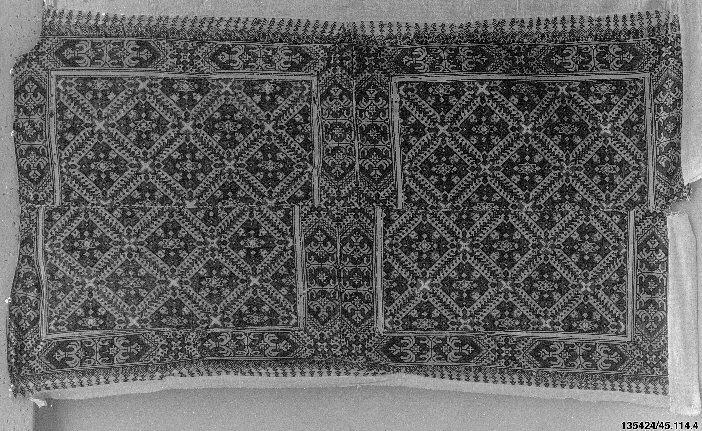
In the relentless pursuit of sartorial evolution, the avant-garde designer must interrogate the very foundations of garment construction. For Zoey Fashion Laboratory’s SS26 collection, we isolate a singular, potent element: the Panel. This is not a mere segment of fabric; it is a conceptual atom, a unit of architectural potential. Sourced from the Global Frontier—a nebulous territory where traditional textile provenance dissolves into a matrix of sustainable, cross-continental innovation—the chosen material is a paradox: raw, unbleached linen, brutally minimal in its fiber, yet violently embroidered with silk threads. This juxtaposition is the thesis for our standalone avant-garde study. The linen grounds the garment in a tactile, almost archaeological reality, while the silk embroidery introduces a discordant note of opulence, a digital-age scar upon an analog surface. Our objective is to redefine the panel not as a passive component, but as an active, structural protagonist, capable of generating futuristic silhouettes that challenge the human form and the very concept of wearability.
From Flatness to Dimensionality: The Panel as a Load-Bearing Element
Traditional tailoring treats the panel as a two-dimensional plane that conforms to the body. Our SS26 methodology inverts this logic. We posit the panel as a load-bearing membrane, a structural beam in textile form. The linen’s inherent stiffness—its refusal to drape without resistance—becomes an asset. Each panel is engineered with calculated, asymmetrical cuts and laser-perforated seams that do not simply join fabric but act as hinges, allowing the garment to cantilever away from the body. The silk embroidery is not decorative; it is a system of tensile reinforcement. Fine, parallel lines of silk thread are stitched in a grid pattern across the linen’s surface, creating a composite material that resists compression. This allows for the construction of futuristic silhouettes that are rigid, almost sculptural: a shoulder panel that juts forward at a 45-degree angle, a hip panel that flares into a geometric, non-Euclidean fan. The body is no longer the container; it is the scaffold upon which these panels are suspended, creating a negative space between skin and fabric that is as integral to the design as the textile itself.
The Embroidery as a Digital Cartography
The silk embroidery on the Global Frontier linen is not a pastoral motif. It is a cartography of disruption. The threads are applied using a proprietary, algorithm-driven machine that generates patterns based on real-time data from global weather systems and stock market fluctuations. The result is a chaotic, yet deliberate, network of lines, nodes, and gaps. This is not ornament; it is a record of instability. On a structural level, these embroidered zones create areas of varying tensile strength. A dense cluster of silk stitches renders the linen more rigid, forming a structural rib; a sparse, open area leaves the linen vulnerable, creating a point of collapse or draping. The designer uses this to control the garment’s silhouette with surgical precision. A panel intended to flare aggressively is heavily embroidered along its outer edge; a panel meant to wrap and cling is left largely unstitched, allowing the linen to buckle. This technique transforms the garment into a responsive architecture, where the surface itself dictates the volumetric outcome. The silk, a material of historical luxury, is weaponized as a tool of structural control, subverting its traditional role as a symbol of softness.
Deconstructing the Silhouette: Asymmetry and the Unstable Equilibrium
The avant-garde imperative for SS26 is to reject the symmetrical, the balanced, and the predictable. The panel, in our hands, becomes an instrument of dynamic asymmetry. Consider a single, oversized panel that originates at the left shoulder, traverses the torso diagonally, and terminates at the right hip. Its edges are raw, unhemmed, and the silk embroidery is concentrated in a single, dense band along its lower edge. This creates a weight differential: the lower edge is heavy, causing the panel to pull downward and away from the body, while the upper edge remains light and floating. The resulting silhouette is one of unstable equilibrium—a constant tension between gravity and the material’s own structural memory. The wearer is not passive; their movement becomes a negotiation with the garment. A step forward forces the panel to swing, to crease, to reveal the linen’s unadorned interior. This is not a dress; it is a kinetic sculpture. The futuristic silhouette is not about sleek, aerodynamic forms; it is about the jagged, the unresolved, the fragmentary. The panel is a broken promise of wholeness, a deliberate refusal to cohere into a conventional garment shape.
The Global Frontier: Material Ethics and Post-Industrial Identity
The origin of the material—the Global Frontier—is a critical component of the analysis. This is not a geographic location but a conceptual zone where supply chains are decentralized, transparent, and regenerative. The linen is sourced from a cooperative in a post-industrial region of Eastern Europe, grown without irrigation and processed using solar energy. The silk is a byproduct of a closed-loop textile system in Japan, where silkworms are fed on mulberry leaves grown in vertical farms. This is not mere sustainability; it is a post-industrial identity. The garment carries the ethical weight of its production, and the designer is now a curator of these narratives. The embroidery, therefore, is also a map of this provenance—a visual record of the Global Frontier’s complex logistics. The tension between the rough, earthy linen and the refined, technological silk mirrors the tension between the natural and the manufactured, the local and the global. The panel becomes a document, a physical artifact of a new system of making. The futuristic silhouette is not just a shape; it is a statement of material consciousness.
Conclusion: The Panel as a Manifesto
Our standalone avant-garde study for SS26 concludes that the panel is not a passive element but a manifesto. By weaponizing the structural properties of linen and silk, by embracing asymmetry and instability, and by embedding a global, ethical narrative into the material itself, the panel transcends its role as a garment component. It becomes a tool for questioning the body, for redefining volume, and for critiquing the consumerist obsession with perfection. The futuristic silhouette is not about predicting the future; it is about constructing a new present—a present where every seam is a decision, every thread is a statement, and every panel is a frontier. Zoey Fashion Laboratory’s SS26 collection is not a line of clothing; it is a series of architectural interventions. The wearer is not a model; they are a collaborator, a living armature for these deconstructive, structural innovations. The panel, in its raw, embroidered, and asymmetrical glory, is the definitive avant-garde gesture for the season.