Deconstructing the Small Sword: A Study in Tension and Transformation
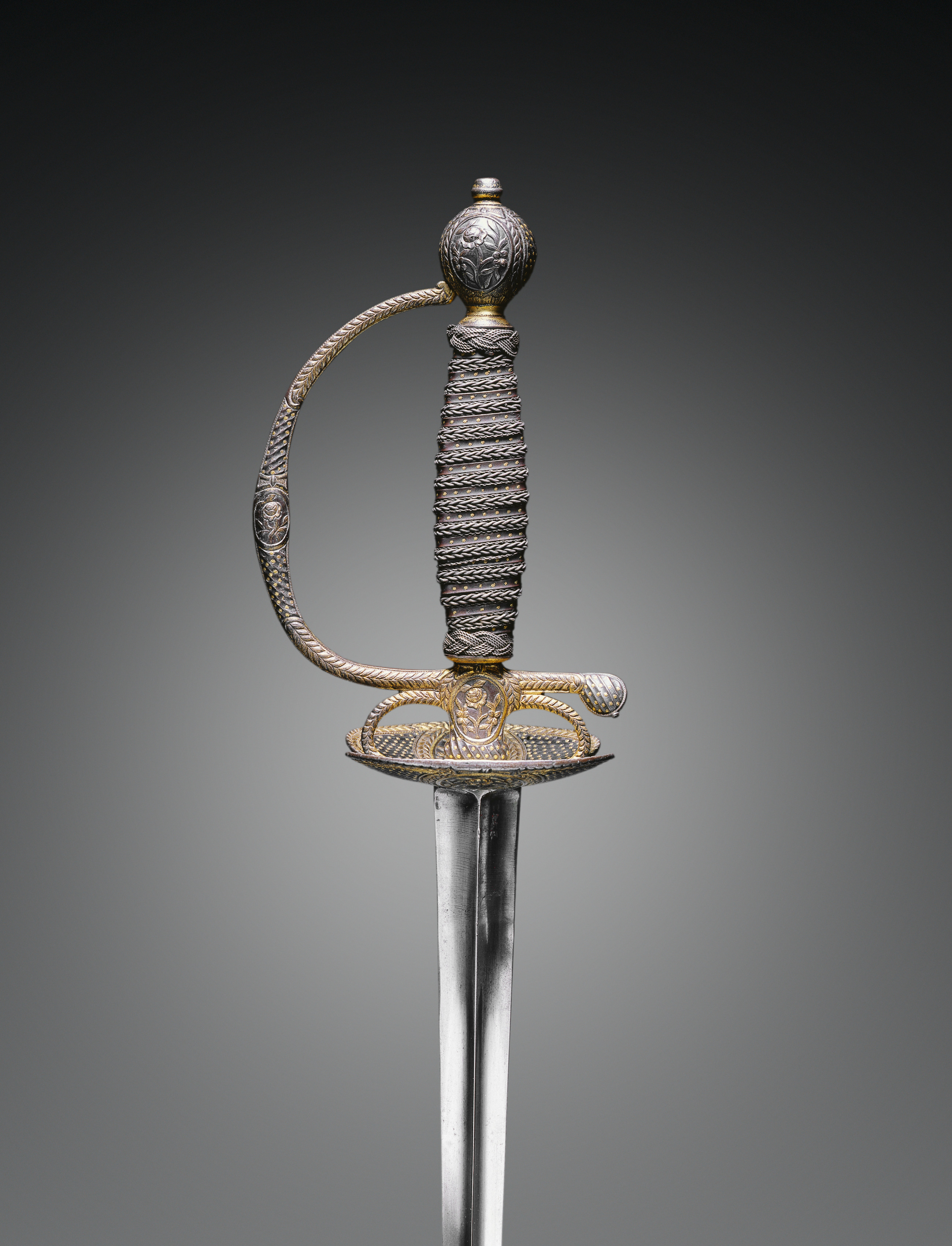
As Chief Fabric Deconstructionist for Zoey Fashion Lab, I approach the Small Sword—a French artifact from 18th-century Paris—not as a relic of aristocratic dueling or courtly fashion, but as a structural blueprint for avant-garde design. This weapon, forged from steel, partially gilt, and wrapped in leather and wire, embodies a paradox: it is both a tool of precision and a symbol of ornamentation. In our lab, we dissect its material DNA to extract principles that challenge conventional garment construction, creating pieces that oscillate between fragility and force, history and futurism.
Material Analysis: The DNA of Duality
The Small Sword’s composition is a study in contrasts. The forged steel blade represents rigidity, sharpness, and linear purpose—a singular trajectory of function. In contrast, the partially gilt and russet steel hilt introduces decorative excess: gold accents that catch light, russet tones that evoke rust and decay. This juxtaposition of utilitarian metal with ornamental gilding mirrors the avant-garde’s obsession with deconstructing hierarchies—where the mundane and the luxurious coexist without resolution.
The steel wire, leather bands, and wood core of the grip are particularly telling. The wood core provides internal structure, the leather bands offer tactile grip, and the steel wire wraps them in a net of tension. This layered system—rigid core, flexible wrap, and metallic restraint—is a microcosm of garment engineering. For Zoey Fashion Lab, this translates into a design philosophy: a dress might have a sculpted resin core (wood), laser-cut leather straps (leather bands), and fine chainmail overlays (steel wire), creating a piece that is both armor and accessory.
Historical Context: The Sword as Social Fabric
The 18th-century French Small Sword was not merely a weapon; it was a social signifier. Worn by aristocrats in court and salon, it signaled status, refinement, and readiness for conflict—though duels were often more about honor than bloodshed. This duality—the weapon as ornament, the ornament as weapon—is the core tension we exploit in avant-garde fashion. A garment can be both protective and provocative, structured yet fluid, historical yet alien.
Consider the partially gilt hilt: the gilding was not just decorative but a display of wealth and craftsmanship. In our work, we reinterpret this as surface treatment—applying gold leaf or metallic finishes to specific zones of a garment (shoulders, cuffs, collars) to create focal points that draw the eye while the rest remains raw, unfinished, or deliberately distressed. This echoes the russet steel’s oxidized texture, which we replicate through chemical washes on fabric, creating a patina that suggests age and narrative.
Structural Principles: From Blade to Bodice
The Small Sword’s blade geometry—tapered, double-edged, with a central ridge for strength—offers lessons in linear construction. In fashion, this translates to sharp, asymmetrical seams that cut across the body, creating visual tension. The blade’s pointed tip becomes a dart or panel that directs the eye downward, elongating the silhouette. We can also mimic the blade’s cross-section in pleated structures—folds that are sharp on one edge, soft on the other, suggesting both attack and retreat.
The hilt’s guard, often a complex arrangement of quillons and rings, inspires layered cage-like structures over the torso. Using 3D-printed or laser-cut components, we can create a wearable exoskeleton that frames the body without restricting it—a nod to the sword’s dual role as tool and ornament. The grip’s wire wrapping becomes a tactile surface on sleeves or bodices, using coiled metal threads or embroidery with metallic yarns to create a sense of texture that invites touch while repelling it.
Avant-Garde Application: The New DNA Strand
Zoey Fashion Lab’s New DNA Strand project seeks to reimagine historical artifacts as genetic codes for future garments. The Small Sword’s DNA is a sequence of tension, decay, and ornamentation. From this, we extract three design directives:
1. Tension as Structure: The sword’s wire wrap creates a tensioned surface that holds the grip together. In a garment, this becomes corsetry with integrated cables—not for cinching, but for creating dynamic compression that shifts with movement. Imagine a jacket where steel cables run through channels, allowing the wearer to adjust the silhouette by pulling or releasing tension.
2. Decay as Aesthetic: The russet finish on the steel is a controlled form of oxidation. We apply this to fabrics through chemical distressing or burn-out techniques, where sections of a garment are deliberately degraded to reveal underlying layers. This creates a palimpsest effect—a garment that tells a story of wear, use, and transformation.
3. Ornament as Armor: The gilding on the hilt is both decorative and protective (against rust). In fashion, we reinterpret this as applied metal foils on high-wear areas (elbows, knees, shoulders) that serve as both embellishment and abrasion resistance. This blurs the line between jewelry and utility, making the garment a functional sculpture.
Design Prototype: The Small Sword Silhouette
Based on this analysis, I propose a prototype for Zoey Fashion Lab: The Gilt Russet Bodysuit. This piece features a wood-core corset with leather straps that mimic the grip’s bands, wrapped in steel wire embroidery. The bodice is asymmetrical, with a single blade-like panel extending from the left shoulder to the right hip, echoing the sword’s taper. The panel is partially gilt—gold leaf applied in a random, fractured pattern—while the rest is russet-dyed silk, suggesting both decay and luxury.
The sleeves are detachable, attached via leather bands and steel clips, allowing the wearer to transform the piece from a full bodysuit to a minimalist top. This modularity references the Small Sword’s disassemblable nature—a weapon that could be broken down for travel or maintenance. The neckline is cage-like, using 3D-printed steel rings that frame the collarbone, a direct nod to the hilt’s guard.
Conclusion: The Sword as Future Fabric
The Small Sword is not a historical artifact to be preserved but a living code to be rewritten. By deconstructing its materials—steel, leather, wood, gold—we uncover principles of tension, decay, and ornamentation that are timeless. For Zoey Fashion Lab, this weapon becomes a template for avant-garde garments that challenge the wearer to see fashion as both armor and art, history and prophecy. In the New DNA Strand, the Small Sword’s legacy is not in its edge but in its ability to cut through convention, leaving only the sharpest lines and the most provocative textures.