The Primal Geometry of Tomorrow: Deconstructive Horizons for SS26
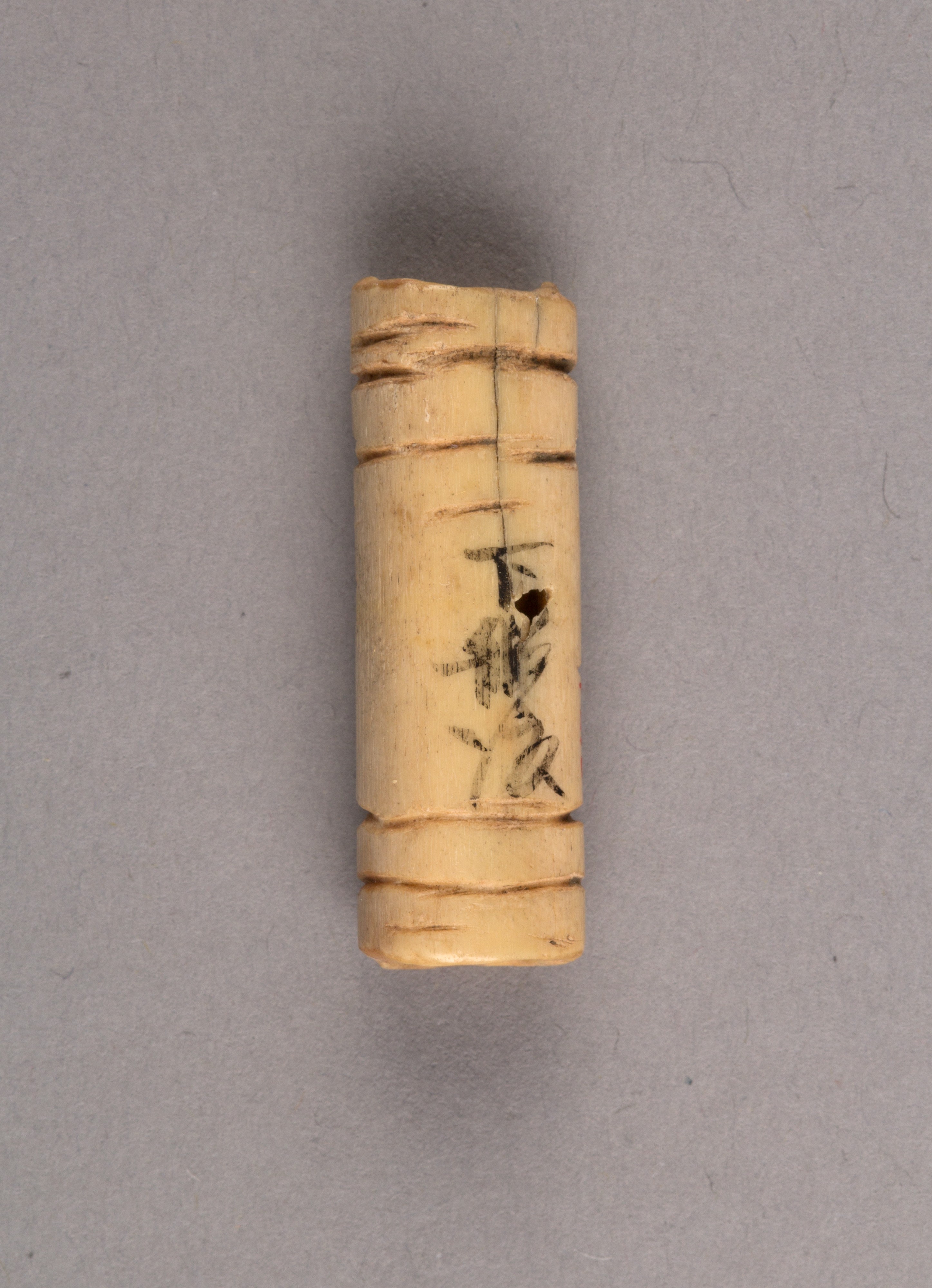
The avant-garde couture landscape for SS26 demands a radical departure from the soft, organic forms that have dominated recent seasons. At Zoey Fashion Laboratory, we have turned our gaze to a raw, anthropological lexicon: the arrowhead, the needle, the hook, and the harpoon. Sourced from ancient Japanese bone implements, these artifacts are not mere decorative motifs but structural grammar. They represent a pre-industrial precision—a language of piercing, binding, and tension that redefines the silhouette. This analysis dissects how these primal tools, recontextualized through futuristic material science, forge a new architecture for the body.
Deconstructive Geometry: The Arrowhead as Structural Fulcrum
The arrowhead, with its sharp, triangular apex and barbed edges, becomes the foundational module for SS26’s shoulder and waist architectures. In traditional Japanese hunting culture, the yajiri (arrowhead) was engineered for maximal penetration with minimal mass. We translate this efficiency into garment construction by using laser-cut, polished bone fragments as static counterweights and dynamic joint points. A tailored blazer, for instance, is not sewn but pinned along the shoulder seam using a series of graduated arrowheads. The fabric—a micro-perforated, carbon-fiber-infused silk—drapes away from the body, creating a negative space that visually mimics the trajectory of a projectile. The silhouette is aggressive yet weightless, a futuristic exoskeleton that amplifies the wearer’s motion without constriction.
This approach subverts traditional tailoring: the arrowhead does not fasten but directs the eye and the fabric’s fall. The barbs create micro-tensions, pulling the material into sharp, angular folds. For SS26, this manifests in a shift dress where the waist is cinched not by a belt but by a continuous spine of arrowheads, each one angled to create a hyperbolic curve. The result is a silhouette that is simultaneously rigid and fluid—a paradox that defines the avant-garde.
Needle and Hook: The Anatomy of Tension and Release
The needle and the hook—implements of piercing and binding—are reimagined as kinetic fasteners. In ancient Japan, the hari (needle) was a tool of precision, while the kagi (hook) served to snare and secure. For SS26, these forms are scaled up and rendered in polished whalebone and deer antler, then integrated into garments as modular closures that allow for real-time silhouette manipulation. A floor-length coat, for example, features a series of hooks along the interior spine. By threading a single, elongated needle through these hooks, the wearer can compress the volume of the coat into a tightly sculpted column, or release it into a billowing, harpoon-like train.
This system introduces a new vocabulary of transformative wearability. The hook, when paired with a tensioned cord made of braided silk and sinew, creates a corsetry of air—a structure that does not compress the torso but instead suspends the fabric in a state of perpetual tension. The needle, meanwhile, becomes a piercing ornament that passes through layered panels of bio-ceramic leather and shredded linen, creating a lattice of shadows. The silhouette is both fragile and formidable, evoking the armor of a cybernetic hunter-gatherer.
The Harpoon Line: Futuristic Silhouettes of Projectile Motion
The harpoon—a weapon of deep penetration and retrieval—informs the most radical silhouette of the collection: the harpoon line. In Japanese whaling history, the mōko (harpoon) was a tool of immense force, designed to anchor itself through layers of blubber and muscle. We abstract this concept into a garment’s structural spine. A long, asymmetrical tunic features a single, continuous bone harpoon that runs from the left shoulder to the right hip, piercing through the fabric at multiple points. The harpoon’s barbs act as anchors, holding the fabric in a state of dynamic torsion. The garment appears to be in mid-flight, caught in the moment of impact.
The result is a futuristic silhouette that defies gravity. The harpoon line creates a diagonal axis that breaks the verticality of the human form, suggesting motion even at rest. For SS26, this is paired with a high, wing-like collar made of interlocking bone needles, evoking the skeletal structure of a prehistoric bird. The overall shape is aggressive, aerodynamic, and deeply primal—a fusion of ancestral craftsmanship and speculative design.
Material Alchemy: Bone as a Medium of Light and Shadow
The choice of bone—specifically, the polished, fossilized remains of deer, whale, and bear from Japan’s ancient Jōmon period—is not arbitrary. These materials possess a unique optical property: when carved into thin, translucent shards, they refract light in a manner akin to organic fiber optics. For SS26, we employ a technique of bone lamination, where layers of bone are bonded with a bio-resin to create flexible, armor-like panels. These panels are then pierced with needles to form light-diffusing grids. The effect is a garment that changes its visual density depending on the light source—opaque in shadow, luminous in direct light.
This material alchemy reinforces the collection’s central thesis: that the past is the raw material for the future. The bone is not a relic but a living surface, etched with the scars of its own history. The hooks and arrowheads are not dead weights but conductors of energy, channeling the wearer’s movement into the garment’s architecture.
Structural Innovation: The Harness of Unfinished Gestures
The final innovation for SS26 is the harness of unfinished gestures—a web of bone needles and hooks that sits atop the base garment like a second skin. This harness is not a closure system but a scaffold for the wearer to manipulate. Each hook can be re-pinned, each needle re-threaded, allowing for real-time deconstruction. The silhouette is never fixed; it is a continuous performance. The bone implements become extensions of the body’s own intent—tools for carving space.
In this context, the arrowhead, needle, hook, and harpoon are not symbols of violence but of agency and transformation. They are the original tools of survival, reimagined as the instruments of a new, post-human elegance. Zoey Fashion Laboratory’s SS26 collection is a manifesto: that the most futuristic silhouette is one that remembers its own primal origins, and that the sharpest edge is the one that cuts through time itself.