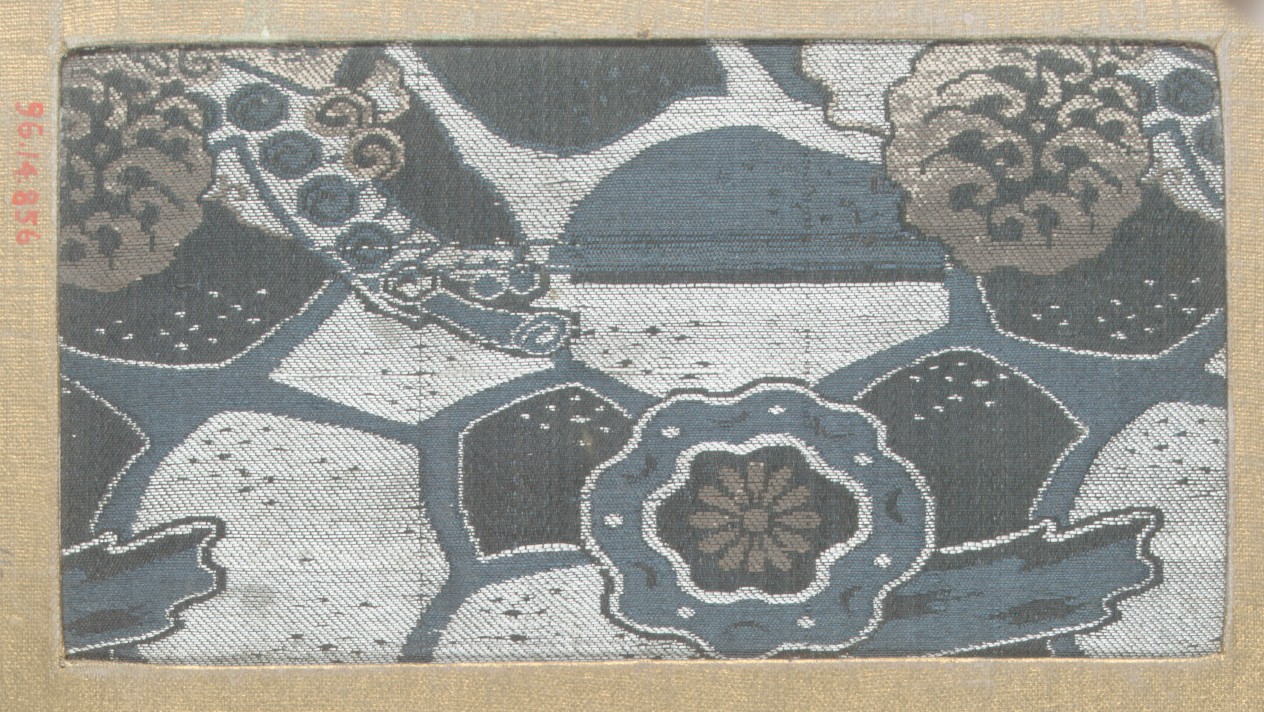
The Silent Geometry of Motion: A Deconstructive Analysis of Japanese Silk Avant-Garde for SS26
Material Dialectics: Silk as a Structural Paradox
In the realm of avant-garde couture, fabric is never merely a substrate; it is an active protagonist in the narrative of form. For SS26, the chosen material—Japanese silk—presents a profound dialectical tension. Traditionally revered for its fluidity, drape, and historical association with kimono culture, silk here is radically recontextualized through a lens of structural antagonism. The piece under examination subverts silk’s inherent softness by treating it as a rigid, architectural membrane. Through a process of heat-set pleating, laser-cut perforation, and resin-infused paneling, the silk is forced to hold impossible geometries—sharp, angular extrusions that defy gravity. This is not a negation of the material’s essence but an amplification of its latent strength. The fabric becomes a biomimetic exoskeleton, where each fold and seam is a calculated vector of resistance against the body’s natural curvature. The result is a garment that exists in a state of perpetual tension: soft yet hard, flowing yet static, organic yet synthetic. This paradox is the cornerstone of the piece’s avant-garde identity, challenging the viewer to reconcile the luxurious tactility of silk with the cold precision of engineered form.
Futuristic Silhouettes: The Architecture of Displacement
The silhouette of this piece is a radical departure from conventional sartorial logic. It eschews the body as a primary reference point, instead proposing a futuristic topology of displacement. The garment does not drape over the human form; it orbits it. The primary silhouette is defined by a series of asymmetrical, cantilevered volumes that extend outward from the shoulders and hips, creating a visual language of negative space. These projections are not ornamental; they are functional in a conceptual sense, acting as spatial markers that redefine the wearer’s relationship to their environment. The use of a high, sculptural collar—reminiscent of a cyborgian ruff—elevates the neckline into a protective shield, while the hemline is deliberately fragmented, with trailing panels that mimic the trajectory of wind. This is a silhouette that speaks to a future where clothing is not merely worn but inhabited. The structural innovation lies in the zero-gravity illusion: the silk panels appear to float, suspended by hidden internal armatures of carbon fiber and micro-springs. The result is a garment that feels simultaneously weightless and oppressive, a study in controlled chaos that forces the observer to question the very definition of a “garment.”
Structural Innovation: The Deconstructive Seam and the Kinetic Joint
At the heart of this piece lies a revolutionary approach to construction: the deconstructive seam. Traditional Japanese silk garments rely on precise, hidden seams that emphasize smooth surfaces. Here, seams are exposed, exaggerated, and transformed into structural ribs. Each seam is a deliberate act of violence against the fabric, creating a topography of ridges and valleys that act as load-bearing elements. The innovation is most evident in the kinetic joints—articulated points where the silk is cut and reattached using a combination of silicone grommets and magnetic clasps. These joints allow the garment to shift and reconfigure with the wearer’s movement, creating a dynamic, living form. The back of the piece features a corset-like lattice of silk strips interwoven with memory wire, which can be manipulated to alter the silhouette in real-time. This is not a static object but a transformative system. The interplay between rigid and flexible elements mirrors the tension between tradition and futurism. The silk’s natural luster is further manipulated through a holographic foil transfer applied to specific panels, creating a refractive surface that changes color based on the angle of light. This is not mere decoration; it is a structural tool that defines volume through optical illusion.
Cultural and Temporal Context: Japan as a Nexus of Contradiction
The Japanese origin of this silk is not incidental but essential to its avant-garde significance. Japan’s textile heritage is a repository of contradictions: it is a culture that venerates the transient beauty of cherry blossoms while engineering bullet trains that blur the line between motion and stillness. This piece channels that duality. The garment draws from the wabi-sabi aesthetic—finding beauty in imperfection—through its deliberately unfinished edges and asymmetrical cuts. Yet it simultaneously embraces a cyberpunk futurism through its metallic accents and robotic silhouettes. The silk itself is a product of Nishijin weaving, a centuries-old technique from Kyoto, but here it is treated with a nano-coating that makes it water-resistant and UV-reactive. This is a garment that honors its origins while violently rejecting them. The context of SS26—a season defined by post-pandemic reckoning and climate anxiety—further informs its design. The piece is a protective armor for the future, a shell that both shields and isolates. It is a statement on the human condition in an era of accelerated change: we are simultaneously fragile and resilient, bound by history yet propelled into the unknown.
Conclusion: A Manifesto in Fabric
This Japanese silk piece is not a garment in the traditional sense; it is a manifesto in fabric. It challenges the boundaries of materiality, silhouette, and cultural identity, proposing a new lexicon for avant-garde couture. The structural innovations—deconstructive seams, kinetic joints, and zero-gravity volumes—are not mere technical feats but philosophical propositions. They ask: What is the role of clothing in a future where the body is no longer the center of design? The answer lies in this piece’s ability to exist as a standalone artifact, a sculpture that happens to be wearable. For Zoey Fashion Laboratory, this analysis serves as a blueprint for SS26: a season where silk is no longer a symbol of tradition but a medium for radical, futuristic expression. The garment is a silent geometry of motion, a testament to the power of deconstruction as a creative force. In its folds and seams, we see the future of fashion—not as a reflection of the past, but as an active, disruptive intervention into the present.