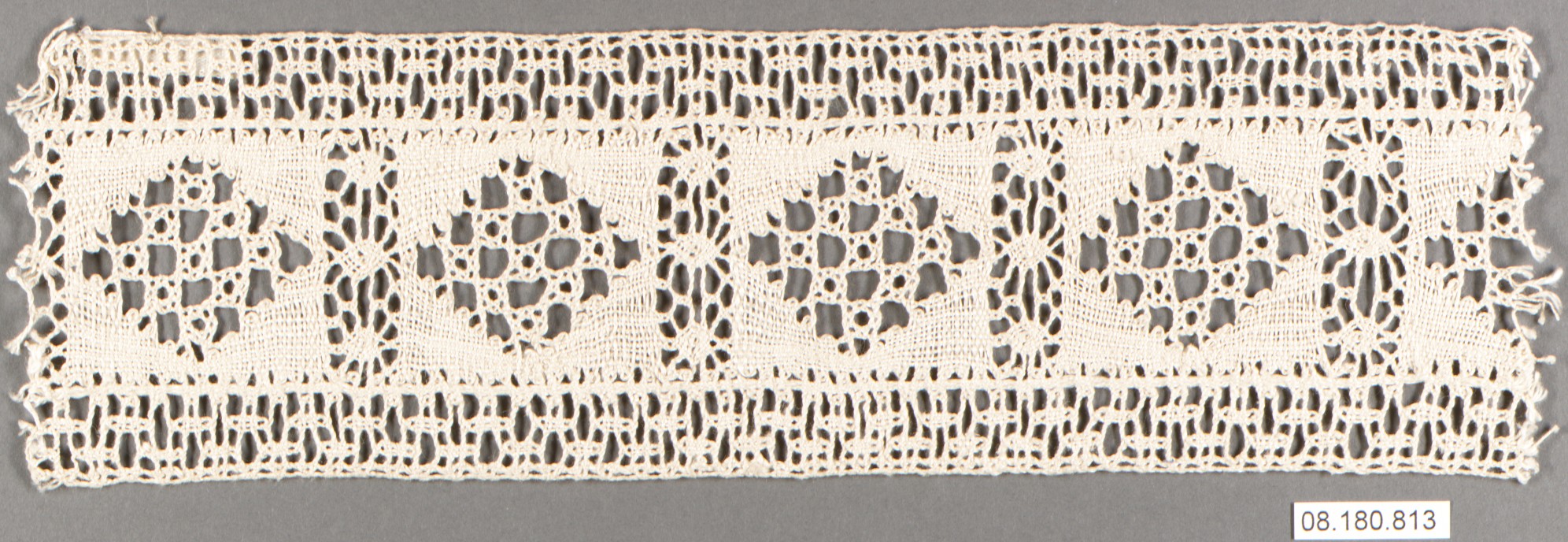
The Semiotics of Insertion: Bobbin Lace as Structural Disruption for SS26
In the perpetual oscillation between heritage and hypermodernity, Zoey Fashion Laboratory’s SS26 avant-garde analysis confronts a singular, provocative subject: Insertion. This is not a gentle seam or a decorative afterthought. Insertion, within the context of this frontier study, is a deliberate act of architectural violence—a surgical incision that redefines the garment’s internal logic. Drawing from a global frontier of deconstructive aesthetics, we examine how bobbin lace, a material historically consigned to the realms of domesticity and ornament, is weaponized as a tool of structural innovation. The result is a futuristic silhouette that rejects passive decoration in favor of active, tensile disruption.
Deconstructing the Archive: Bobbin Lace as a Global Frontier Material
Bobbin lace, with its intricate lattice of twisted and plaited threads, originates from a lineage of painstaking handcraft—from the flax fields of Flanders to the convents of Italy. Yet, in the hands of Zoey’s atelier, this textile is stripped of its nostalgic patina. The global frontier here is not geographical but temporal: we are mining the pre-industrial past for a post-industrial syntax. The material’s inherent properties—its openwork, its structural tension, its ability to create negative space—are repurposed as a parametric grid. Each bobbin, each crossing thread, becomes a data point in a system of engineered voids. For SS26, bobbin lace is not draped; it is inserted into rigid, almost architectural substrates—laser-cut neoprene, carbon-fiber-infused silks, and bio-fabricated mycelium leathers. The lace acts as a soft armor, a permeable membrane that both reveals and conceals the body’s architecture.
Structural Innovation: The Insertion as a Load-Bearing Seam
Traditional couture relies on seams to join panels. Zoey’s SS26 proposition inverts this logic: the insertion becomes the seam, but a seam that performs as a load-bearing element. Consider a sculpted bodice cut from a single piece of thermoformed polyester. Instead of a zipper or a clasp, a vertical strip of hand-knotted bobbin lace is inserted along the spine. This is not a closure; it is a tensile release. The lace’s elasticity allows the bodice to expand and contract with the wearer’s breath, creating a dynamic silhouette that shifts from a rigid carapace to a fluid second skin. The structural innovation lies in the lace’s ability to distribute stress: where a solid seam would crack or buckle, the lace’s lattice absorbs and redistributes force. For SS26, this principle is applied to exaggerated shoulder yokes, asymmetrical hip panels, and even footwear—where bobbin lace inserts replace traditional laces, forming a web-like exoskeleton that cradles the foot.
Futuristic Silhouettes: Negative Space as Volume
The avant-garde silhouette for SS26 is defined not by what is present, but by what is absent. Bobbin lace, with its inherent transparency, enables a radical rethinking of volume. Traditional haute couture builds volume through layers of tulle, horsehair, or padding. Zoey’s approach uses insertion as volume. Imagine a floor-length coat in matte black technical jersey. Instead of a padded shoulder, a series of concentric lace insertions—each a different gauge of thread—creates a gradient of opacity from shoulder to elbow. The lace does not puff outward; it suspends the fabric, creating a holographic effect of layered space. The silhouette is simultaneously severe and ephemeral—a phantom limb of fabric that suggests bulk without material weight. This technique is pushed further in a series of deconstructed ball gowns: a skirt of translucent organza is punctuated by horizontal bands of inserted bobbin lace that act as structural ribs. The garment’s shape is not sewn; it is tensioned by the lace’s pull, resulting in a silhouette that appears to float, defying gravity and convention.
Material Alchemy: From Handcraft to Hyperfunction
The materiality of bobbin lace undergoes a profound alchemy in this analysis. Traditionally, lace is passive—a surface pattern. Zoey’s laboratory treats it as an active component. Through chemical stiffening and heat-setting, the lace is transformed into a semi-rigid composite. When inserted into a garment, it behaves like a spring or a hinge. For SS26, this is demonstrated in a series of modular sleeves: each sleeve is composed of multiple panels connected by bobbin lace insertions. The lace allows the sleeve to articulate at precise angles—45 degrees at the elbow, 90 degrees at the shoulder—while maintaining a seamless visual flow. The wearer can adjust the silhouette by repositioning the lace’s tension, effectively customizing the garment’s architecture in real-time. This is not decoration; it is wearable engineering. The bobbin lace becomes a control system, a network of nodes that dictate the garment’s behavior.
Contextualizing Insertion: The Avant-Garde as a Standalone Study
This analysis positions Insertion as a standalone avant-garde study because it challenges the very definition of couture construction. The term “insertion” in lacemaking traditionally refers to a strip of lace sewn between two pieces of fabric. Zoey’s interpretation radicalizes this: the insertion is no longer a passive filler but an active generator of form. The global frontier is not a place but a methodology—a synthesis of ancient handcraft and computational design. For SS26, the bobbin lace insertion becomes a metaphor for the future of fashion itself: a delicate balance between fragility and strength, between the hand and the machine. The futuristic silhouette that emerges is not a utopian vision but a pragmatic one—a garment that breathes, moves, and adapts. It is a study in controlled chaos, where the lace’s irregular, human-made imperfections are precisely engineered to create structural integrity.
In conclusion, Zoey Fashion Laboratory’s SS26 avant-garde analysis of Insertion using bobbin lace redefines the boundaries of couture. The material is no longer a relic of the past but a frontier of possibility. The silhouette is no longer a fixed shape but a dynamic system. And the insertion is no longer a seam—it is a statement. This is the definitive avant-garde: a future built not on erasure, but on the radical recontextualization of what already exists. The bobbin lace, inserted with surgical precision, becomes the suture between tradition and tomorrow.