Deconstructing the Bishop's Mantle: A Study in Avant-Garde Armor
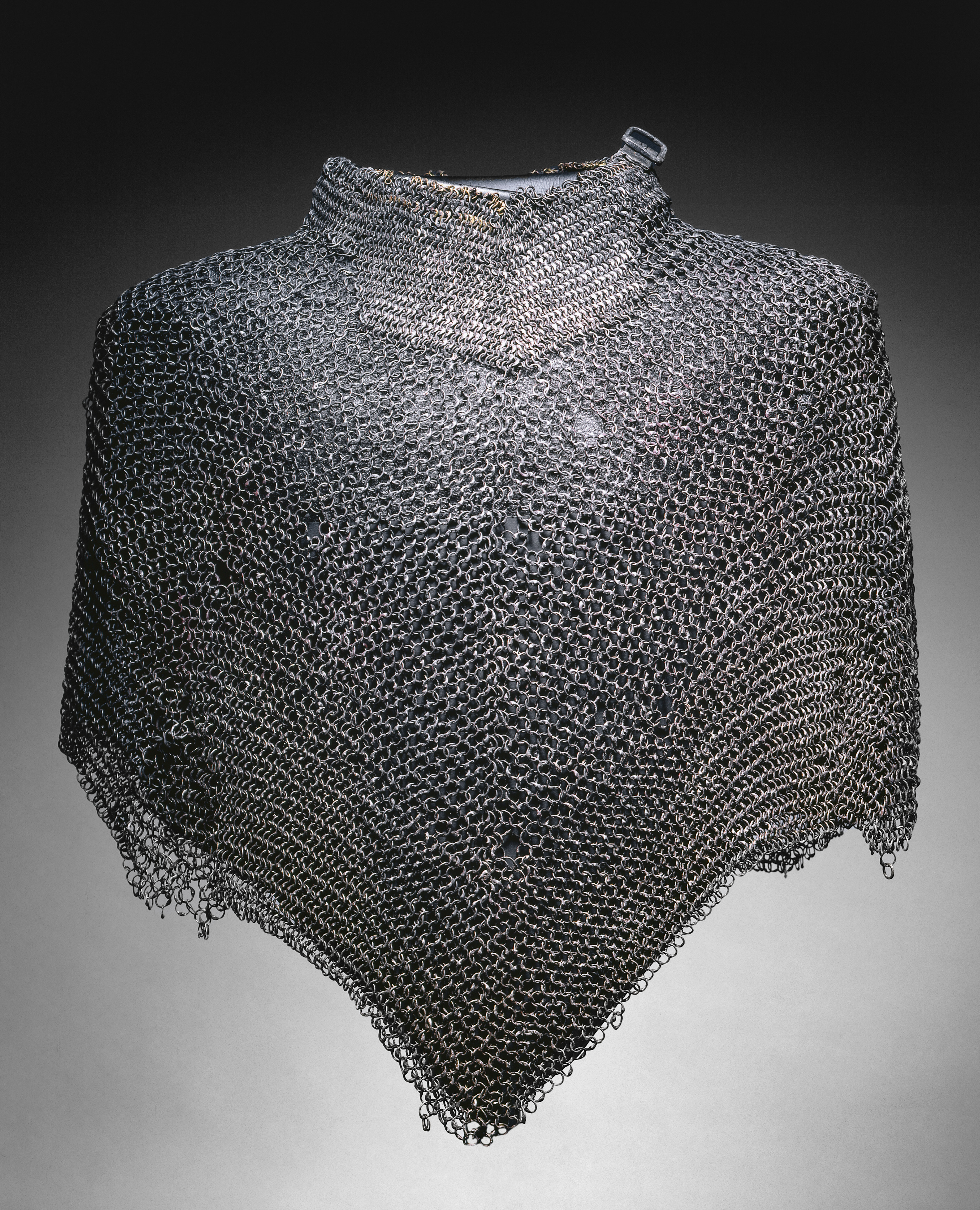
As Chief Fabric Deconstructionist for Zoey Fashion Lab, I am tasked with dissecting not merely the physical components of historical garments, but the very narrative architecture they embody. The subject of this analysis—a Bishop's Mantle (cape) of early 16th-century European origin, likely German or Swiss—presents a unique challenge. Constructed from riveted steel and brass rings with a reinforced collar, this object is far more than a piece of armor. It is a precursor to the avant-garde, a rigid, metallic exoskeleton that anticipates the sculptural, confrontational, and deconstructivist impulses of modern fashion. Our reference point, the "New DNA Strand," compels us to view this artifact not as a relic, but as a living, mutating genetic code that can be spliced, recombined, and reimagined for a contemporary avant-garde sensibility.
I. The Technical Grammar of Rings and Rivets
The Bishop's Mantle is, at its core, a masterpiece of functional engineering disguised as ceremonial dress. Its primary construction material—riveted steel rings—creates a flexible yet impenetrable surface. This is not the fine, interlocking mail of a knight’s hauberk; the rings here are larger, heavier, and more visibly articulated. Each ring is a discrete unit, a single data point in a larger, protective matrix. The riveted closure—a small, hammered pin securing each link—is the fundamental act of assembly. This process is inherently deconstructive in its logic: the whole is entirely dependent on the integrity of its smallest parts. For Zoey Fashion Lab, this suggests a design language of modularity. An avant-garde reinterpretation might replace steel with laser-cut acrylic, carbon fiber, or even recycled PET plastic, maintaining the rivet as a visible, tactile joint. The brass accents, likely used for decorative edging or to denote rank, introduce a chromatic tension—the cold, functional grey of steel against the warm, ceremonial gold of brass. This is a deliberate dissonance, a visual cue that the object operates in two registers: the brutal and the sacred.
II. The Reinforced Collar: A Locus of Power and Constraint
The reinforced collar is the most conceptually significant feature of this garment. Unlike the flexible body of the cape, the collar is a rigid, almost architectural structure. It is designed to protect the neck and shoulders—the most vulnerable and expressive parts of the human form—while simultaneously framing the head. This creates a profound dialectic between protection and imprisonment. The wearer is both shielded and encased. In an avant-garde context, this collar becomes a site of tension. It evokes the clerical collar, the yoke of authority, and the armored gorget of a soldier. To deconstruct this, we would consider its negative space. What if the collar were detached, suspended as a separate sculptural element? What if it were inverted, becoming a base or a pedestal? The reinforced collar is not merely a structural necessity; it is a symbolic fulcrum upon which the entire garment’s meaning pivots. For Zoey, we might experiment with asymmetrical reinforcement—a collar that is heavily armored on one side and completely open on the other, suggesting a fractured identity or a state of becoming.
III. The Cape as a Second Skin: From Armor to Exoskeleton
The Bishop's Mantle functions as a second skin, but one that is entirely inorganic. Unlike fabric, which drapes and conforms to the body, this metal cape creates its own rigid volume. It does not follow the body; the body must conform to it. This is a precursor to the avant-garde concept of the exoskeleton, where clothing becomes a prosthetic, a tool for altering posture, perception, and presence. The weight of the steel rings would have been immense, forcing the wearer into a stiff, deliberate gait. This is not a garment for movement; it is a garment for ceremonial stillness. In a contemporary deconstruction, we would exploit this weight and rigidity. We might segment the cape into overlapping, articulated panels that can be locked into different positions, creating dynamic silhouettes. The rings themselves could be oversized and hollow, reducing weight while amplifying their visual and acoustic presence. The sound of metal against metal—a soft, percussive chime with every step—becomes an integral part of the garment’s sensory language.
IV. The Avant-Garde DNA Strand: Recombination and Mutation
Our reference to the "New DNA Strand" is critical. This Bishop's Mantle is not a finished product; it is a genetic template. The avant-garde designer’s role is to extract, mutate, and recombine its core elements. Consider the following strands of this DNA:
- The Ring Matrix: The repeating pattern of riveted rings can be abstracted into a digital print or a 3D-printed lattice. It can be scaled up to become a net-like overlay or miniaturized into a fine, chainmail-like fabric.
- The Rivet as Motif: The rivet, a symbol of industrial assembly, can be exaggerated and fetishized. Imagine a cape where every joint is a large, polished brass rivet, visible and tactile, like a piece of Brutalist architecture.
- The Collar as Frame: The reinforced collar can be detached and recontextualized. It could become a standalone neckpiece, a headdress, or even a handheld architectural shield. Its rigid geometry could be softened with leather, silk, or transparent polymers.
- The Weight of History: The garment’s historical weight—its association with war, religion, and hierarchy—becomes a conceptual material. An avant-garde piece might deliberately reference this history through symbolic details, such as a single, broken chain or a collar inscribed with deconstructed liturgical text.
V. Conclusion: The Mantle as a Living Artifact
The Bishop's Mantle of the early 16th century is a fossil of a future that never arrived. It is a testament to the human desire to transform the body into a monument, to make the self impervious through artifice. For Zoey Fashion Lab, this artifact is not a museum piece to be replicated, but a catalyst for innovation. By deconstructing its technical grammar—the ring, the rivet, the reinforced collar—we can extract a new vocabulary for avant-garde design. The mantle’s DNA is a strand of hard, metallic protection that, when recombined with contemporary materials and deconstructivist philosophy, yields garments that are both armor and art, cage and crown. The result is a fashion that does not merely clothe the body, but challenges its limits, forcing a dialogue between the human and the architectural, the historical and the futuristic. This is the essence of our work at Zoey Fashion Lab: to unearth the radical potential buried within the past, and to forge it into the avant-garde of tomorrow.