Deconstructing Continuity: The Fragment as Avant-Garde Proposition
In the lexicon of contemporary avant-garde practice, the term Fragment transcends mere artifact status to become a radical methodological framework. For Zoey Fashion Laboratory's SS26 inquiry, "Fragment" is not a relic of a whole but the genesis of a new sartorial logic. Originating from the conceptual "Global Frontier"—a non-place denoting the liminal zone between digital erosion and physical reassembly—this collection interrogates the very ontology of the garment. By deploying the historically laden materiality of bobbin lace through a lens of futuristic structural innovation, the laboratory proposes a couture where dissolution and integrity are not opposites but symbiotic forces. This is a standalone study in the architecture of absence, where the silhouette is not constructed but implied through strategic disintegration.
Material Alchemy: The Subversion of Bobbin Lace
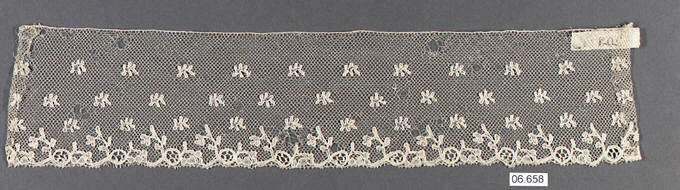
The foundational provocation lies in the deliberate, almost violent, re-contextualization of bobbin lace. Traditionally a symbol of continuity, meticulous craftsmanship, and ornamental wholeness, lace is here subjected to a process of tactical fragmentation. Zoey Fashion Laboratory does not merely cut lace; they engineer its failure points. Through a proprietary technique involving biodegradable stiffening polymers and heat-reactive threads, specific segments of intricate lace are pre-programmed to collapse or rigidify. The result is a material that exists in simultaneous states: the delicate, historic pattern and the deliberate, gaping void. This creates a wearable palimpsest where negative space carries equal compositional weight to the textile itself. The lace is no longer a substrate for decoration but becomes the structural exoskeleton of the garment, its broken tracery acting as load-bearing architecture against the body or floating away from it in cantilevered forms.
Silhouette as Echo: The Futuristic Form-Factor
The SS26 silhouette, emerging from this material thesis, rejects monolithic futurism in favor of what we term holographic morphology. Garments are designed as non-contiguous assemblies, where fragments of lace and engineered voids suggest a complete form that the viewer's perception must actively reconstruct. Key innovations include:
The Cantilevered Cage: Bodices appear as floating lace cartographies, connected to the body by only a few, precise points, with the rest of the form projecting into space, creating a palpable tension between wearer and garment.
Kinetic Fragmentation: Layers of treated lace are programmed to respond to micro-climatic changes (body heat, airflow), causing panels to slowly articulate, revealing or concealing the body in a dynamic performance of disclosure. The silhouette is never static; it is a time-based sculpture.
Volumetric Negative Space: Instead of relying on fabric to create volume, the collection engineers volume through emptiness. Structured voids within lace constructions are highlighted with minimalist titanium wireframes, crafting elliptical and parabolic forms around the body that are more air than substance.
Structural Innovation: The Calculus of Collapse
The technical prowess of this collection is its invisible calculus—the precise engineering that determines where and how a fragment terminates. This is couture as predictive deconstruction. Seam allowances are eliminated; edges are either laser-fused to prevent fraying in a technological echo of a clean break, or deliberately left with conductive threads that trace the fragment's boundary like a schematic diagram. Fastenings are obsolete, replaced by magnetic articulation points and anatomical slings that cradle fragments in a precise, yet seemingly precarious, equilibrium around the body.
Furthermore, the "Global Frontier" origin manifests in hybrid construction techniques. Algorithms used in topographical mapping generate the patterns for fragmentation, ensuring each rupture feels both organic and mathematically inevitable. This creates a powerful dialogue between the hand of the artisan (in the initial lace creation) and the logic of the machine (in its strategic dissolution), a core tenet of the laboratory's frontier philosophy.
Context & Conclusion: The Standalone Study as Manifesto
As a standalone avant-garde study, "Fragment" for SS26 deliberately avoids commercial narrative or thematic dilution. It is a pure, concentrated exploration of one core disruptive principle. Its context is the laboratory itself—a controlled environment for high-risk sartorial experimentation. The significance of this work lies in its rejection of fashion's compulsion towards seamless newness. Instead, it offers a profound commentary on our contemporary reality, where identity, data, and culture are perpetually in states of fragmentation and reassembly.
Zoey Fashion Laboratory, through this collection, posits that the future of couture lies not in building more perfect, impermeable shells, but in mastering the aesthetics and engineering of intelligent decay. The "Fragment" is a complete idea in its incomplete state. It challenges us to find beauty and structure in the interstitial, to see the garment not as an object but as a process—a fleeting, elegant moment of balance between the memory of wholeness and the promise of a new, reconfigured form. This is not fashion as armor, but fashion as evidence of a transformative event, forever captured in its most compelling, unresolved state.