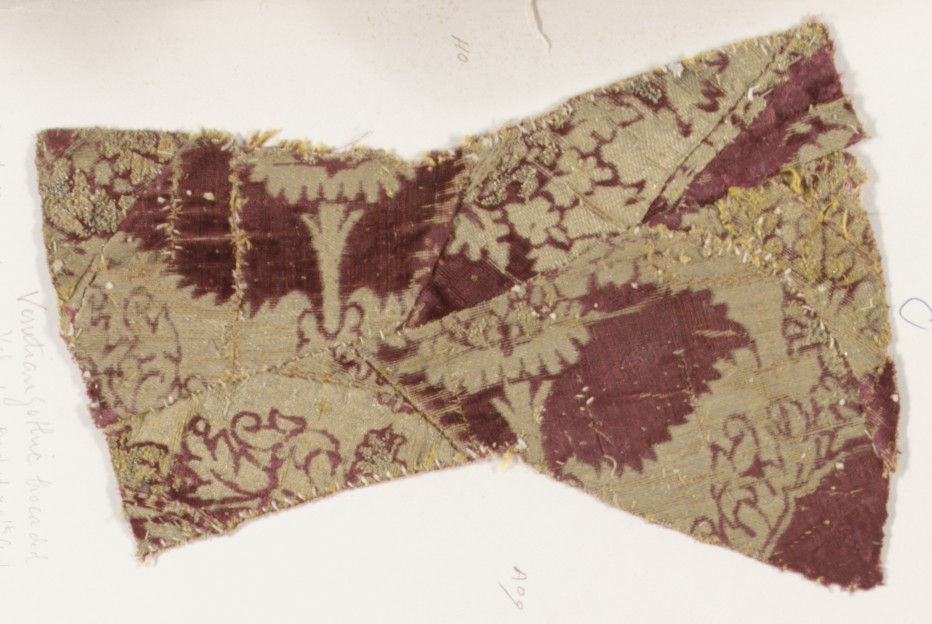
The Fragment as Architectural Genesis: A Deconstructive Lexicon for SS26
The avant-garde imperative for Spring/Summer 2026 demands a radical departure from the seamless, the whole, and the pristine. In this definitive analysis for Zoey Fashion Laboratory, we dissect the Fragment—not as a signifier of incompleteness, but as a foundational unit of structural innovation. Originating from the Global Frontier, a conceptual territory where geography dissolves into a network of material and digital flux, this study repositions the fragment as a deliberate, architectural gesture. The chosen materiality—silk and metal thread—serves as a dialectic between organic fluidity and engineered rigidity, a tension that defines the futuristic silhouettes of the coming season.
Deconstructing the Whole: The Fragment as a Positive Space
Traditional couture has long worshipped the unbroken line, the continuous drape. The SS26 avant-garde analysis, however, posits the fragment as a generative force. We are not speaking of accidental tears or decay; rather, we examine the intentional severance of fabric into discrete, non-contiguous panels. Each fragment is a self-contained volume, a micro-architecture that interacts with the body and the void. The silk—chosen for its luminous, almost liquid surface—is cut into asymmetrical shards. These are not sewn together in a conventional seam; they are suspended, overlapping, or held apart by the metal thread acting as a tensile scaffold. The resulting silhouette is a negative-positive interplay, where the gaps between fragments become as critical as the fabric itself. This is not a garment that covers; it is a garment that defines space through absence.
The structural innovation here is profound. By treating each fragment as an independent panel with its own grain, weight, and drape, we achieve a kinetic asymmetry that defies the static nature of traditional tailoring. The metal thread, interwoven with the silk in a lattice or grid pattern, provides a memory structure—a way to hold the fragment in a predetermined, futuristic shape. Consider a bodice composed of three silk fragments, each angled at 45 degrees to the body, connected only by fine metal thread bridges. The movement of the wearer causes these fragments to shift, creating a constantly evolving silhouette that is both architectural and organic. This is the Global Frontier aesthetic: a garment that is never the same twice, a living assemblage of parts.
Material Dialectics: Silk, Metal, and the Tension of Opposites
The material selection for this standalone avant-garde study is not arbitrary; it is a calculated provocation. Silk, with its historical connotations of luxury, fluidity, and vulnerability, is deliberately juxtaposed against the metal thread—cold, industrial, and unyielding. The silk is treated with a structural finish that allows it to hold a crease or a sharp fold, mimicking the behavior of paper or metal while retaining its soft hand. The metal thread, often used in traditional embroidery, is here repurposed as a functional exoskeleton. It is not merely decorative; it is the load-bearing element that defines the silhouette.
For SS26, we propose a layered fragmentation where the metal thread is used to create a geodesic framework over a silk base. The silk is cut into fragments that are then attached to this framework at specific points, allowing the fabric to billow, drape, or remain taut. This creates a hybrid structure—part fabric, part sculpture. The metal thread also introduces a reflective, almost digital quality to the garment, catching light in a way that suggests circuitry or data streams, reinforcing the Global Frontier origin. The tension between the soft, organic silk and the hard, precise metal thread is the central design thesis: fragility and strength coexisting in a single, fragmented form.
Silhouette as Fragment: The New Body Architecture
The futuristic silhouettes of this analysis reject the monolithic shapes of previous decades. Instead, we advocate for a modular, fragment-based silhouette. The body is not draped or molded; it is intersected by fragments. A typical SS26 composition might feature a skirt composed of multiple silk panels, each suspended from a metal thread waistband at different lengths and angles. The hemline is not a line; it is a fractured horizon. The shoulders are defined by sharp, angular silk fragments that jut outward, supported by a hidden metal thread armature, creating a cybernetic shoulder line that is both aggressive and ethereal.
The structural innovation lies in the articulation of joints. Where a traditional garment would have a continuous sleeve, we introduce a segmented sleeve: three or four silk fragments connected by metal thread hinges, allowing for a range of motion that is both constrained and liberated. The elbow becomes a pivot point for a fragment to rotate, creating a silhouette that changes with every gesture. This is deconstructive couture elevated to a new level of precision—not the deconstruction of a finished garment, but the construction from fragments as the primary act. The result is a body architecture that is perpetually in a state of becoming, a visual representation of the fragment as a positive, generative principle.
Contextualizing the Fragment: A Standalone Avant-Garde Study
This analysis is not a trend report; it is a manifesto for material and structural innovation. The fragment, in the context of Zoey Fashion Laboratory, is a design methodology. It challenges the very notion of a finished garment. In an era of digital fabrication and algorithmic design, the fragment represents a return to the handmade, the deliberate, the artisanal gesture. The silk and metal thread are manipulated with a jeweler’s precision, each fragment a singular, unrepeatable component. The Global Frontier origin speaks to a world where cultural and geographical boundaries are fragmented, yet interconnected. The garment becomes a cartography of fragments, mapping a new territory of form.
The commercial implications are radical. This is not ready-to-wear; it is haute couture as conceptual art. The SS26 collection built on this study would be limited to one-of-a-kind pieces, each a unique assemblage of fragments. The metal thread allows for the possibility of reconfiguration—a garment that can be disassembled and reassembled into a different silhouette, extending its lifecycle and challenging the consumer’s relationship with ownership. The fragment, therefore, is not just an aesthetic choice; it is an ethical and philosophical stance against the waste and homogeneity of mass production.
In conclusion, the Fragment for SS26 is a definitive statement: the future of avant-garde couture lies in the intentional incompleteness of the garment. By leveraging the dialectic of silk and metal thread, and by embracing the fragment as a structural and conceptual unit, Zoey Fashion Laboratory positions itself at the vanguard of a new architectural fashion language. This is not a garment for the passive observer; it is a provocation, a fractured mirror reflecting a world in pieces, yet holding them together with the tensile strength of innovation.