Deconstructing the Hanging Fragment with Boar Head: An Avant-Garde Reading of Textile Power
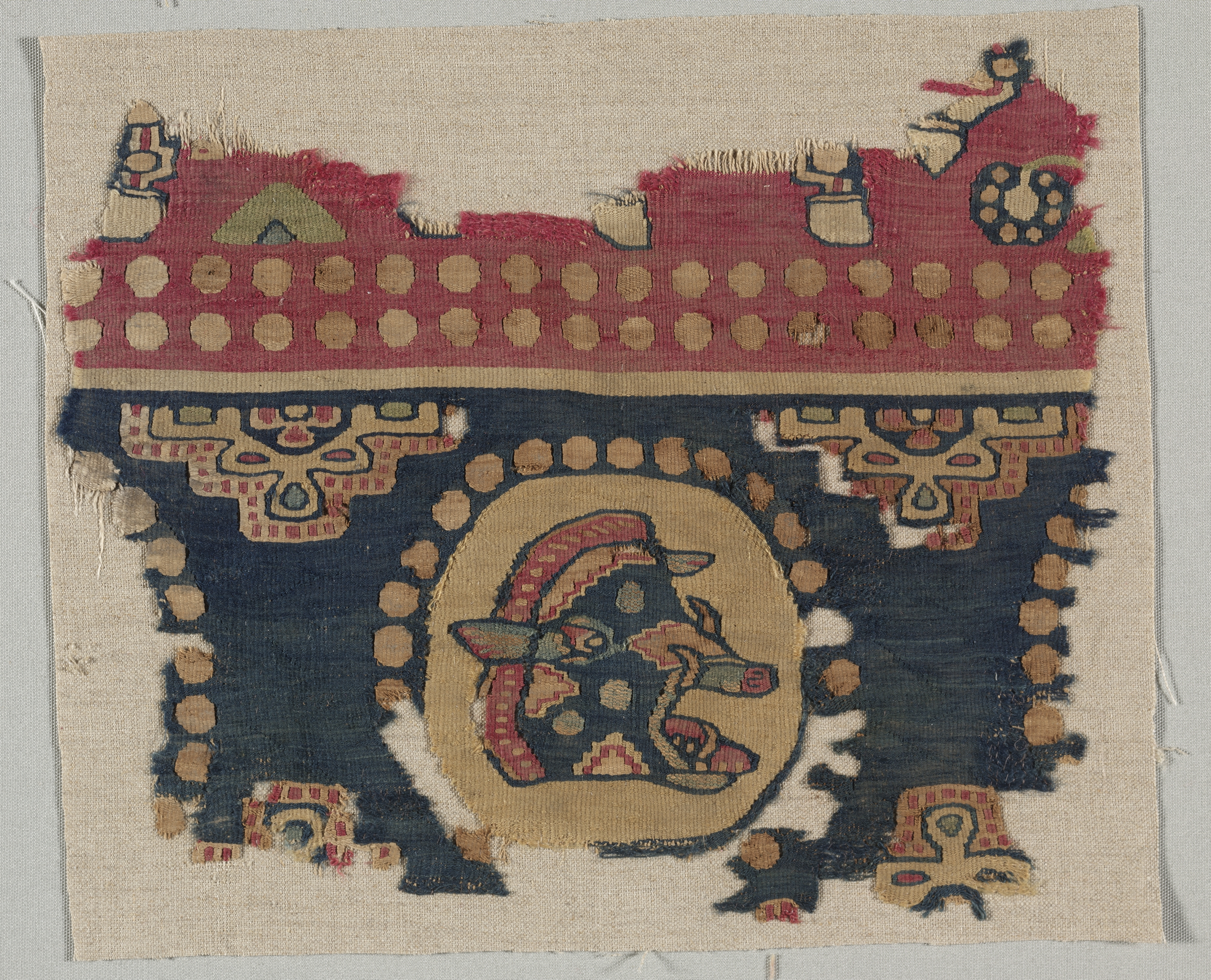
At Zoey Fashion Lab, our mission is to dismantle the conventional narratives embedded within historical textiles, reinterpreting them through an avant-garde lens. The Hanging Fragment with Boar Head, a wool and linen tapestry weave from 16th–17th century Iran, offers a profound case study. To the untrained eye, it is a decorative relic; to the Chief Fabric Deconstructionist, it is a radical document of power, hybridity, and material subversion. This analysis will peel back the layers of this fragment, revealing its resonance with contemporary avant-garde fashion sensibilities—specifically, the deconstruction of form, the collision of cultures, and the raw expression of animalistic energy.
Materiality as Rebellion: Wool, Linen, and the Tapestry Weave
The technical choice of wool and linen in a tapestry weave is not merely functional but ideological. In the 16th–17th century Safavid world, silk was the dominant luxury fiber for courtly textiles, symbolizing refinement and imperial reach. By contrast, wool and linen carry connotations of pastoral life, nomadic practicality, and a certain unpolished authenticity. The avant-garde interpretation seizes upon this: the fragment rejects the polished opulence of silk in favor of a raw, tactile, and almost confrontational materiality. The wool, with its natural lanolin and varying fiber thickness, introduces an irregular texture that resists perfect replication—a hallmark of the handmade that contemporary deconstructionists like Martin Margiela or Rei Kawakubo would celebrate. The linen, with its long, sturdy flax fibers, adds a structural integrity that is both rigid and fluid, allowing the weave to bear the weight of the boar's imagery without succumbing to decorative frippery.
This tapestry weave itself is a technical act of rebellion. Unlike jacquard or printed textiles, tapestry weaving is a slow, labor-intensive process where the weft threads are manually packed to create the design. The fragment's weave reveals deliberate irregularities—slight variations in tension, subtle shifts in color density—that speak to the human hand and its imperfections. For an avant-garde fashion lab, this is a powerful counterpoint to the sterile precision of industrial manufacturing. It suggests that true luxury lies not in flawlessness but in the visible trace of creation, a concept that resonates with the "wabi-sabi" aesthetic and the contemporary emphasis on artisanal craftsmanship.
Iconography of the Boar: Subverting the Courtly Gaze
The central motif—the boar head—is the fragment's most provocative element. In Safavid Iran, the boar was an ambivalent symbol. On one hand, it represented ferocity, courage, and the untamed wilderness, often associated with royal hunting scenes that demonstrated the shah's mastery over nature. On the other, the boar was ritually impure in Islamic tradition, a creature of the wild that defied domestication. The fragment's placement of the boar head within a textile—a medium traditionally associated with domesticity, comfort, and courtly display—creates a violent juxtaposition. The boar is not depicted in a heroic hunting narrative but isolated, almost as a trophy, its head severed and presented as a fragment within a fragment.
From an avant-garde perspective, this isolation is a radical act of decontextualization. The boar head becomes a symbolic weapon against the decorative. It refuses to be absorbed into a harmonious pattern; instead, it asserts its primal energy, its tusks and bristled snout rendered in stark, contrasting colors. The weaver's choice to emphasize the boar's aggressive features—the sharp tusks, the small, intense eye, the rough texture of the hide—suggests a deliberate challenge to the viewer. This is not a passive ornament but an active statement of power, one that aligns with the avant-garde tradition of using animal motifs to critique human vanity and societal constructs. Think of Alexander McQueen's "Plato's Atlantis" collection, where reptilian and avian forms evoked both primal fear and futuristic evolution. The boar head, similarly, bridges the ancient and the contemporary, the wild and the constructed.
Archive Resonance: Cultural Collision and the Fragmented Self
The Archive Resonance of this fragment, as described in the brief, references the 16th–17th century as a period of intense cultural exchange. Iran was at the crossroads of the Silk Road, absorbing influences from China, Central Asia, and Europe. The tapestry weave itself, while indigenous to Iran, shows echoes of Chinese cloud-collar motifs and European heraldic devices in the surrounding geometric and floral patterns. Yet the fragment's avant-garde reading insists on the fragmentation of this cultural synthesis. The boar head is not seamlessly integrated into a globalized design; it remains a jarring, isolated element. This mirrors the contemporary experience of identity in a globalized world—a patchwork of influences that can never be fully reconciled.
The phrase "fragment with boar head" is crucial. It is not a complete textile but a surviving piece, torn from its original context. This physical fragmentation becomes a metaphor for the deconstruction of historical narrative. We cannot know the full tapestry; we only have this remnant, which forces us to imagine the missing parts. In avant-garde fashion, this is the essence of deconstruction: garments are intentionally unfinished, seams are left raw, hems are frayed. The fragment's torn edges, preserved but not repaired, become a design feature. They invite the viewer to question what is lost and what is retained, to consider the violence of history and the resilience of material culture.
Avant-Garde Applications: From Archive to Runway
For Zoey Fashion Lab, this fragment is not a museum piece to be revered but a catalyst for new creation. The boar head's aggressive silhouette can be translated into oversized, sculptural shoulder pads or helmet-like headpieces, evoking both ancient armor and futuristic warfare. The wool and linen weave can be reimagined as a textural base for deconstructed garments—jackets with exposed warp threads, skirts with intentionally uneven hems, dresses that incorporate raw, unspun wool as a deliberate contrast to polished silk linings. The color palette—muted earth tones punctuated by the boar's dark browns and whites—can inform a collection that is both grounded and provocative.
Furthermore, the fragment's narrative of power and subversion can inspire a runway presentation that challenges traditional fashion hierarchies. Models could wear the boar motif as a mask or a handheld object, transforming the garment into a performative artifact. The show could include a deconstructed reenactment of a Safavid hunting scene, with the boar head as the central, disruptive element. The goal is not to replicate the past but to activate its latent radicalism, to let the boar's wild energy break through the constraints of conventional beauty.
Conclusion: The Fragment as a Manifesto
The Hanging Fragment with Boar Head is more than a historical curiosity; it is a manifesto in textile form. Its materiality rejects luxury in favor of raw authenticity. Its iconography subverts courtly decorum with primal aggression. Its fragmentation celebrates the incomplete as a site of creative potential. For Zoey Fashion Lab, this fragment validates our avant-garde approach: that true innovation arises from deconstructing the past, not preserving it. By embracing the boar's untamed spirit and the weaver's imperfect hand, we can forge a fashion that is both deeply rooted in history and radically new. The fragment hangs not as a relic but as a challenge—to see the wild within the woven, the power within the fragment, and the future within the past.