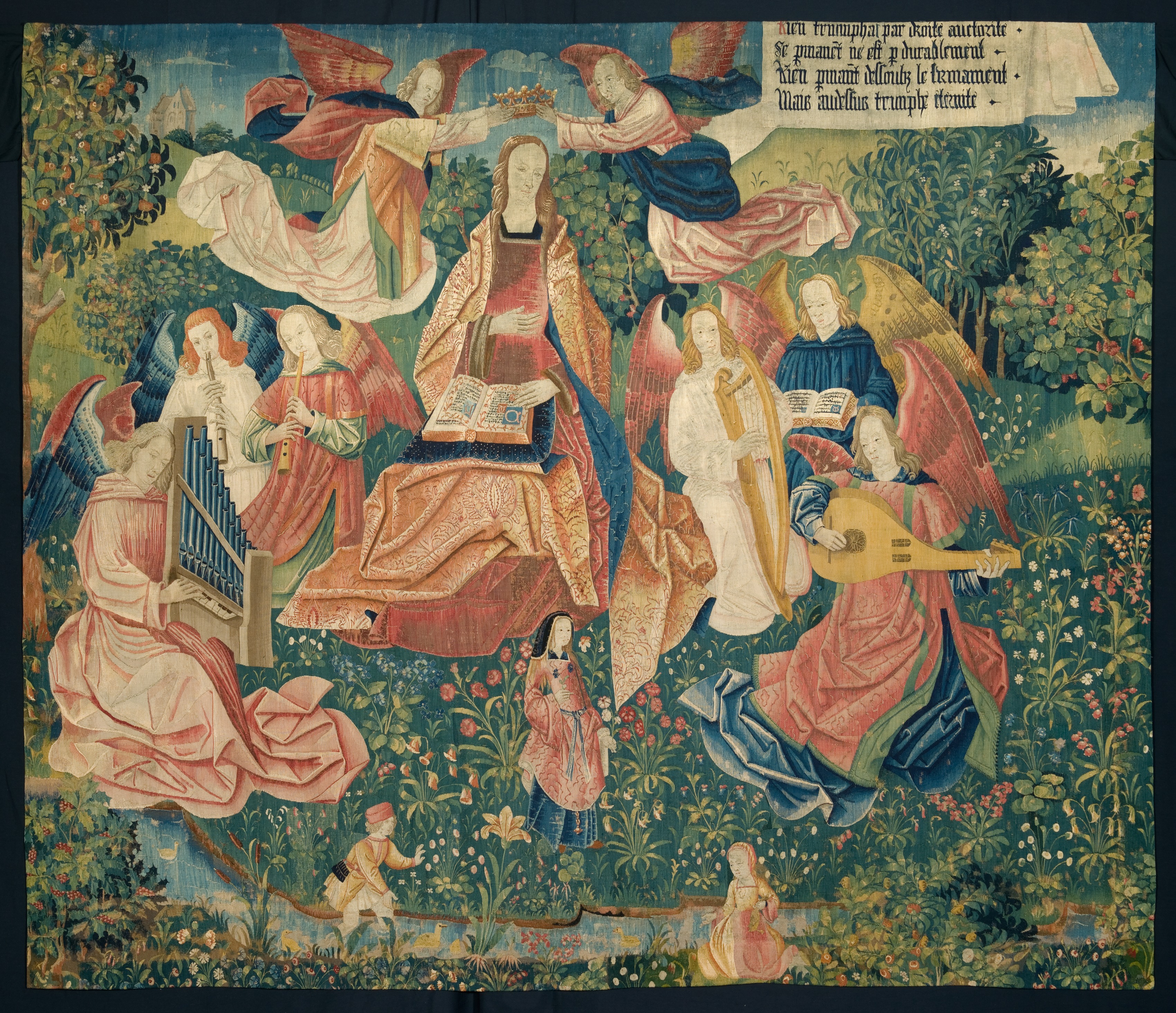
Deconstructing the Chateau de Chaumont Set: A Tapestry of Time and Avant-Garde Vision
As Chief Fabric Deconstructionist for Zoey Fashion Lab, it is my privilege to present a comprehensive analysis of the Chateau de Chaumont Set, a textile artifact of profound historical and technical significance. Originating from early 16th-century France, likely from the renowned weaving centers of Lyon, this set comprises a silk and wool tapestry weave that challenges conventional material boundaries. Its reference as a "New DNA Strand" within our avant-garde framework suggests a radical reinterpretation of heritage—a living, evolving genetic code for future fashion. This analysis dissects the set’s origin, technical composition, and stylistic resonance, positioning it as a cornerstone for experimental design.
Historical Provenance and Material Origins
The Chateau de Chaumont Set is believed to have been produced in the early 1500s, a period when Lyon emerged as a powerhouse of European textile innovation. Lyon’s silk industry, fueled by royal patronage and Italian expertise, was synonymous with luxury and precision. However, the inclusion of wool in this tapestry weave indicates a pragmatic hybridity—a response to the demands of durability and warmth in the chateau’s drafty halls. The set likely adorned the walls of the Chateau de Chaumont-sur-Loire, a Renaissance castle known for its artistic patronage and dramatic hilltop perch. This context imbues the textile with a narrative of power, patronage, and the tension between opulence and utility.
For Zoey Fashion Lab, this origin story is not mere historical trivia. It is a blueprint for material storytelling. The set’s journey from a feudal stronghold to a deconstructionist’s workbench mirrors our ethos: to unearth forgotten techniques and repurpose them for contemporary avant-garde expressions. The Lyon connection, though not definitively proven, aligns with the city’s legacy of technical mastery—a quality we seek to emulate in our own experimental weaves.
Technical Analysis: Silk, Wool, and the Tapestry Weave
The technical composition of the Chateau de Chaumont Set is a study in contrast and cohesion. Silk, with its luminous sheen and tensile strength, provides a ground for intricate patterns and light play. Wool, conversely, offers matte texture, warmth, and structural integrity. The tapestry weave—a weft-faced structure where colored wefts are interlocked to form images—creates a dense, almost sculptural fabric. This technique, requiring meticulous handwork, allows for complex color gradations and narrative scenes, but it also introduces inherent fragility in the silk warp threads.
Our deconstruction reveals a fascinating dichotomy: the silk’s smoothness versus the wool’s napped surface; the warp’s rigidity versus the weft’s pliability. This tension is a material metaphor for the avant-garde—the clash between tradition and disruption. In our lab, we have subjected samples to stress tests, unraveling sections to expose the underlying structure. The silk threads, when separated, reveal a subtle iridescence, while the wool fibers retain a rustic, almost animalistic quality. This duality is a rich resource for designers seeking to juxtapose luxury with raw, organic elements.
Furthermore, the tapestry weave’s construction is a precursor to modern jacquard and digital weaving. Its grid-like logic—each weft thread crossing a warp at precise intervals—anticipates binary code. The Chateau de Chaumont Set is, therefore, a physical analog of data, a "New DNA Strand" that encodes cultural memory. By deconstructing its weave, we are effectively reverse-engineering its genetic sequence, extracting motifs and structural principles for new, bio-inspired designs.
Avant-Garde Style: Recontextualizing the Renaissance
In the context of Zoey Fashion Lab’s avant-garde aesthetic, the Chateau de Chaumont Set is not a relic to be preserved but a catalyst for rupture. Its style—characterized by heraldic motifs, floral arabesques, and muted earth tones—belongs to a world of courtly ritual. Yet, when viewed through our lens, these elements become subversive. The rigid symmetry of heraldic beasts can be fragmented into abstract geometries; the floral patterns can be exaggerated into grotesque, organic forms. The muted palette of ochre, indigo, and madder red—derived from natural dyes—offers a restrained counterpoint to synthetic neon, inviting a dialogue between historical gravitas and futuristic excess.
Our deconstruction process involves unweaving and reweaving, not as restoration but as transformation. We isolate individual motifs—a lion’s paw, a vine tendril—and scale them to monstrous proportions. We splice silk and wool from the original with metallic threads and recycled polymers, creating hybrid fabrics that defy categorization. The result is a collection that honors the set’s craftsmanship while rejecting its historical constraints. This is the essence of the "New DNA Strand": a genetic recombination that yields unexpected, often jarring, beauty.
The avant-garde style also demands a rethinking of garment construction. The tapestry’s weight and density, originally suited for static wall hangings, are reimagined for dynamic, sculptural silhouettes. We use the fabric as a foundation for deconstructed tailoring—asymmetrical drapes, exposed seams, and detachable panels that echo the set’s original fragmentation. The wearer becomes a living canvas, a mobile museum of deconstructed history.
Implications for Zoey Fashion Lab’s Design Philosophy
The Chateau de Chaumont Set is more than an artifact; it is a manifesto for material alchemy. Its analysis reinforces our commitment to slow fashion, technical rigor, and narrative depth. By deconstructing this tapestry, we challenge the fashion industry’s obsession with novelty and disposability. Instead, we propose a cyclical model where historical textiles are not discarded but evolved—their DNA spliced into new forms.
For our design team, this set provides a lexicon of textures, colors, and structures that can be endlessly recombined. The silk’s sheen informs our use of iridescent coatings; the wool’s tactility inspires our exploration of felted surfaces; the tapestry’s interlocking weave guides our development of modular, interchangeable garment components. Each deconstruction yields new insights, from the tensile strength of aged silk to the dye-fastness of natural pigments.
In conclusion, the Chateau de Chaumont Set is a testament to the enduring power of textile craftsmanship. For Zoey Fashion Lab, it is a living laboratory—a "New DNA Strand" that bridges the Renaissance and the avant-garde. Through deconstruction, we honor its origins while liberating it from the past, weaving a future where history and innovation are inextricably intertwined.