The Armchair as Architectural Silhouette: A Deconstructive Blueprint for SS26
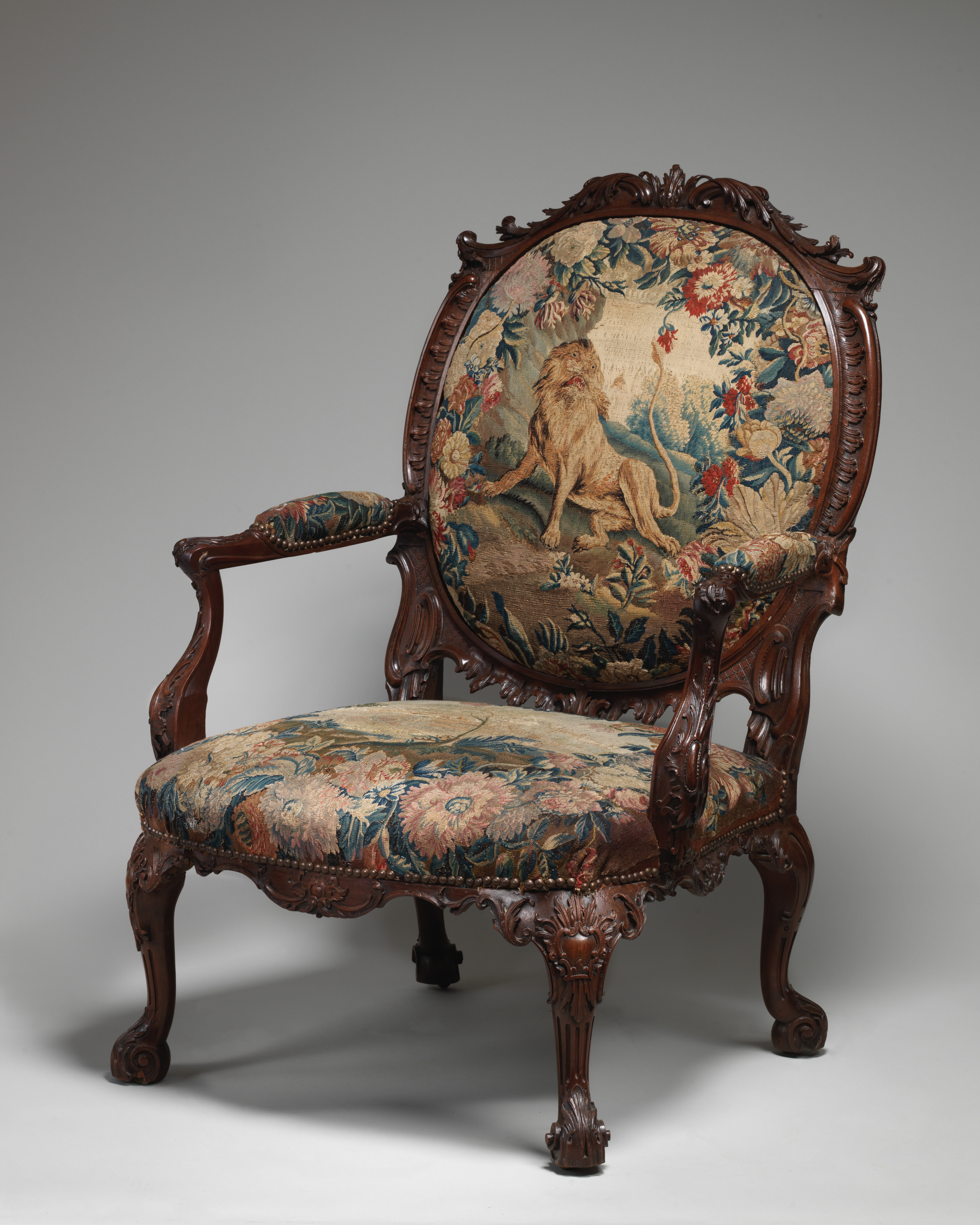
The armchair, in its quotidian ubiquity, has long been a passive vessel for the human form. Yet within the Global Frontier of Zoey Fashion Laboratory’s SS26 vision, this object is transmuted into a radical, active protagonist. It is not merely a seat, but a generative matrix—a structural archetype that demands a complete rethinking of garment architecture. This analysis dissects the armchair as a standalone avant-garde study, focusing on its futuristic silhouettes and material innovations, specifically through the lens of its mahogany frame and the luxurious, precisely engineered wool and silk textile (18-21 warps per inch, 7-9 per centimeter). We are not designing clothing for the armchair; we are designing clothing as the armchair.
Deconstructing the Frame: Mahogany as Structural Metaphor
The mahogany skeleton of the armchair is not a passive support system; it is a manifesto for rigid, yet fluid, architectural lines. In the context of SS26, this translates into a futuristic silhouette that rejects the soft, draping norm. The armchair’s armrests become exaggerated, cantilevered shoulder structures—a prosthetic extension of the human torso. Imagine a jacket where the sleeves are not attached, but rather emerge from a central, carved mahogany-like structural core. The grain of the wood, with its natural, undulating lines, informs the garment’s seams: not as simple joins, but as topographical contours that map the body’s relationship to space. The silhouette is not organic; it is geometric, angular, and defiantly static, yet it must move. This paradox is resolved through the textile.
The Textile Paradox: Rigidity Woven into Flow
The specified textile—wool and silk at 18-21 warps per inch (7-9 per centimeter)—is the laboratory’s most critical innovation. This is not a fabric for comfort; it is a tensile membrane. The warp count is deliberately high, creating a dense, almost armor-like surface that mimics the tight grain of the mahogany. Yet the silk weft introduces a latent, kinetic fluidity. The garment’s silhouette, therefore, is a paradox of stasis and motion. When the wearer stands, the fabric holds the form of the armchair’s backrest—a rigid, upright panel. When the wearer moves, the silk allows for a subtle, controlled collapse, like the slow settling of a cushion. This is structural innovation born from the tension between material and form. The fabric does not drape; it articulates. Each warp thread is a line of architectural intent, each weft thread a moment of potential release.
Futuristic Silhouettes: The Vestigial Seat
The core silhouette for SS26 is the Vestigial Seat. It is a garment that incorporates the armchair’s fundamental geometry—the seat, the back, the armrests—as vestigial, non-functional elements. Consider a coat where the lower back is extended into a rigid, horizontal shelf, reminiscent of the seat cushion. This shelf is not for sitting; it is a platform for a deconstructed narrative. It can be folded up to form a collar, or left to project outward, creating a dramatic, architectural overhang. The armrests are reimagined as detachable, sculpted sleeves that can be worn as separate, kinetic accessories. The entire garment is a modular system, a direct translation of the armchair’s component parts into wearable, futuristic architecture. The silhouette is intentionally disjointed, a collage of structural fragments that challenges the viewer to reassemble the original object in their mind.
Structural Innovation: The Mahogany-Membrane Joint
The most profound innovation lies in the joinery between the imagined mahogany forms and the textile membrane. Traditional tailoring relies on seams and darts. Here, we propose a magnetic and tension-based system. The mahogany-like structural elements (created via molded, rigid resin or 3D-printed bio-composite) are not sewn to the fabric. Instead, they are held in place by a series of internal, high-tension cables woven into the textile’s warp structure. This creates a floating, suspended effect. The armchair’s armrest, for example, appears to hover mid-air, tethered to the garment’s torso by invisible lines of force. This is a futuristic silhouette that defies gravity and traditional garment construction. The wearer becomes a living, kinetic sculpture, with the structural components shifting and re-settling with every movement. The high warp density ensures that the fabric can withstand this tension without tearing, creating a dynamic, load-bearing textile.
Global Frontier Context: The Armchair as Cultural Artifact
Within the Global Frontier, the armchair is not a domestic object; it is a symbol of suspended power. It represents a moment of rest within a hyper-mobile, digital world. The SS26 collection appropriates this symbol, but subverts it. The garment does not offer comfort; it offers disruption. The wearer cannot sit comfortably in a coat that has a rigid, projecting seat shelf. They are forced to stand, to occupy space, to become an active monument. This is the ultimate avant-garde statement: fashion as a critique of passivity. The mahogany and wool-silk textile are not chosen for their luxury, but for their ability to convey a dialectic between the natural and the engineered. The wood grain speaks to a pre-industrial craft, while the high-tech warp count speaks to a future of precision and control. The garment is a temporal paradox, a fusion of the antique and the speculative.
Conclusion: The Armchair as a Living System
For SS26, the armchair is not a reference; it is a generative algorithm. Its silhouette is not imitated but extrapolated into a new, wearable language. The material—wool and silk at 18-21 warps per inch—is not a fabric but a tensile architecture. The mahogany is not a material but a structural philosophy. The final garment is not clothing; it is a habitable sculpture that redefines the relationship between the body, the object, and the space it occupies. This is the definitive avant-garde study for a future where fashion and furniture are no longer distinct disciplines, but interchangeable, deconstructive systems of form and function. The armchair has been liberated from its function. It is now a futuristic silhouette for a new frontier of human expression.