The Deconstructive Dialectic: The Cane as Structural Fulcrum in SS26 Avant-Garde Couture
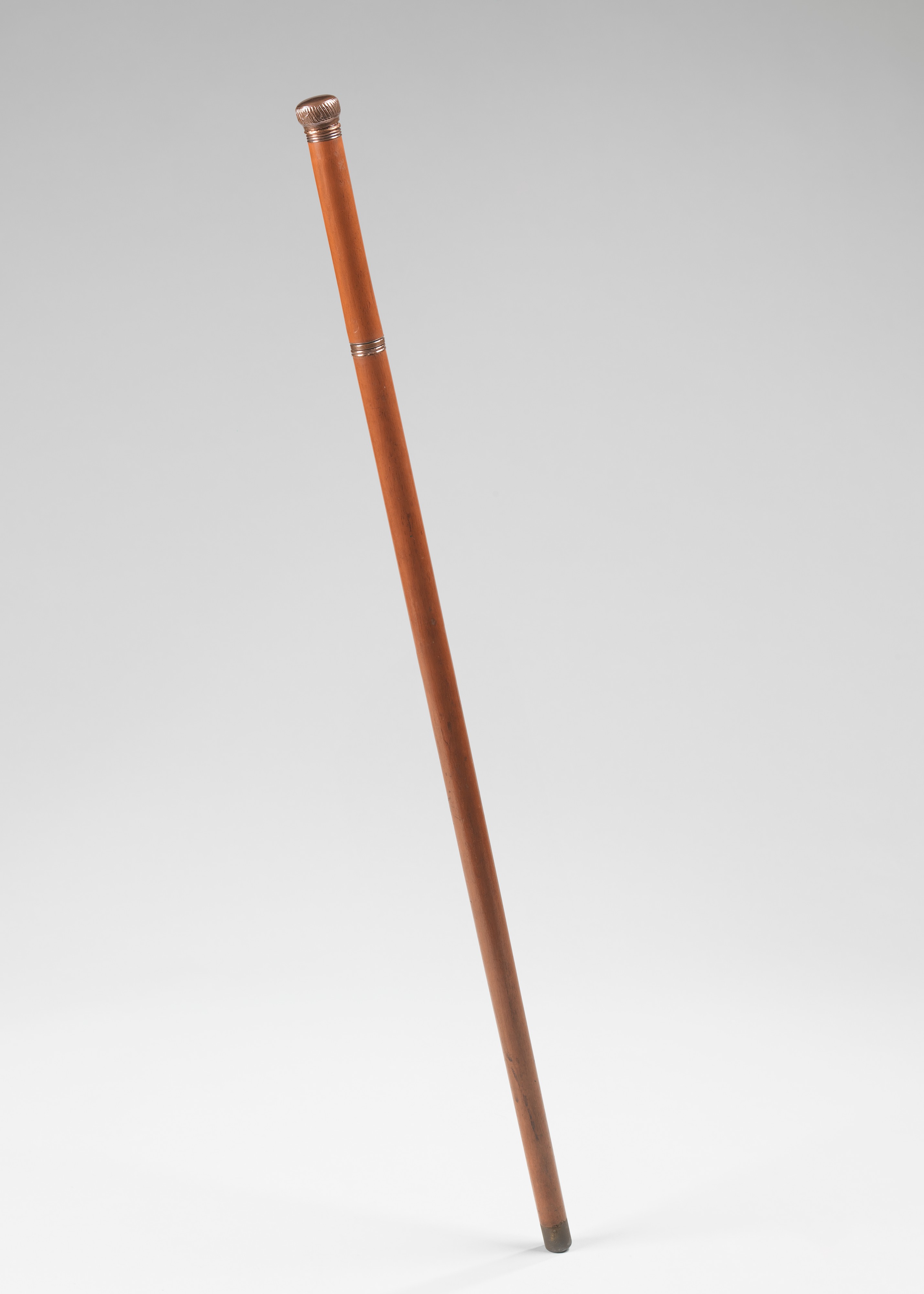
In the relentless pursuit of architectural garment innovation, the cane—a seemingly archaic implement of support and authority—emerges as a central protagonist in Zoey Fashion Laboratory’s SS26 avant-garde analysis. This study transcends the cane’s traditional role as a mere walking aid, reimagining it as a dynamic, load-bearing structural fulcrum within futuristic silhouettes. Rooted in American industrial pragmatism and elevated through the alchemy of wood, metal, and glass, the cane becomes a catalyst for deconstructive aesthetics that challenge the very physics of wearability. Here, the body is no longer a passive vessel but a kinetic partner in a sculptural dialogue, where every gesture redefines the garment’s form.
Material Alchemy: Wood, Metal, and Glass as Structural Lexicon
The tripartite materiality of the cane—wood, metal, and glass—is not arbitrary but a deliberate orchestration of tensile strength, malleability, and fragility. The American origin of this cane, likely sourced from Appalachian ash or Pacific Northwest maple, provides a warm, organic counterpoint to the cold precision of stainless steel or aluminum. The wood’s grain, when preserved in its raw state, offers a tactile memory of the natural world, while its structural integrity—when carved into articulated joints—enables radical angular bends that mimic the human skeleton’s own fulcrums. Metal, in this context, is not merely a reinforcement but a conductor of tension; thin rods of brushed steel can be woven into the wood’s core, creating a hybrid exoskeleton that allows the cane to double as a cantilever for drapery. Glass, the most audacious element, is employed as a transparent, brittle lattice that catches and refracts light, transforming the cane into a prismatic device. When fused with wood via epoxy or metal rivets, glass inserts create zones of optical illusion, making the cane appear to float or fracture. This material trio is not decorative; it is a functional lexicon for constructing garments that defy gravity, where the cane serves as both spine and shadow.
Futuristic Silhouettes: The Cane as Kinetic Armature
The SS26 silhouette is defined by what we term “kinetic armature”—a system where the cane is integrated into the garment’s infrastructure, not as an accessory but as a primary structural component. Imagine a deconstructed blazer where the cane replaces the traditional shoulder pad, curving upward to create a dramatic, asymmetrical peak that rises six inches above the natural shoulder line. The wood’s rigidity supports a cascade of laser-cut wool panels, while metal hinges at the elbow allow the wearer to adjust the angle, transforming the profile from a sharp, angular hawk to a sweeping, wing-like arc. In a futuristic dress, the cane becomes a vertical spine, running from the nape of the neck to the mid-thigh, with glass inlays that catch ambient light and project spectral patterns onto the fabric. The dress’s skirt is not sewn but suspended from this spine via micro-tension cables, creating a floating, weightless silhouette that moves with the body’s breath. For a jumpsuit, the cane is bifurcated into two parallel rods that trace the ribcage, then flare outward at the hips into a structural crinoline of metal and glass. This is not mere ornamentation; it is a reimagining of the garment’s relationship to the body, where the cane dictates the negative space, the volume, and the dynamic tension of each piece.
Structural Innovation: The Cane as a Deconstructive Joint
Deconstruction in avant-garde couture often relies on exposing seams, raw edges, and deliberate asymmetry. The cane elevates this practice by functioning as a deconstructive joint—a point where the garment’s internal logic is both revealed and reconfigured. Consider a coat where the cane replaces the traditional seam at the shoulder, with the wood’s end carved into a ball-and-socket joint that allows the sleeve to rotate 360 degrees. This is not a design gimmick; it redefines the armhole as a kinetic zone, enabling the wearer to fold the sleeve across the chest or extend it backward as a counterbalance. In a skirt, the cane is segmented into three interlocking metal and glass sections, each connected by a pivot joint that allows the hemline to be raised or lowered by the wearer’s hand gestures. The glass segments, when aligned, create a transparent window that reveals the inner lining—a deliberate violation of the garment’s privacy. This structural innovation challenges the notion of permanence in fashion; the cane’s joints make the garment mutable, a living sculpture that adapts to the environment and the wearer’s intent.
The American Pragmatic Aesthetic: Function as Provocation
The American origin of this cane infuses the analysis with a distinct pragmatic ethos—a rejection of European romanticism in favor of industrial functionality. In Zoey Fashion Laboratory’s SS26 study, the cane is not a decorative scepter but a tool for problem-solving. The wood’s grain is left unvarnished, its surface scarred with tool marks, while the metal is deliberately oxidized to a matte gunmetal gray. The glass is not polished to perfection but left with slight bubbles and inclusions, celebrating the imperfections of the manufacturing process. This aesthetic is a provocation: it asks why fashion must always be pristine. The cane’s wear is a narrative of use, a record of the body’s interaction with the garment. For example, a cane-integrated harness for a top features a wooden rod that bears the imprint of the wearer’s grip—a tactile memory embedded in the design. This is not a trend but a philosophical stance: the garment is not a finished object but a continuous process of becoming, where the cane’s materiality and the wearer’s actions co-author the final form.
Conclusion: The Cane as a Portal to Post-Human Silhouettes
In this avant-garde study for SS26, the cane transcends its utilitarian origins to become a portal for post-human silhouettes—silhouettes that are not merely worn but inhabited, manipulated, and deconstructed in real time. The wood, metal, and glass triad offers a material vocabulary that is both ancient and futuristic, grounding the garment in tactile reality while propelling it into a realm of kinetic possibility. The cane’s structural innovations—its joints, its cantilevers, its optical effects—redefine the garment as an architecture of movement, where the body is both occupant and architect. For Zoey Fashion Laboratory, this analysis is not a conclusion but a catalyst: the cane is a starting point for a new dialogue between the human form and the built environment, a dialogue that will continue to evolve with each SS26 collection. The future of avant-garde couture is not in fabric alone but in the objects we choose to reanimate, deconstruct, and reinvent.