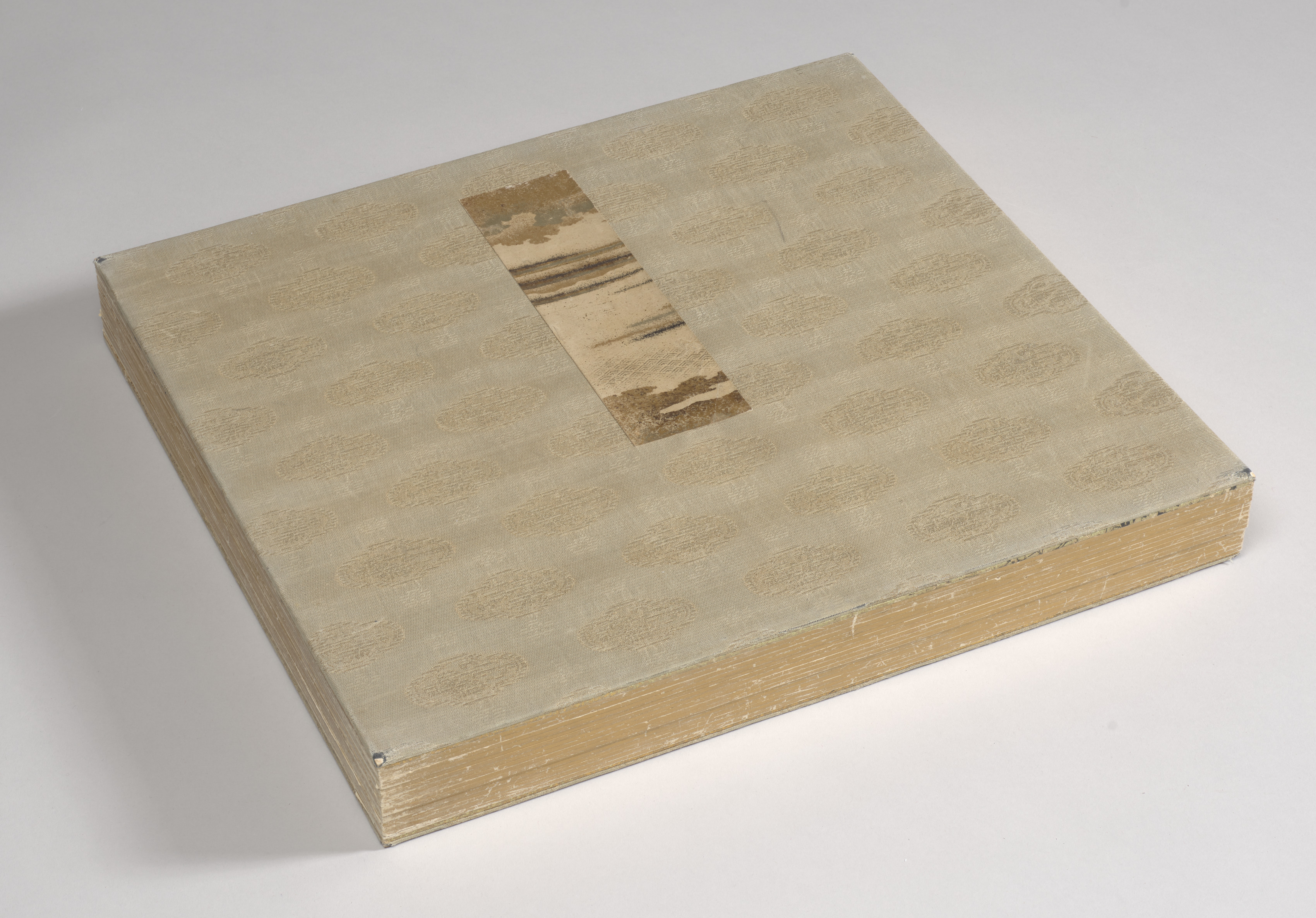
Deconstructing the Tang-Nara Silk Album: A New DNA Strand for Avant-Garde Fashion
At Zoey Fashion Lab, we approach historical artifacts not as relics to be preserved in amber, but as living blueprints for radical innovation. The subject of this analysis—an album of textile samples, likely originating from either China’s Tang dynasty (618–907) or Japan’s Nara period (710–794), crafted from silk—represents a pivotal moment in the evolution of textile art. Its technical execution and aesthetic principles, when viewed through the lens of our New DNA Strand methodology, offer profound insights for avant-garde fashion design. This album is not merely a collection of fabrics; it is a genetic code waiting to be re-expressed.
Historical and Technical Context: The Silk Road as a Genetic Pool
The Tang dynasty and Nara period were eras of unprecedented cultural exchange, primarily along the Silk Road. Silk, the medium of this album, was more than a luxury fiber; it was a conduit for ideas, techniques, and iconography. The Tang dynasty, in particular, was a golden age of textile production, known for its intricate weaves, vibrant dyes (including madder, indigo, and safflower), and complex patterns such as duan (satin) and jin (brocade). Japan’s Nara period, deeply influenced by Tang culture through diplomatic missions, developed its own sophisticated silk weaving, often incorporating Buddhist motifs and naturalistic forms.
Technically, the album’s silk samples likely exhibit a range of structures: plain weave, twill, and possibly compound weaves like samite or lampas. The use of multiple warp and weft threads allowed for intricate color interplay and raised patterns. Dyeing techniques, such as resist-dyeing (shibori precursors) and painting with mineral pigments, added layers of texture and narrative. These methods were not merely decorative; they encoded cultural values—symmetry, harmony, and the cyclical nature of life—into the very fabric.
For Zoey Fashion Lab, these technical choices are not historical curiosities but raw material for deconstruction. The album’s silk is a testament to the mastery of structure and surface, a dialogue between thread and dye that we can disrupt and reimagine.
Avant-Garde Reinterpretation: The New DNA Strand in Practice
Our New DNA Strand framework treats historical artifacts as genetic sequences to be spliced, mutated, and recombined. The Tang-Nara silk album offers three key genetic markers for avant-garde fashion: structural complexity, narrative layering, and material transience.
Structural Complexity: The album’s weaves, with their interplay of warp and weft, suggest a grid-like logic that can be subverted. In avant-garde design, we can extract the underlying weave patterns—such as the twill’s diagonal lines or the satin’s float threads—and translate them into three-dimensional forms. For instance, a dress could mimic the album’s compound weave by incorporating laser-cut silk panels that overlap and shift, creating a dynamic, sculptural silhouette. The structural logic becomes a blueprint for modular construction, where each seam is a “thread” in a larger fabric system.
Narrative Layering: The album’s motifs—likely phoenixes, lotus blossoms, or geometric abstractions—are not mere decoration but carriers of symbolic meaning. In an avant-garde context, these motifs can be decontextualized and re-coded. A lotus, symbolizing purity and rebirth, might be deconstructed into fragmented, abstract forms that suggest decay or transformation. Alternatively, the album’s narrative can be inverted: instead of harmonious patterns, we introduce deliberate asymmetry, tearing, or digital distortion. This creates a dialogue between the original’s order and the contemporary’s chaos, reflecting the fragmented nature of modern identity.
Material Transience: Silk, as a natural protein fiber, is inherently fragile and susceptible to aging. The album’s samples, preserved for centuries, embody a tension between permanence and decay. For Zoey Fashion Lab, this transience is a design feature. We can use techniques like bio-degradation—embedding enzymes or bacteria into the silk that slowly break down the fabric over time—or light-sensitive dyes that fade with exposure, making the garment a living, evolving entity. This challenges the notion of fashion as static, positioning it instead as a temporal art form.
Deconstruction as a Creative Act: From Album to Garment
The album’s format—a bound collection of samples—itself inspires new design processes. Each page can be seen as a “scene” in a fashion narrative. We can deconstruct the album by isolating individual samples, then reassembling them in non-linear sequences. For example, a jacket might feature panels from different pages, arranged to create a disjointed, cubist effect. The binding—stitching, glue, or paper—can be replaced with modern fasteners like magnets or zippers, allowing the wearer to reconfigure the garment.
Furthermore, the album’s origin in the Tang or Nara period introduces a cross-cultural tension that avant-garde fashion thrives on. The Silk Road was a network of exchange, but also of appropriation and adaptation. In our designs, we can highlight this by combining Tang-style brocade with Nara-inspired dye techniques, then juxtaposing them with industrial materials like neoprene or recycled polyester. This creates a hybrid aesthetic that honors the original while critiquing cultural commodification.
Zoey Fashion Lab’s Signature: The Album as a Prototype
For Zoey Fashion Lab, this analysis is not an end but a beginning. The album of textile samples becomes a prototype for a new collection—one that deconstructs historical techniques to build future-oriented forms. We envision a series of garments that function as “wearable albums”: each piece contains multiple layers, pockets, or detachable elements that reference the original’s sample pages. The silk is treated with smart textiles—such as conductive threads that change color with touch or temperature—blending ancient craft with digital interactivity.
In conclusion, the Tang-Nara silk album is a New DNA Strand for avant-garde fashion. Its technical mastery, narrative depth, and material vulnerability offer a rich vocabulary for deconstruction. By splicing its genetic code with contemporary methods—digital fabrication, bio-design, and modular construction—Zoey Fashion Lab can create garments that are not only visually striking but conceptually profound. This album is not a historical artifact; it is a catalyst for the future of fashion, where the past is not preserved but perpetually reborn.