The Ring as a Fractured Archive: Deconstructing Javanese Gold for SS26
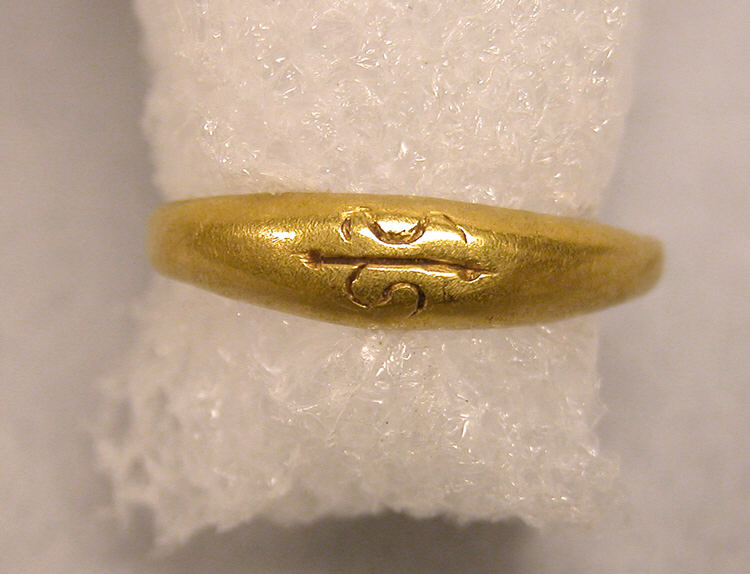
The Central Javanese engraved gold ring, in its traditional context, is a testament to meticulous craftsmanship—a micro-architecture of devotion, status, and narrative. Yet, within the crucible of Zoey Fashion Laboratory’s SS26 collection, this artifact undergoes a radical transmutation. It is no longer a mere ornament but a structural blueprint for a new sartorial syntax. The ring’s dual nature—its polished, luminous exterior and its incised, storytelling interior—mirrors the archive node’s juxtaposition of the gleaming mirror and the somber sarcophagus. This analysis dissects how this ancient object informs a futuristic silhouette, where surface and depth, light and shadow, become the primary materials for avant-garde innovation.
Deconstructing the Dual Surface: From Engraving to Structural Weft
The ring’s defining feature is its engraved palm-leaf motif (ron-ronan), a pattern that is both decorative and symbolic, representing life’s cyclical nature. For SS26, we do not merely print or emboss this motif. Instead, we deconstruct its geometry into a tensile, load-bearing structure. The traditional engraving, a subtractive process, is reimagined as an additive one: laser-cut gold alloy filaments are woven into a parametric lattice. This lattice, reminiscent of the ring’s incised lines, forms the primary structural weft for a series of architectural garments.
The “Mirror” side of the archive node—the smooth, reflective silver surface—is translated into high-polish, liquid-metal finishes applied to rigid, geometric panels. These panels are not merely decorative; they function as counterbalances to the lattice’s organic flow. Consider a sculpted bustier where one half is a seamless, mirrored gold carapace, while the other is a web of engraved, lattice-like straps that expose the skin in calculated, fractal patterns. This duality creates a visual tension: the cold, impenetrable surface versus the intimate, narrative depth of the engraved structure. The garment becomes a wearable archive, its surface a mirror reflecting the future, its depth a sarcophagus preserving the past.
Futuristic Silhouettes: The Ring as an Exoskeletal Joint
The ring’s circular, closed form is a symbol of eternity and containment. For SS26, we break this circle, transforming it into an exoskeletal joint that defines the silhouette. The ring’s band is reinterpreted as a series of articulated, gold-alloy cuffs and collars that do not merely adorn but reshape the human form. These are not accessories; they are integral components of the garment’s architecture.
Imagine a high-neck, structural cape where the neckline is a rigid, engraved ring that extends into a cantilevered shoulder frame. The “palm leaf” engravings are enlarged and stretched into aerodynamic fins, creating a silhouette that is simultaneously ancient and extraterrestrial. The ring’s interior, traditionally unseen, becomes an exposed structural rib—a series of gold ribs that articulate with the spine, allowing for a range of motion that mimics a futuristic, biomechanical armor. This is not about draping fabric; it is about building a second skeleton.
The silhouette’s innovation lies in its asymmetry. One shoulder is encased in a smooth, mirrored gold plate (the “mirror” node), while the opposite side features a cascading, engraved lattice that flows into a train of fine gold chains (the “sarcophagus” node). This creates a dynamic, off-balance form that challenges traditional symmetry. The wearer becomes a living sculpture, a mobile archive of Javanese craft and cyborgian futurism.
Material Alchemy: Gold as a Narrative Medium
Gold, in its traditional Javanese context, is a symbol of divine power and immortality. In the Zoey Laboratory, it is a narrative medium for temporal collapse. The ring’s gold is not simply polished; it is subjected to a process of controlled corrosion and re-gilding. This creates a surface that is both ancient and futuristic—a patina that speaks of centuries, yet a finish that feels extraterrestrial.
The structural innovation arises from combining this gold with a new generation of recycled, high-tensile polymers. The gold is reduced to a micron-thin foil, then embedded within a transparent, shape-memory polymer. This composite material can be programmed to shift from a rigid, structural state to a fluid, drapeable one. A garment’s collar, for instance, can be a rigid, engraved ring at 20°C, but at body temperature (37°C), it softens and flows into a liquid-like drape. This is wearable alchemy, where the ring’s static engraving becomes a dynamic, responsive interface.
The “palm leaf” motif is further abstracted into a binary code of light and shadow. Using micro-perforations in the gold-polymer composite, the pattern becomes a filter for ambient light. When the wearer moves, the pattern projects a shifting, ephemeral narrative onto the skin and surrounding surfaces. This is the sarcophagus speaking—the internal narrative of the ring becomes an external, immersive experience.
Conclusion: The Ring as a Portal
The engraved gold ring from Central Java, when viewed through the prism of Zoey Fashion Laboratory’s avant-garde ethos, is not an artifact of the past. It is a portal to a future where craft and computation, tradition and transhumanism, coexist. The SS26 collection does not replicate the ring; it re-architects its essence—its duality, its narrative depth, its structural integrity—into a new language of silhouette and material.
The futuristic silhouette is not about escaping history; it is about carrying it forward as a structural, aesthetic, and emotional load. The ring’s engraved palm leaf becomes a code for living, breathing garments that archive their own creation. The mirror and the sarcophagus are no longer opposites; they are the two faces of a single, revolutionary garment: one reflecting the light of innovation, the other preserving the weight of memory. This is the definitive avant-garde couture for SS26—a wearable, evolving archive of human and machine, of gold and shadow.