Fabric Deconstruction Analysis: The Brescian Close Helmet as Avant-Garde DNA
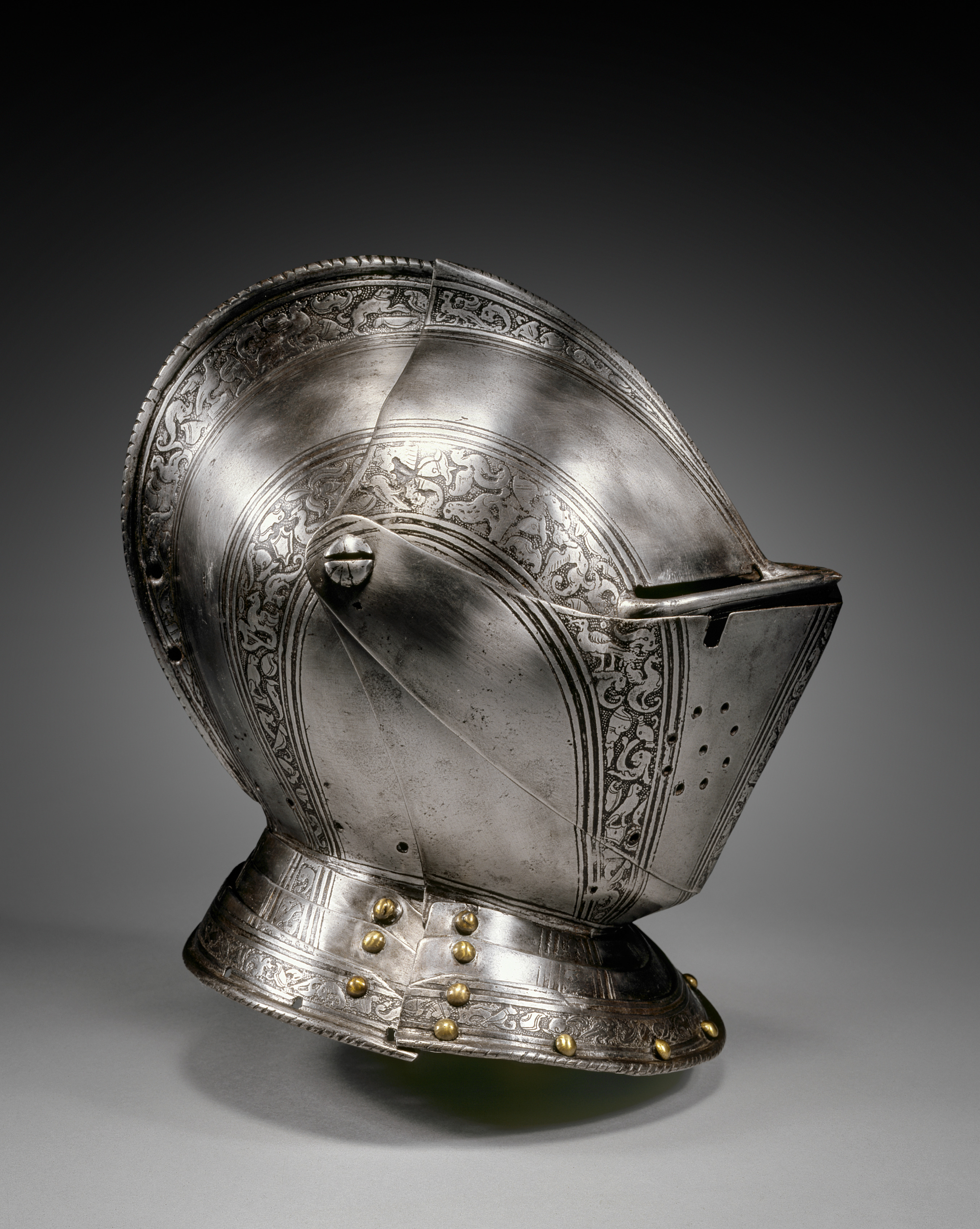
At Zoey Fashion Lab, we approach historical artifacts not as static relics but as living blueprints for future design. The subject of this analysis—a close helmet from North Italy, likely Brescia, circa 16th century—offers a profound case study in structural integrity, ornamental restraint, and psychological armor. Constructed from steel with etched decorative bands and roundels, this piece transcends its martial origins to become a New DNA Strand for avant-garde fashion. Our deconstruction focuses on three core dimensions: material evolution, spatial geometry, and the tension between protection and expression.
Material Evolution: Steel as Textile
The primary material—steel—is traditionally antithetical to fashion’s soft, pliable fabrics. Yet, in the context of avant-garde design, steel becomes a radical textile. The close helmet’s construction relies on articulated plates, riveted joints, and a seamless fit that contours to the human skull. This is not mere armor; it is a second skin engineered for maximum resilience. For Zoey Fashion Lab, this suggests a paradigm shift: hard materials can be reimagined as structural garments. The etched decorative bands, which run in concentric patterns across the helmet’s crown and cheek pieces, function like embroidery on a corset—they are ornamental yet reinforce the underlying geometry.
The roundels, small circular motifs etched into the steel, serve a dual purpose. Visually, they break the monotony of the metal surface, creating rhythm and focal points. Structurally, they distribute stress across the helmet’s surface, much like grommets in a leather jacket. In an avant-garde context, these roundels can be translated into 3D-printed metallic appliqués on high-collared coats or as laser-cut inserts in structured dresses. The steel’s patina—a result of age and oxidation—adds a layer of temporal depth. For our lab, this patina is a color story: oxidized greens, rusted oranges, and muted grays that evoke industrial decay. We propose patina-dyed silks and distressed metallic finishes as fabric equivalents, capturing the helmet’s history without sacrificing modernity.
Spatial Geometry: The Helmet as Architectural Silhouette
The close helmet’s form is a masterclass in spatial geometry. Its domed skull piece, articulated visor, and flared neck guard create a silhouette that is both protective and theatrical. The visor, often hinged at the temples and capable of being raised, introduces a dynamic element of concealment and revelation—a core tenet of avant-garde fashion. The helmet’s vertical axis, from the crest to the chin, emphasizes elongation, while the horizontal bands around the crown add width. This interplay of axes is directly applicable to shoulder pads, collars, and headpieces in contemporary design.
From a deconstructionist perspective, the helmet’s components can be disassembled and reassembled as modular fashion elements. The cheek pieces, for instance, can be reinterpreted as asymmetrical neck guards or detachable shoulder armor. The visor’s slits—designed for vision and airflow—become cutouts in hoods or face masks, allowing the wearer to control exposure. The crest, a ridge running from front to back, suggests a central seam in a coat or a structural spine in a corset. By extracting these geometric principles, Zoey Fashion Lab can create garments that are not merely worn but inhabited—architectural shells that redefine the human form.
The roundels and etched bands, when examined as spatial markers, create a fractal pattern that guides the eye across the helmet’s surface. This pattern can be translated into digital prints or embroidered motifs on stretch fabrics, allowing the design to move with the body while retaining its structural logic. The helmet’s symmetry is deliberate—a balance between left and right, front and back. In avant-garde fashion, this symmetry can be subverted: one shoulder armored, the other fluid; one sleeve rigid, the other draped. The Brescian helmet teaches us that balance is not about equality but about intentional contrast.
Psychological Armor: Protection as Expression
The close helmet’s primary function was to protect the wearer in combat, but its psychological impact is equally significant. It transforms the human face into an impassive, metallic mask—a blank canvas for power and mystery. In avant-garde fashion, this concept of armor as identity is potent. The helmet’s etched decorations, often featuring mythological or heraldic motifs, serve as personal iconography. For our lab, this suggests a new approach to surface design: garments that tell stories through embedded symbols, whether through laser-engraved leather, embossed vinyl, or woven metallic threads.
The act of donning a close helmet is a ritual of transformation. The wearer becomes a different entity—a warrior, a guardian, a symbol. Zoey Fashion Lab can harness this by designing transformative pieces that alter the wearer’s silhouette and presence. A high-necked jacket with a rigid collar, for example, can evoke the helmet’s neck guard. A hood with integrated visor flaps can offer the same sense of concealment. The psychological weight of steel is replaced by the tactile heft of layered fabrics, but the effect remains: the wearer is armored against the world, yet expressive through the armor itself.
The roundels, in particular, function as meditative focal points—repetitive, calming, yet commanding attention. In fashion, these can be realized as circular cutouts, mirrored discs, or embroidered mandalas on garments. They break the visual field, creating moments of pause. The etched bands, with their linear precision, can be translated into ribbed textures or parallel seams that guide the eye and structure the garment’s flow. Together, they form a visual language of control and chaos—a dialectic that defines avant-garde design.
Conclusion: The Brescian Helmet as a New DNA Strand
The 16th-century close helmet from Brescia is far more than a historical artifact; it is a template for radical design. Its steel construction challenges us to rethink materiality, its geometry inspires architectural silhouettes, and its psychological depth offers a framework for armor as identity. At Zoey Fashion Lab, we view this helmet as a New DNA Strand—a genetic code that can be spliced, mutated, and re-expressed in fabrics, cuts, and textures. The etched bands and roundels are not mere decorations but structural and symbolic anchors that inform every design decision.
Our analysis concludes that the future of fashion lies in the deconstruction of the past. By dissecting this helmet, we uncover principles of articulation, balance, and ornamentation that are timeless. The avant-garde is not about rejecting history but about recontextualizing its fragments into something unprecedented. The Brescian close helmet, with its fusion of brutality and beauty, is a testament to this philosophy. Zoey Fashion Lab will continue to mine such artifacts for their latent potential, transforming steel into silk, armor into attire, and history into a living, breathing garment.