Deconstructing the Pha Nung: A Fabric Analysis for Zoey Fashion Lab
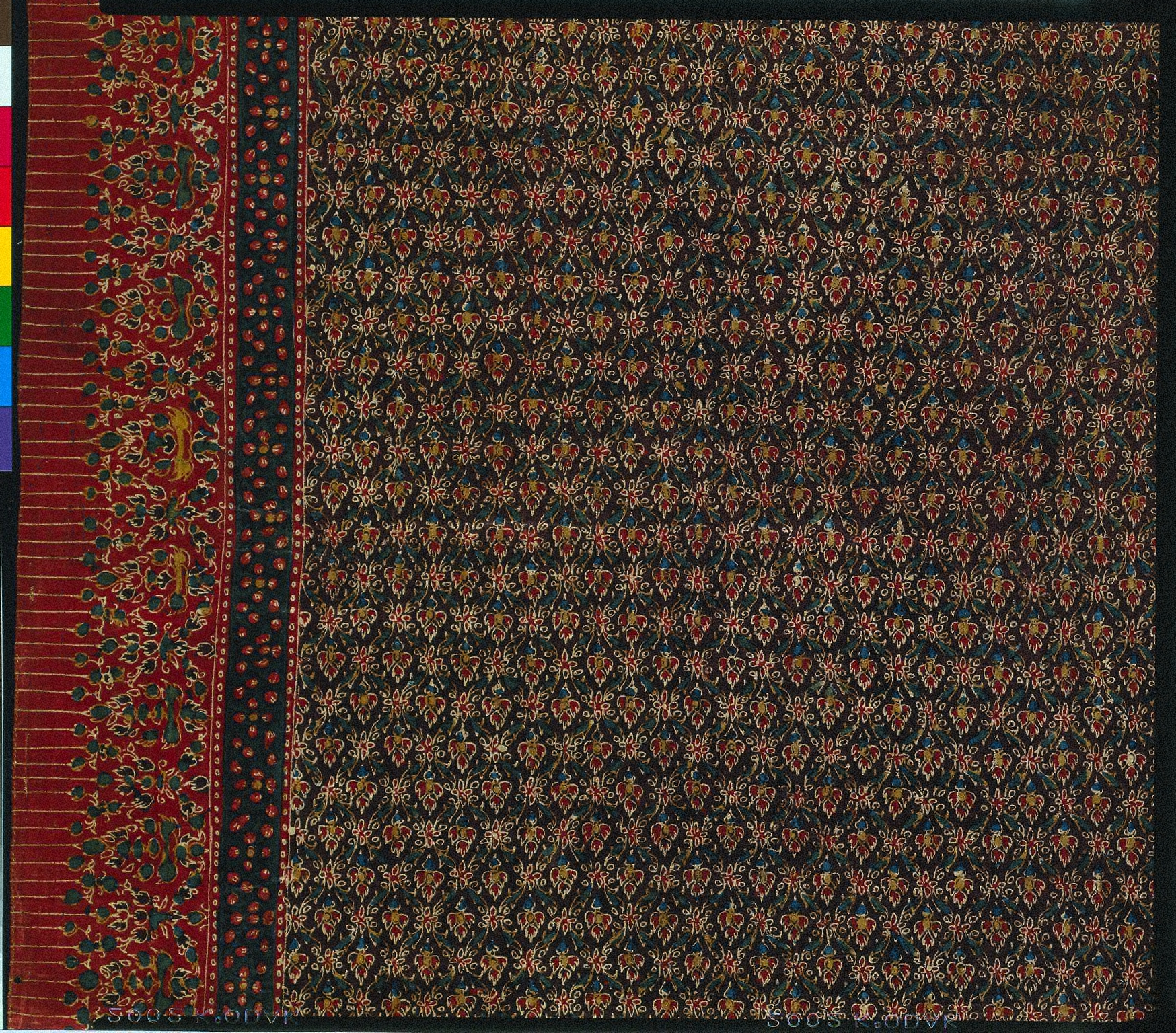
At Zoey Fashion Lab, our mission is to unravel the narratives woven into every textile. The subject of this analysis—a Pha Nung, or wrapped garment cloth, originating from the East Coast of India, dating from the late 19th to early 20th century—presents a profound dialogue between traditional craft and avant-garde sensibility. This cloth, constructed from cotton in a tabby weave and decorated through mordant resist and batik techniques, is not merely a historical artifact. It is a resonant archive of cultural exchange, technical mastery, and aesthetic innovation. By deconstructing its material, technique, and cultural resonance, we can extract principles that inform our own avant-garde design language.
Material and Structural Integrity: The Tabby Weave Foundation
The base of this Pha Nung is a tabby weave, the simplest and most fundamental of textile structures. In this weave, weft threads pass alternately over and under each warp thread, creating a balanced, grid-like fabric. This structure is not merely a technical baseline; it is a statement of functional elegance. For a wrapped garment, the tabby weave provides a stable, non-stretching foundation that drapes with a controlled, sculptural quality. The cotton fiber, inherently absorbent and breathable, was ideal for the humid climates of both coastal India and the Southeast Asian regions where such cloths were traded and adopted.
From an avant-garde perspective, the tabby weave represents radical simplicity. It is a grid of possibility, a neutral field upon which the designer can project complex interventions. The very lack of structural complexity in the weave allows the surface design—the resist and batik—to become the primary agent of visual and tactile disruption. At Zoey Fashion Lab, we see this as a lesson in minimalist construction: the most profound innovation often begins with the most basic, honest foundation. The cloth’s integrity lies not in elaborate structural tricks, but in the purity of its woven plane.
The Alchemy of Surface: Mordant Resist and Batik
The true avant-garde character of this Pha Nung emerges through its surface treatment: a combination of mordant resist and batik. These are not merely decorative techniques; they are chemical and physical processes that transform the cloth into a layered narrative.
Mordant resist involves applying a metallic salt (mordant) to the fabric, which chemically binds with a specific dye to create a permanent color. The areas without mordant remain undyed or take a different color during subsequent dye baths. This is a process of controlled alchemy, where the artisan predicts the interaction between chemistry and fiber. The resulting patterns are often geometric, precise, and deeply integrated into the cloth’s structure—they are not printed on the surface but grown from within.
Batik, in contrast, uses wax as a physical resist. The wax is applied to areas meant to resist dye, then cracked or removed to create intricate, often organic patterns. The crackling of the wax produces the characteristic fine lines of batik, a chaotic elegance that contrasts with the precision of mordant resist. In this Pha Nung, the combination of both techniques creates a dialectic of control and spontaneity. The mordant resist provides the structural framework—the geometric fields, the borders, the repeating motifs—while the batik introduces a fluid, almost painterly quality. This is a sophisticated avant-garde strategy: order disrupted by organic intervention.
For Zoey Fashion Lab, this dual-resist approach is a direct inspiration. It suggests a design methodology where the primary structure (the weave, the mordant pattern) is a skeleton, and the secondary intervention (the batik) is the flesh—the living, breathing, unpredictable element. This challenges the binary of "pattern" versus "ground," instead proposing a fabric where every square inch is a contested, negotiated space between intention and accident.
Cultural Resonance: The Archive of Exchange
As noted in the Archive Resonance reference, artifacts like this Pha Nung are "silent witnesses" to the collision of cultures between the 16th and 17th centuries. While this piece dates slightly later (late 19th to early 20th century), it carries the legacy of that earlier, intense period of trade and cultural exchange along the Indian Ocean rim. The East Coast of India, particularly the Coromandel Coast, was a nexus for textile production destined for markets in Southeast Asia, including Thailand, where the Pha Nung (a term derived from the Thai "ผ้านุ่ง") was traditionally worn as a wrapped lower garment.
This cloth is not a purely Indian object, nor is it purely Thai. It is a hybrid artifact, born from the meeting of Indian technical expertise (mordant dyeing, fine cotton weaving) with Southeast Asian aesthetic preferences (specific color palettes, motifs, and garment forms). The patterns on this cloth—often featuring floral or abstract geometric designs—reflect a transcultural visual language that was intelligible to both producers and consumers across vast distances. This is a powerful lesson for the contemporary avant-garde: innovation often arises from the friction of difference. The most compelling design is not born in isolation but in the dynamic space between traditions.
From the perspective of Archive Resonance, this cloth is a material document of globalism before globalization. It tells a story of movement—of fibers, dyes, techniques, and people. For Zoey Fashion Lab, this challenges us to think of our own designs not as static objects but as nodes in a network of cultural and material flows. To deconstruct this Pha Nung is to read the history of trade routes, colonial economies, and aesthetic diplomacy woven into its very threads.
Avant-Garde Applications: Deconstruction and Reconstruction
How does this analysis inform our avant-garde practice at Zoey Fashion Lab? We propose a deconstructive methodology that extracts the core principles of this Pha Nung and recontextualizes them within a contemporary, experimental framework.
First, we embrace the concept of the grid as a site of intervention. The tabby weave is our starting point—a neutral, democratic field. Our designs will begin with this grid, then deliberately disrupt it through asymmetric draping, fragmented pattern placement, and surgical cuts that reveal the underlying structure. The wrapped garment itself is a form of temporary architecture on the body; we will explore how to make that architecture more dynamic, more unstable, and more responsive to movement.
Second, we adopt the dual-resist philosophy. Our surface treatments will combine digital precision (laser-cut stencils, programmed resist patterns) with manual, spontaneous interventions (hand-painted wax, chemical splatters, physical wear). This creates a fabric that is both hyper-designed and authentically imperfect. The tension between control and chaos becomes the aesthetic signature.
Third, we foreground the narrative of cultural exchange. Our collections will explicitly reference the hybrid origins of textiles like the Pha Nung, but through a futurist lens. We will use recycled and bio-fabricated materials that speak to contemporary concerns of sustainability, while maintaining the visual complexity of historical resist-dye traditions. The cloth becomes a palimpsest—a surface written and rewritten by multiple hands across time.
Finally, we honor the wrapped garment as a radical form. Unlike tailored clothing, which imposes a fixed shape on the body, the wrapped garment is infinitely adjustable. It is a democratic, unisex form that defies sizing and standardization. For our avant-garde line, we will reimagine the Pha Nung as a modular system—a single cloth that can be worn in dozens of configurations, from a sculptural evening gown to a functional day wrap. This is a direct challenge to the fast-fashion model of disposable, fixed garments.
Conclusion: The Cloth as a Living Archive
This Pha Nung from the East Coast of India is far more than a historical curiosity. It is a masterclass in material intelligence, a testament to the power of technique, and a blueprint for avant-garde innovation. At Zoey Fashion Lab, our deconstruction of this cloth reveals not just how it was made, but what it can teach us about making now. By understanding its weave, its resist processes, and its cultural journey, we gain the tools to create garments that are conceptually rigorous, materially honest, and aesthetically radical. The archive is not a museum; it is a laboratory. And this Pha Nung is our most compelling experiment.