The Architecture of Devotion: Deconstructing the Shichijō Kesa as a Blueprint for SS26 Avant-Garde Silhouettes
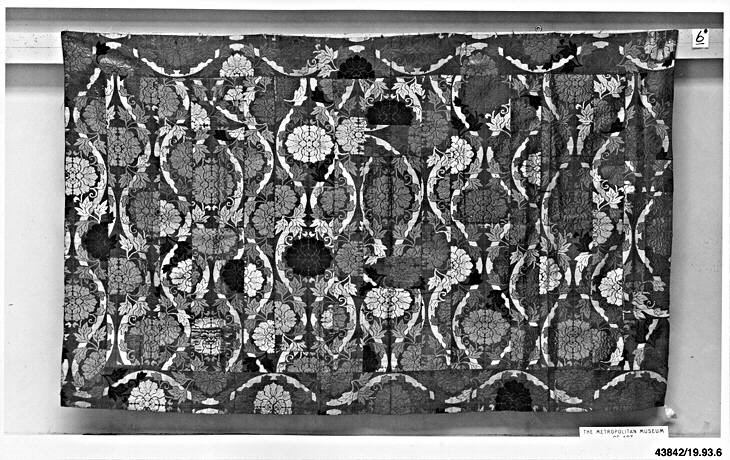
The intersection of sacred geometry and radical garment construction finds a compelling nexus in the seven-panel Buddhist monk’s vestment, or shichijō kesa. For the SS26 season, Zoey Fashion Laboratory positions this relic not as a historical artifact, but as a proto-futurist template. Its structural logic—a series of segmented, rectangular panels assembled into a trapezoidal form—offers a radical departure from conventional tailoring. This analysis dissects the kesa’s materiality, its peony-patterned undulating columns, and its potential as a catalyst for deconstructive silhouettes that redefine the relationship between body, garment, and movement.
Structural Grammar: The Seven-Panel System as Modular Prototype
The kesa’s foundational architecture is its most avant-garde element. Composed of seven distinct panels of twill-weave silk, the garment eschews the organic curves of Western draping in favor of a rigid, geometric grid. Each panel, typically rectangular, is sewn together vertically, creating a flat, almost architectural surface that hangs from the left shoulder and drapes diagonally across the torso. For SS26, this modularity is reimagined as a parametric construction system. Imagine a coat or a tunic where each panel is not merely sewn but mechanically fastened using magnetic clasps or carbon-fiber hinges, allowing the wearer to reconfigure the silhouette in real-time. The kesa’s trapezoidal shape—narrow at the shoulder, widening toward the hem—becomes a blueprint for a new species of outerwear: a dynamic, transformable shell that can shift from a strict, monastic column to a flared, almost bell-shaped volume. The rigidity of the panel system also introduces a controlled tension against the body, creating negative space—a void between fabric and skin that becomes a deliberate aesthetic and functional feature.
Material Alchemy: Twill-Weave Silk and the Futurist Imperative
While traditional kesa utilize silk for its sacred luminosity and drape, Zoey Fashion Laboratory’s SS26 interpretation demands a material re-engineering. The twill-weave silk base—characterized by its diagonal ribbing—provides a subtle, directional texture that catches light unevenly, creating a moiré effect. This is not a passive fabric; it is a surface of kinetic potential. For the collection, the silk is treated with a thermochromic finish, allowing the peony patterns to shift in hue based on body heat or ambient temperature. The supplementary weft patterning, traditionally used to embroider floral motifs, is here reimagined as a conductive thread network. The undulating peony columns become not just decorative but functional: they house micro-LED filaments that pulse in rhythmic patterns, transforming the garment into a living, breathing screen. The peony, a symbol of prosperity and renewal in Buddhist iconography, is thus recontextualized as a biometric interface, its petals opening and closing in response to the wearer’s heart rate or breathing.
Undulating Columns: From Motif to Kinetic Silhouette
The peony patterns are arranged in undulating vertical columns that traverse the kesa’s surface. This is not a static print; it is a rhythm. For SS26, these columns are physically extruded from the fabric surface using 3D-printed silicone or resin, creating a bas-relief topography. The undulations become structural ribs that stiffen the silk in specific zones, dictating how the garment folds, collapses, and rebounds. Imagine a jacket where the peony columns act as articulated fins, fanning out when the wearer raises an arm and collapsing flat when at rest. This introduces a new dimension of responsive silhouette: the garment’s shape is no longer fixed but is a function of the wearer’s kinetic energy. The columns also serve as channels for pneumatic inflation, allowing the garment to expand or contract in volume. A sleeve can become a billowing, petal-like structure, then deflate into a sleek, aerodynamic sheath. This is silhouette as performance, as dialogue between the body and its environment.
Deconstructive Draping: The Diagonal Axis and Asymmetric Tension
The kesa’s characteristic diagonal drape—from left shoulder to right hip—is a radical departure from the symmetrical, centered construction of most garments. This asymmetry introduces a tension vector that pulls the body into a new posture. For SS26, this diagonal is exaggerated and multiplied. Instead of a single shoulder, the garment might feature multiple anchor points: a weighted chain at the left clavicle, a magnetic clasp at the right hip, and a counterbalancing pocket at the left hem. The diagonal axis becomes a structural spine around which the entire silhouette is organized. The peony columns, when aligned along this axis, create a visual and physical torque. The fabric is deliberately cut on the bias in some panels, while others remain on the straight grain, creating a torsional tension that causes the garment to twist and rotate as the wearer moves. This is deconstruction not as destruction, but as controlled chaos—a deliberate engineering of instability that results in a perpetually evolving form.
Futuristic Silhouette: The Monastic-Meets-Cyborg
The final silhouette for SS26 is a synthesis of the monastic and the cyborg. The kesa’s voluminous, rectangular shape is retained but reinterpreted through a hard-soft hybrid aesthetic. The outer layer is the twill silk, with its undulating peony columns and thermochromic reactivity. Beneath it, a carbon-fiber exoskeleton provides structure, allowing the garment to stand away from the body at sharp, geometric angles. The result is a silhouette that is both ancient and alien: a floating, architectural shell that hovers around the body, never fully conforming to its contours. The hem is left raw, with exposed weft threads that can be electrically charged to create a fringe of static energy. The shoulders are exaggerated, not with padding, but with inflatable chambers that mimic the kesa’s original shoulder drape. This is not a garment for passive observation; it is a wearable manifesto that challenges the very notion of what a silhouette can be. It is a statement that the future of fashion lies not in rejecting tradition, but in deconstructing its sacred geometries and rebuilding them as instruments of radical, kinetic expression.