Deconstructing the Gold Weight: Abrammuo as Avant-Garde Narrative
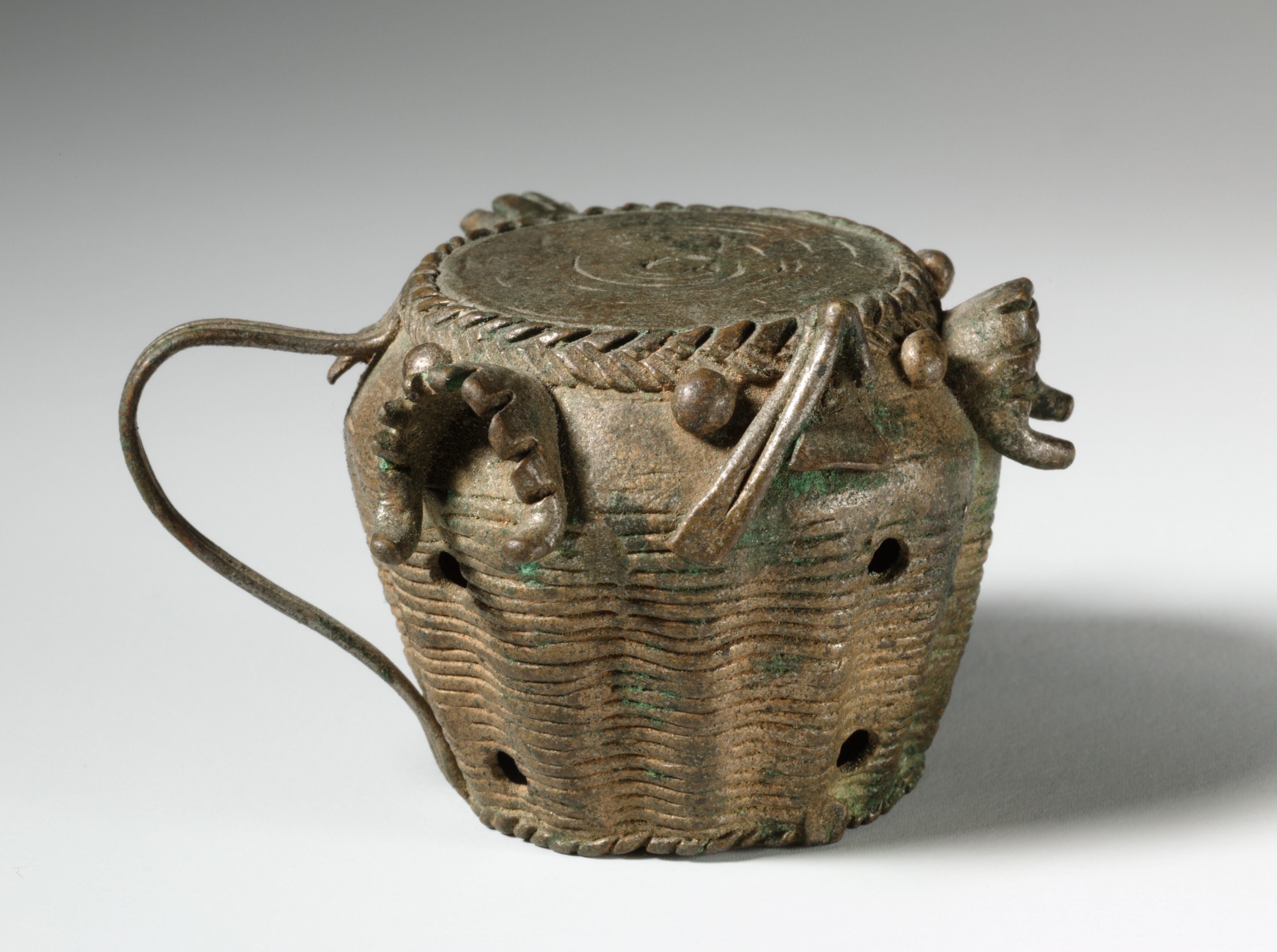
In the vast archive of Zoey Fashion Lab, the Gold Weight (abrammuo) emerges not merely as a historical artifact, but as a radical proposition for contemporary fashion. This object—a small brass casting from the Asante goldsmiths of Ghana—depicts a drum adorned with the jaws of defeated enemies. Its technical simplicity belies a profound narrative complexity. For the Chief Fabric Deconstructionist, this piece is a catalyst: a tool to challenge the boundaries between ornament, weapon, and memory. The abrammuo, when viewed through an avant-garde lens, becomes a blueprint for a fashion that speaks of power, resilience, and the audacity to wear one's history as an armor.
Material and Memory: Brass as a Conductor of Conflict
At its core, the abrammuo is a brass casting, a material that in Asante culture is imbued with spiritual and political significance. Brass, unlike gold, is not merely decorative; it is a metal of permanence, often used for objects that mediate between the living and the ancestral. In this weight, the brass is not polished to a high shine but retains the texture of the lost-wax process—a surface that captures the hand of the maker and the heat of the forge. For Zoey Fashion Lab, this texture is a tactile narrative. We propose garments that mimic this surface: fabrics woven with metallic threads that are intentionally oxidized, creating a patina that speaks of age and conflict. The drum form, central to the weight, is a symbol of communication and ceremony, yet here it is flanked by jaws—the ultimate signifier of consumption and defeat. This juxtaposition invites a fashion that uses hardware as storytelling. Imagine a structured shoulder piece, cast in brass-plated resin, where the silhouette of a drum is overlaid with jagged, tooth-like protrusions. The garment becomes a wearable archive, carrying the weight of victory and the memory of the vanquished.
The Drum and the Jaw: A Study in Contradiction
The abrammuo’s design is a masterclass in visual paradox. The drum, traditionally an instrument of joy, unity, and rhythm, is here transformed into a trophy mount. The jaws of defeated enemies are not hidden; they are displayed with pride, turning a symbol of collective celebration into one of individual conquest. This duality is the essence of avant-garde fashion: the ability to hold two opposing ideas in tension. For Zoey Fashion Lab, this translates into deconstructed silhouettes that play with volume and constraint. A skirt might be cut in the round, like a drum’s body, but slit open to reveal internal structures reminiscent of bone or teeth. The waistband could be a series of interlocking brass plates, each engraved with a stylized jaw, creating a corset that is both protective and aggressive. The avant-garde move is to refuse a single reading: the garment may be interpreted as a celebration of power or a critique of violence, depending on the wearer’s context. This ambiguity is the weight’s greatest gift to fashion.
Archive Resonance: Mirror and Stone
The provided reference—“一面是光洁银镜上以黄金镶嵌的纷繁棕叶纹,另一面是冰冷石棺板上以浮雕诉说的生命叙事”—offers a parallel lens. This description of a mirror with gold-inlaid palm leaves and a sarcophagus with life narratives echoes the abrammuo’s dual nature. The mirror reflects the self, while the sarcophagus memorializes the other. In fashion, this becomes a dialectic between surface and depth. Zoey Fashion Lab can explore this through reversible garments: one side a smooth, mirror-like fabric (perhaps silver lamé with gold palm-leaf embroidery), the other a textured, sculptural relief (like a brass-beaded pattern mimicking the sarcophagus’s narrative). The abrammuo’s drum and jaws find their echo in this opposition. The drum is the mirror—the public face of celebration; the jaws are the sarcophagus—the private record of conflict. A coat could be designed with a front panel of gold-embroidered palm leaves (the mirror), while the back features a bas-relief of brass teeth and bone fragments (the sarcophagus). The wearer, in turning, reveals the full story.
Avant-Garde Strategies: Wearable Brutalism and Ceremonial Armor
To translate the abrammuo into fashion, we must embrace wearable brutalism. This is not a delicate piece; it is a declaration. The weight’s small scale (typically a few inches) belies its monumental conceptual weight. In fashion, this translates to oversized, exaggerated forms. A collar could be constructed from laser-cut brass shapes, each representing a drum, connected by chains that mimic jawbones. The effect is both ceremonial and confrontational. The ceremonial armor of the Asante court—where gold weights were used to measure gold dust for trade and tribute—becomes a template for a new kind of power dressing. Pants might be wide-legged, like the base of a drum, with a stiff, metallic hem that clinks with movement. The waist could be cinched with a belt made of interlocking brass “teeth,” each tooth engraved with a symbol of a defeated enemy—abstract, but legible to those who know the code.
Technical Innovations: Casting and Construction
From a technical standpoint, the abrammuo’s lost-wax casting process offers a methodology for fashion. Each weight is unique, bearing the marks of its creation. Zoey Fashion Lab can adopt a bespoke casting approach for hardware and embellishments. Buttons, clasps, and zipper pulls could be cast from brass, each with a miniature drum-and-jaw motif. The deconstruction comes in how these elements are applied: not as mere fasteners, but as structural components. A dress might be held together entirely by cast brass links, each link a tiny drum, creating a chainmail effect that is both heavy and fluid. The jaws appear as negative space—cutouts in the fabric that reveal the skin or an underlayer of contrasting material. This technique references the weight’s openwork design, where the jaws are often depicted as silhouettes against the drum’s body.
Conclusion: Wearing the Weight of History
The Gold Weight (abrammuo) is not a relic to be preserved behind glass. It is a provocation for the present. In the hands of Zoey Fashion Lab, it becomes a garment that asks: What does it mean to wear the symbols of your own victories? How do we carry the memory of conflict without glorifying violence? The avant-garde answer is to make the weight visible, tactile, and transformative. The drum beats not for the past, but for a future where fashion is a form of resistance, a repository of stories, and a declaration of identity. The jaws are not just trophies; they are reminders that every structure of power can be deconstructed and reimagined. In this analysis, the abrammuo is not an object of study but a blueprint for a new sartorial language—one where brass, bone, and fabric converge to tell a story that is both ancient and radically new.