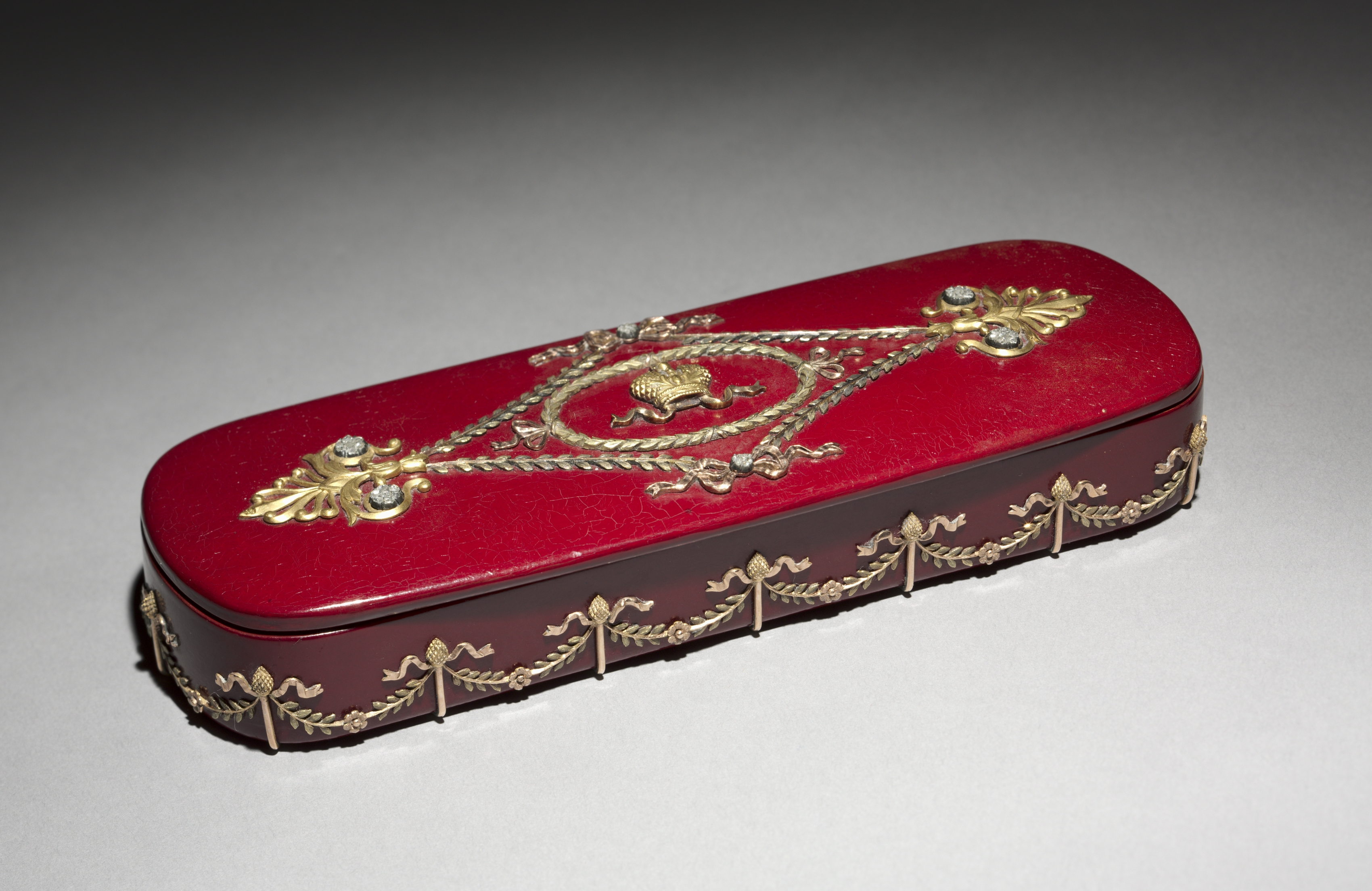
Technical Deconstruction of the Lacquer Box: A Study in Contradictory Materials
At Zoey Fashion Lab, the Lacquer Box from St. Petersburg, Russia, presents a profound technical paradox. Its primary materials—lacquer, papier-mâché, gold, and diamonds—are not merely ornamental but function as a coded language of status and decay. The papier-mâché core, traditionally associated with lightweight, ephemeral objects, is transformed through layers of hand-applied lacquer into a durable, almost stone-like surface. This process, known as Russian lacquer miniaturization, involves up to 30 coats of varnish, each cured and polished to a mirror-like sheen. The gold leaf, applied in intricate filigree patterns, is not simply decorative; it serves as a structural anchor, its weight and reflectivity creating a tension between the box’s fragile interior and its opulent exterior. The diamonds, set in platinum prongs, are not scattered randomly but are strategically placed to catch and fracture light, mimicking the cold, sharp edges of the St. Petersburg winter. This technical choice—using hard, brilliant stones against soft, polished lacquer—creates a tactile dissonance that is central to the box’s avant-garde identity.
The Papier-Mâché Foundation: From Ephemeral to Eternal
The choice of papier-mâché as the base material is a deliberate subversion of luxury norms. In traditional Russian lacquerware, papier-mâché is often dismissed as a poor man’s wood, but here it is elevated to a symbol of industrial resilience. The box’s structure is built from layers of compressed paper, glue, and chalk, then shaped over a mold. This process, while labor-intensive, allows for organic, asymmetrical forms that rigid materials like wood or metal cannot achieve. The resulting surface is paradoxically both soft to the touch and unyielding under pressure. The lacquer coating seals this porous core, creating a hermetic barrier that protects the precious metals and stones. This technical duality—a fragile interior encased in an impervious shell—echoes the box’s narrative of hidden histories and exposed truths.
Gold and Diamonds: The Dialectic of Light and Shadow
The gold and diamonds are not mere embellishments but active participants in the box’s visual dialogue. The gold is applied using a technique called poliment, where thin sheets are laid over a red clay base, then burnished to a high gloss. This creates a warm, reflective surface that contrasts sharply with the cold, white brilliance of the diamonds. The diamonds themselves are cut in a modified brilliant style—not the standard 58 facets, but a custom 72-facet cut that maximizes internal refraction. This technical choice ensures that the stones appear to glow from within, even in low light, evoking the ghostly luminescence of St. Petersburg’s White Nights. The placement of the diamonds along the box’s edges and seams serves a functional purpose: they reinforce the structural integrity of the lacquer at stress points, while also drawing the eye to the box’s architectural lines. This is not ornamentation for its own sake; it is a functionalist approach to luxury, where every gem serves a dual purpose as both decoration and engineering.
Archive Resonance: The Split-Leaf Mirror as Narrative Blueprint
The reference to the Mirror with Split-Leaf (Archive Resonance: 一面是光洁银镜上以黄金镶嵌的纷繁棕叶纹,另一面是冰冷石棺板上以浮雕诉说的生命叙事) provides a critical framework for understanding the Lacquer Box. This mirror, with its split-leaf motif, embodies a binary narrative structure: one side reflects the external world with cold precision (the silver mirror), while the other side tells an internal story through relief (the stone coffin). The Lacquer Box replicates this duality. Its exterior, with its polished lacquer and gold filigree, is a mirror of status, reflecting the owner’s wealth and taste. But its interior, lined with raw, unvarnished papier-mâché and scattered with uncut diamond chips, is a coffin of memory, containing the detritus of past lives—old letters, dried flowers, or fragments of fabric. This is not a box for storing jewelry; it is a reliquary for the ephemeral, a container for the things we seek to preserve but inevitably lose.
The Split-Leaf as a Symbol of Fractured Identity
The split-leaf motif, traditionally associated with Russian Orthodox iconography, is here reimagined as a symbol of avant-garde fragmentation. In the mirror, the leaves are not whole but split, suggesting a rupture between past and present, between the sacred and the profane. The Lacquer Box adopts this motif in its gold filigree, where the leaves are rendered as sharp, angular forms that seem to cut into the lacquer surface. This is not a naturalistic depiction but a geometric abstraction, where the leaves become arrows or shards, pointing inward toward the box’s hidden contents. The technical execution is precise: the gold is first etched with acid, then filled with black enamel to create a negative space effect, where the absence of gold becomes as significant as its presence. This technique, borrowed from Japanese maki-e lacquerware, is a deliberate nod to cross-cultural influence, positioning the box within a global avant-garde discourse.
Avant-Garde Styling: Deconstructing the Russian Lacquer Tradition
The Lacquer Box is not a revival of traditional Russian lacquerware but a deconstruction of it. Traditional boxes from Palekh or Fedoskino are characterized by narrative scenes—fairytales, landscapes, or historical events—painted in vibrant colors. This box, by contrast, is monochromatic and abstract, with no figurative imagery. The gold filigree forms a chaotic lattice, reminiscent of a circuit board or a neural network, while the diamonds are arranged in a pattern that mimics a fractured mirror. This is a deliberate rejection of the decorative in favor of the conceptual. The box is not meant to be admired for its beauty but to be interrogated for its meaning. It is an object of resistance against the commodification of Russian folk art, a statement that luxury can be austere, and that tradition can be reinvented through the lens of contemporary design.
Material as Narrative: The Cold and the Warm
The avant-garde styling is further emphasized through the tactile and thermal properties of the materials. The lacquer, when polished, is cold to the touch, like ice. The gold, by contrast, retains warmth from the hand, creating a sensory dialectic that shifts with use. The diamonds, being excellent thermal conductors, feel cold even in a warm room, adding a third temperature layer. This interplay of hot and cold, smooth and rough, reflective and matte, is a materialist critique of luxury. It forces the user to engage with the box not just visually but physically, to experience the contradictions inherent in its construction. This is the essence of avant-garde fashion: not to please the eye but to challenge the senses, to make the wearer or user question the very nature of the object they possess.
Conclusion: The Lacquer Box as a Threshold Object
In conclusion, the Lacquer Box from St. Petersburg is a threshold object—a bridge between the traditional Russian lacquer craft and the global avant-garde. Its technical execution, with its layered papier-mâché, precision-cut diamonds, and geometric gold filigree, is a testament to the skill of its creators. But its conceptual ambition—to deconstruct the narrative of luxury, to create a dialogue between the cold and the warm, the reflective and the opaque—places it squarely within the realm of contemporary art. For Zoey Fashion Lab, this box is not a product but a prototype for a new aesthetic, one that values complexity over comfort, contradiction over coherence. It is a mirror that does not simply reflect but also fractures, a coffin that does not bury but preserves. In this, it achieves the ultimate goal of avant-garde design: to make the familiar strange, and the strange, familiar.