Deconstructing the Divine: An Avant-Garde Analysis of the Ceremonial Cross of Countess Gertrude
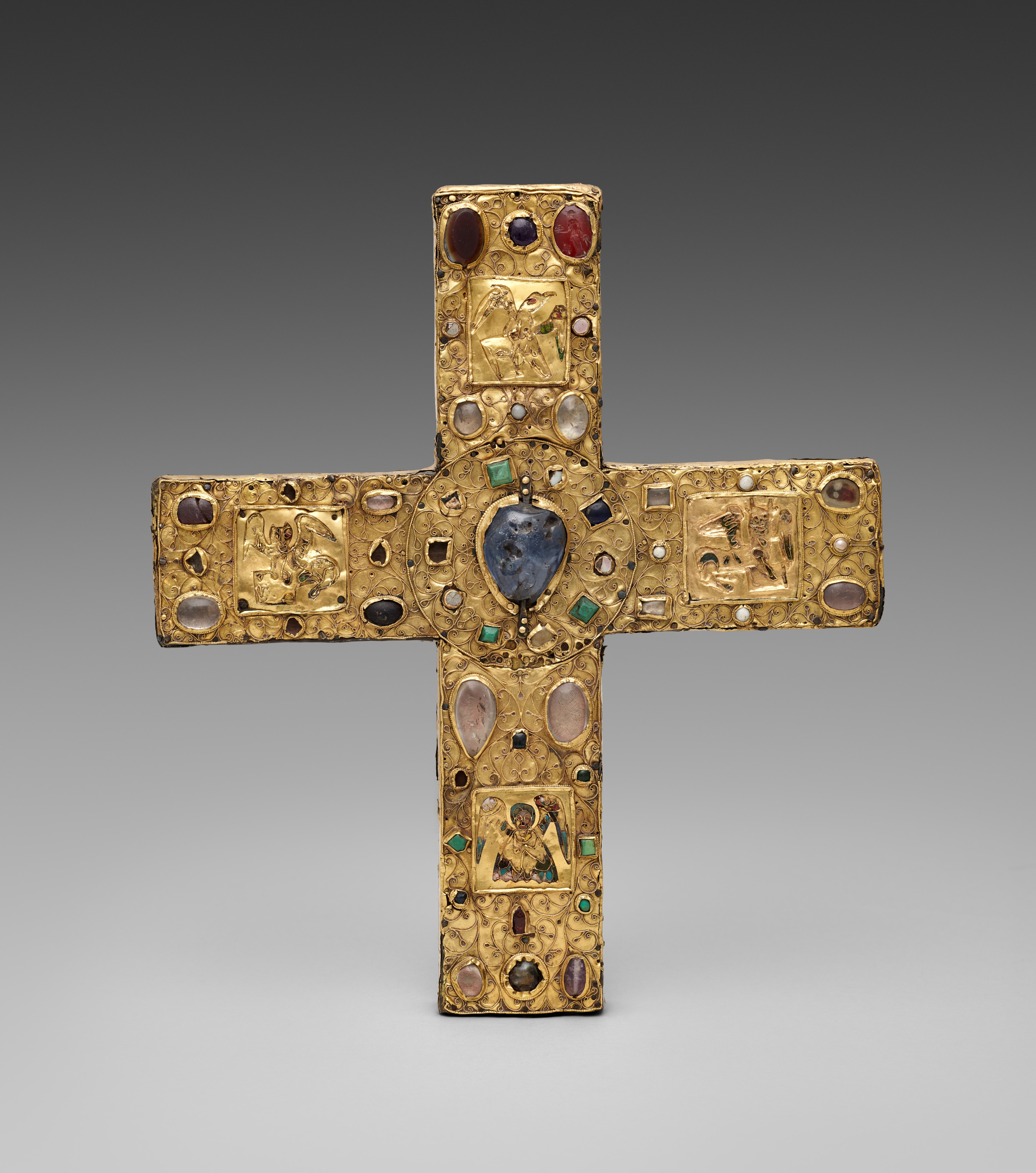
At Zoey Fashion Lab, we do not merely observe historical artifacts; we dissect them, extracting their latent energy and re-weaving their narratives into the fabric of future fashion. The Ceremonial Cross of Countess Gertrude, a 11th-century treasure from Lower Saxony, is no exception. This object, a repository of gold, cloisonné enamel, intaglio gems, pearls, and a humble wood core, presents a paradox that is ripe for avant-garde deconstruction. It is at once a symbol of rigid ecclesiastical authority and a deeply personal, almost talismanic object. Our analysis, guided by the Archive Resonance of a "mirror with split leaves," will explore how this cross embodies a tension between reflective surface and narrative depth, a duality that is the very essence of our design philosophy.
The Material Lexicon: Gold, Wood, and the Avant-Garde Body
The cross’s materiality is its first and most potent statement. The gold repoussé, hammered from the reverse to create a high-relief surface, speaks of a laborious, almost violent transformation of raw matter into divine iconography. For the avant-garde, this is not a symbol of piety but a technology of power. The gold skin is a facade, a shimmering armor that both reveals and conceals the object’s true nature. Beneath it lies the wood core, a humble, organic substrate that anchors the precious metals. This is a critical tension: the eternal, incorruptible gold versus the perishable, earthly wood. In our collections, we replicate this friction by pairing high-tech, metallic fabrics (liquid lamé, laser-cut aluminum) with raw, untreated linens or salvaged wood veneers. The wood core is not a flaw; it is the soul of the piece, the reminder that all glory is built on a fragile, human foundation.
The cloisonné enamel introduces a further layer of complexity. These tiny cells of color, fired into the gold, create a mosaic of light and hue. They are not merely decorative; they are fragments of a forgotten code. Each cell is a pixel in a larger image, a discrete unit of information that, when assembled, forms a sacred narrative. In our avant-garde interpretation, we translate this into deconstructed digital prints—pixelated patterns that break down the cross’s iconography into its component parts. A garment might feature a single, enlarged cloisonné cell as a shoulder piece, or a skirt might be a cascade of these "pixels" in translucent organza, creating a sense of fragmented memory.
The Intaglio Gems and Pearls: Narrative as Surface
The intaglio gems—carved with images of classical or biblical scenes—are the cross’s most subversive elements. They are not merely stones; they are narrative capsules. An intaglio is a negative space, a story carved into the surface, meant to be read by the wearer or the viewer. This is a direct challenge to the flat, reflective surfaces of the gold. The cross thus becomes a palimpsest: a layered text where the shiny surface of gold competes with the deep, carved stories of the gems. The pearls, organic and lustrous, add a third dimension. They are the tears of the divine, the soft, feminine counterpoint to the hard, masculine gold. Their irregularity—each pearl is unique—introduces an element of chance and imperfection into the rigid geometry of the cross.
This interplay between surface and depth is the core of the Archive Resonance you provided: "一面是光洁银镜上以黄金镶嵌的纷繁棕叶纹,另一面是冰冷石棺板上以浮雕诉说的生命叙事" (one side is a smooth silver mirror inlaid with intricate gold palm-leaf patterns, the other is a cold stone sarcophagus lid telling a life story through relief). The cross, like this mirror, is a threshold object. One side reflects the world—the gold, the pearls, the polished surface—while the other side contains the narrative, the intaglio, the carved history. In our avant-garde fashion, this translates into garments that are dual-faced. A coat might have an exterior of mirrored, reflective fabric (the "silver mirror") and an interior lined with digital prints of the cross’s intaglio scenes (the "stone sarcophagus"). The wearer becomes a living archive, their outer self a reflection of the present, their inner self a repository of history.
Repoussé as Architectural Fabric: The Body as Reliquary
The repoussé technique is not just a method of metalworking; it is a form of bodily inscription. The gold is pushed from the inside out, creating a topography that mirrors the contours of the body. In the 11th century, this cross was worn on the chest, over the heart. The repoussé patterns—interlacing vines, geometric forms, abstract figures—would have moved with the wearer, catching the light and creating a dynamic, almost kinetic surface. For Zoey Fashion Lab, this is a direct precursor to our architectural draping. We create garments that are not sewn but sculpted on the body, using heat-set pleats, bonded seams, and metallic mesh to create a "repoussé" effect in fabric. A dress might have a bodice that is a series of raised, hammered-looking panels, echoing the cross’s goldwork, while the skirt falls in fluid, unadorned layers—a dialogue between structure and flow.
The wood core is the ultimate avant-garde gesture. It is the invisible skeleton, the structure that supports the spectacle. In our designs, we often expose this "core" deliberately—a jacket might have a visible wooden stay at the collar, or a skirt might be suspended from a wooden hoop, making the support system a part of the design. This is a deconstructivist move, a refusal to hide the mechanics of construction. The cross’s wood core, normally hidden by gold, becomes a symbol of radical honesty in fashion. We wear our structures on the outside, our histories on our sleeves.
Conclusion: The Cross as a Mirror of the Future
The Ceremonial Cross of Countess Gertrude is not a relic; it is a blueprint. Its combination of precious and humble materials, its play between reflective surface and narrative depth, and its intimate connection to the body make it a perfect model for avant-garde design. By deconstructing its elements—the gold repoussé as architectural fabric, the cloisonné as digital pixel, the intaglio as hidden narrative, the pearls as organic imperfection, and the wood core as exposed structure—we create garments that are wearable histories. They are mirrors that do not simply reflect the present but also reveal the layered, complex stories that lie beneath the surface. In the hands of Zoey Fashion Lab, the cross becomes a ceremonial garment for the future, a testament to the enduring power of material, memory, and the body’s own sacred geometry.