Deconstructing the Tea Gown: A Futurist Blueprint for SS26
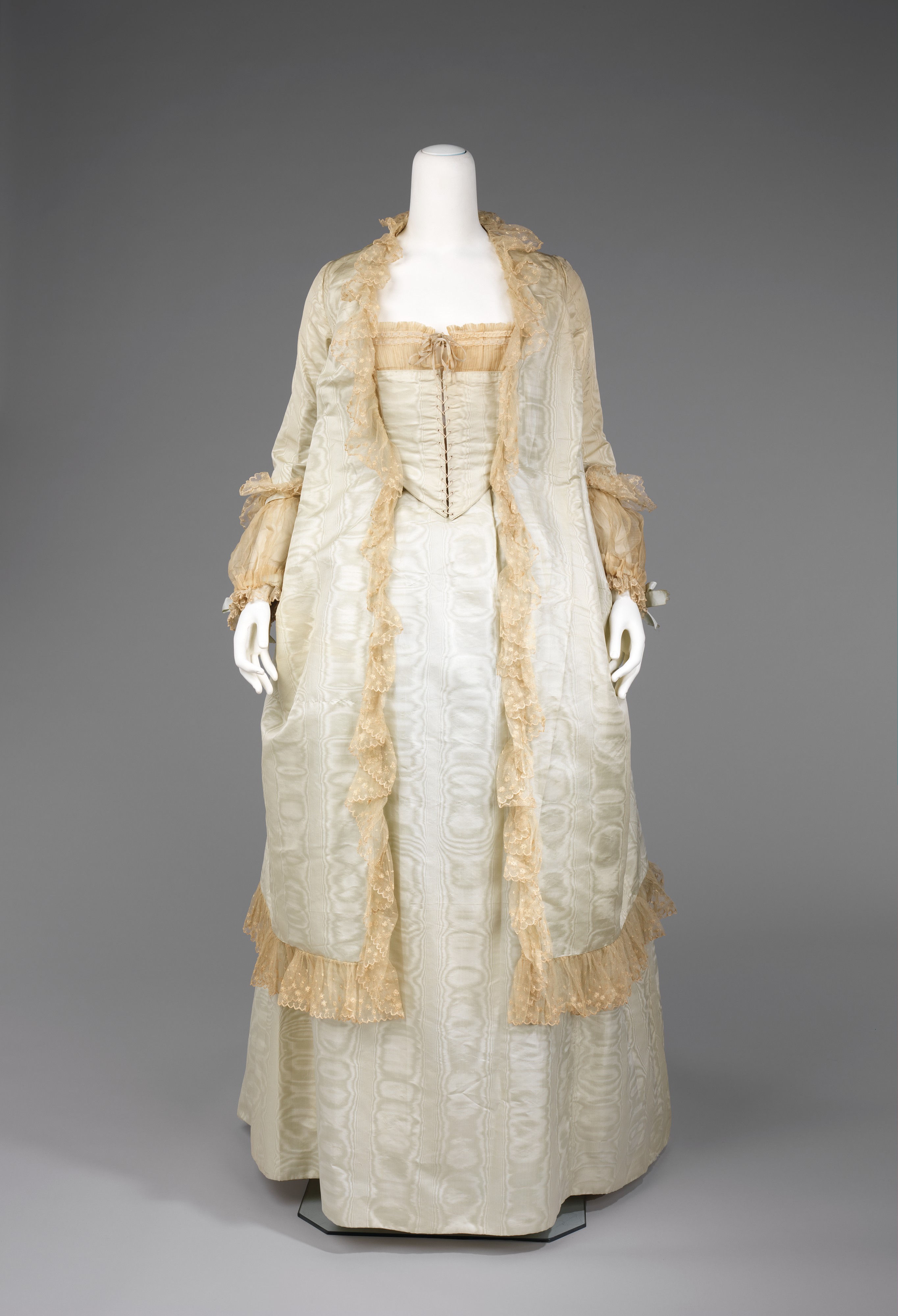
The tea gown, a garment historically synonymous with domestic leisure and ornate restraint, presents a paradox for the avant-garde. Its origins in the late 19th century—a hybrid of wrapper and formal dress—speak to a liminal space between public and private, structured and relaxed. For Zoey Fashion Laboratory’s SS26 collection, we excavate this artifact not as a nostalgic relic, but as a radical substrate for structural innovation. This analysis deconstructs a probable American tea gown from the late 1880s, rendered in silk and cotton, and reimagines its silhouette through a lens of futuristic deconstruction. The result is a manifesto for wearable architecture that subverts historical drapery into a kinetic, post-human form.
Materiality as Dialectic: Silk and Cotton in Tension
The original garment’s materiality—a silk ground with cotton trim or lining—embodies a dialectic of luxury and utility. Silk, with its fluid drape and light-refracting surface, evokes ephemerality and sensuality. Cotton, conversely, introduces a tactile, absorbent counterpoint, grounding the gown in practicality. In our SS26 reimagining, this binary is heightened into a structural conflict. We propose a hybrid fabrication where silk is laser-cut into geometric latticework, its edges left raw to fray into organic filaments, while cotton is treated with a bio-resin to create rigid, sculptural panels. The result is a garment that breathes between soft and hard, transparent and opaque. The silk’s fluidity is channeled into asymmetrical, gravity-defying drapes that mimic liquid mercury, while the cotton panels form exoskeletal supports—a nod to the corset’s legacy, but liberated into a floating, modular system. This material tension becomes a narrative of control and release, a core tenet of avant-garde couture.
Silhouette Revolution: From Domestic Drape to Kinetic Architecture
The historical tea gown’s silhouette—typically a fitted bodice flowing into a train—is anchored by a waistline and a sense of downward motion. For SS26, we invert this logic. The waist is abolished as a fixed point, replaced by a dynamic, adjustable harness system that allows the silhouette to shift between a column, a bell, and a spiral. The train is reimagined as a detachable, modular train of laser-cut silk strips, each ending in a weighted, magnetic tip. These strips can be magnetically attached to the cotton panels at the shoulders, hips, or lower back, creating asymmetrical, cantilevered extensions that defy gravity. The wearer becomes a kinetic sculpture, with the garment’s form changing in response to movement or environmental stimuli—a wind gust, a deliberate gesture. This is not a passive drape but an active, architectural dialogue between body and fabric.
Structural Innovation: The Exoskeleton and the Void
Central to this deconstruction is the concept of the void. The original tea gown’s volume was achieved through multiple layers of silk and cotton, creating a soft, enveloping mass. We replace this with negative space. Using a 3D-printed, bio-degradable polymer framework—inspired by lattice structures in aerospace engineering—we create an exoskeleton that defines the gown’s volume without fabric. The silk and cotton are then suspended within this framework, stretched like membranes over a skeletal armature. Key areas—the shoulders, the hips, the back—are left deliberately open, creating voids that reveal the body’s movement and the garment’s internal structure. This is a direct challenge to the historical tea gown’s emphasis on concealment and modesty. Instead, we celebrate transparency, both literal and conceptual. The exoskeleton itself is dyed in a gradient from bone white to iridescent silver, echoing the silk’s sheen while asserting a mechanical, almost cyborg aesthetic.
Deconstructing the Silhouette: Asymmetry and Displacement
The historical tea gown’s asymmetry was often subtle—a side-draped overskirt, a slightly off-center closure. We push this to its extreme. The SS26 iteration features a single, exaggerated shoulder panel that extends into a wing-like structure, counterbalanced by a hip-cage that wraps around the lower torso in a spiral. The silk is draped in a single, continuous piece that begins at the left shoulder, passes through the exoskeleton’s voids, and terminates in a cascading train on the right hip. This displacement of volume creates a visual torque, as if the garment is in a state of perpetual rotation. The cotton panels are positioned asymmetrically—one on the front, one on the back—creating a sense of instability that is resolved only through the wearer’s posture. This is a garment that demands a new kind of movement: not the languid gestures of the 19th-century parlor, but the sharp, deliberate poses of a digital avatar.
Futuristic Silhouettes for SS26: The Wearable Ecosystem
Ultimately, this deconstructed tea gown is not a costume but a wearable ecosystem. Its modular components—the harness, the magnetic strips, the exoskeleton—allow for infinite reconfiguration. We envision a collection where each garment is a kit of parts: silk skins, cotton shells, polymer frames, and magnetic connectors. The wearer becomes the designer, assembling the silhouette in real-time based on context—a day at the museum, a night at a digital fashion show, a virtual runway. This aligns with SS26’s broader trends toward sustainability, customization, and technological integration. The gown’s historical roots in domesticity are subverted into a tool for self-expression in a hyper-connected world. It is a garment that exists between past and future, private and public, soft and hard—a definitive statement on the evolution of couture from ornament to architecture.
Zoey Fashion Laboratory’s SS26 tea gown is a testament to the power of deconstruction: by dismantling the original, we uncover the potential for a new kind of beauty—one that is fractured, modular, and alive. It is a blueprint for a future where garments are not worn but inhabited, not static but kinetic. The silk and cotton become conduits for a dialogue between the body and the machine, the historical and the hypothetical. This is avant-garde couture as a radical act of redefinition.