The Currency of Form: Deconstructing the Copper Coin for SS26
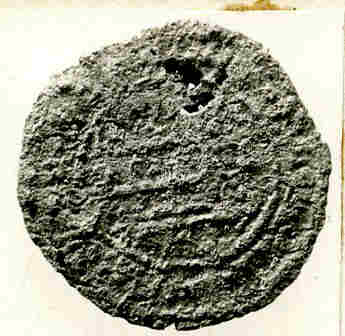
In the relentless pursuit of architectural purity and conceptual rigor, the Zoey Fashion Laboratory turns its gaze to the most humble yet potent of artifacts: the coin. For SS26, we are not merely inspired by currency; we excavate its very ontology. This is not a collection about wealth or commerce, but a study of compression, value, and the physics of a circle under pressure. The coin—specifically, a raw, unalloyed copper disc from the Global Frontier—becomes our primary architectural module. Its material, copper, dictates a palette of oxidation, conductivity, and thermal memory. Its form—a flat, rigid cylinder of infinitesimal height—presents a paradox of structure: how does one build volume from flatness, fluidity from rigidity, and future from the past?
The Metallurgy of Memory: Copper as a Living Skin
Copper is not a passive material. It breathes, oxidizes, and records its environment. For SS26, we treat it as a metallic dermis. The coin’s surface is not polished to a sterile shine but left to develop a patina—a verdigris map of its journey from the Global Frontier. This is not decay; it is a narrative. The garments will feature laser-sintered copper particles embedded into biopolymer matrices, creating a fabric that shifts from ochre to malachite as it reacts to humidity and body heat. The silhouette begins with the coin’s edge: a razor-thin line that defines the shoulder, the hip, the spine. We have engineered a magnetic exoskeleton of copper discs—each one a coin—that can be reconfigured by the wearer. A jacket becomes a cuirass; a skirt becomes a chainmail of currency. The structural innovation lies in the zero-waste tessellation of these discs, where each unit’s negative space becomes the positive volume of the next.
Futuristic Silhouettes: The Coin as a Compass for Volume
The traditional coin is a circle, but in our hands, it becomes a tool for asymmetrical expansion. The SS26 silhouette is defined by a single, dominant geometric gesture: the orbital ring. Imagine a copper coin, scaled to a diameter of 120 centimeters, suspended on a carbon-fiber frame. This ring orbits the body—sometimes at the waist, sometimes at the neck, sometimes slicing diagonally across the torso. It is not a hoop skirt; it is a gyroscopic anchor that redefines the wearer’s spatial presence. The fabric—a copper-infused microfilament—drapes from this ring in radial folds, mimicking the striations of a coin’s edge. The result is a silhouette that is simultaneously rigid and fluid, a paradox of industrial precision and organic movement.
For the avant-garde, we have developed the “Flattened Treasury” jacket. It begins as a single sheet of copper alloy, scored and folded using origami techniques derived from coin-stamping dies. When closed, it is a flat, circular disc that hangs on the body like a medallion. When opened, it expands into a three-dimensional cocoon with articulated sleeves that echo the profile of a coin’s rim. The closure is a magnetic coin-lock, a custom mechanism where two copper discs attract and seal the garment with a satisfying click. The entire piece is a study in compression and release, a metaphor for value itself: latent until activated.
Structural Innovation: The Coin as a Load-Bearing Element
The most radical departure for SS26 is the load-bearing coin. Traditionally, garments rely on seams, darts, and linings for structure. We have replaced these with a tensile system of copper coin modules. Each coin is pierced with a precise, laser-cut hole, through which a high-tensile dyneema cord is threaded. The coins act as compression nodes in a network of tension. A dress, for example, is constructed from a single continuous cord that loops through hundreds of copper coins, creating a geodesic net that conforms to the body. The weight of the coins—each one a small, dense mass—provides the garment with a gravitational logic. The wearer moves, and the coins shift, redistributing mass and creating a kinetic sculpture. This is not clothing; it is a wearable physics experiment.
The “Global Frontier” cape exemplifies this principle. It is a half-circle of copper-laminated silk, weighted at the hem by a series of oversized coin pendants. But these are not decorative; they are counterweights. As the wearer walks, the cape’s drape is dynamically altered by the pendulum motion of the coins. The silhouette is never static. It is a live algorithm of copper and gravity. Furthermore, we have integrated thermochromic copper oxides into the coin surfaces. When the wearer’s body temperature rises, the coins shift from copper-red to a deep, iridescent blue—a visual record of the garment’s interaction with the human form.
The Avant-Garde Edge: Coin as Codex
Beyond silhouette and structure, the coin serves as a semiotic device. Each coin in the collection is stamped with a unique, algorithm-generated pattern—a fractal iteration of the Zoey Laboratory logo, the date SS26, and a coordinate from the Global Frontier. The wearer becomes a living ledger, a walking archive of value that is not monetary but experiential. We have also developed the “Resonant Coin”—a small, copper disc embedded with a piezoelectric crystal. When the garment moves, the coin generates a low-frequency hum, an audible signature of the wearer’s kinetic energy. This is fashion as sonic architecture.
The final innovation is the “Null-Value” suit. It is a full-body garment made entirely of interlocking copper coins, each one suspended on a micro-magnetic grid. The suit has no seams, no zippers, no closures. It is donned by stepping into a magnetic field that assembles the coins around the body in a pre-programmed pattern. The silhouette is a second skin of copper scales, each one capable of independent rotation. The effect is a shimmering, reptilian armor that questions the very nature of value: what is the cost of a garment that has no beginning, no end, and no fixed form?
Conclusion: The Future is Flat and Circular
For SS26, Zoey Fashion Laboratory redefines the coin not as currency but as currency of form. It is a module of infinite potential, a circle that contains both zero and everything. The copper—raw, reactive, and humble—becomes a canvas for structural innovation and futuristic silhouette. We have moved beyond the garment as a covering to the garment as a system of forces, memories, and values. The coin is no longer a token of exchange; it is the very architecture of the future. This is not fashion. This is a new physics of dress.