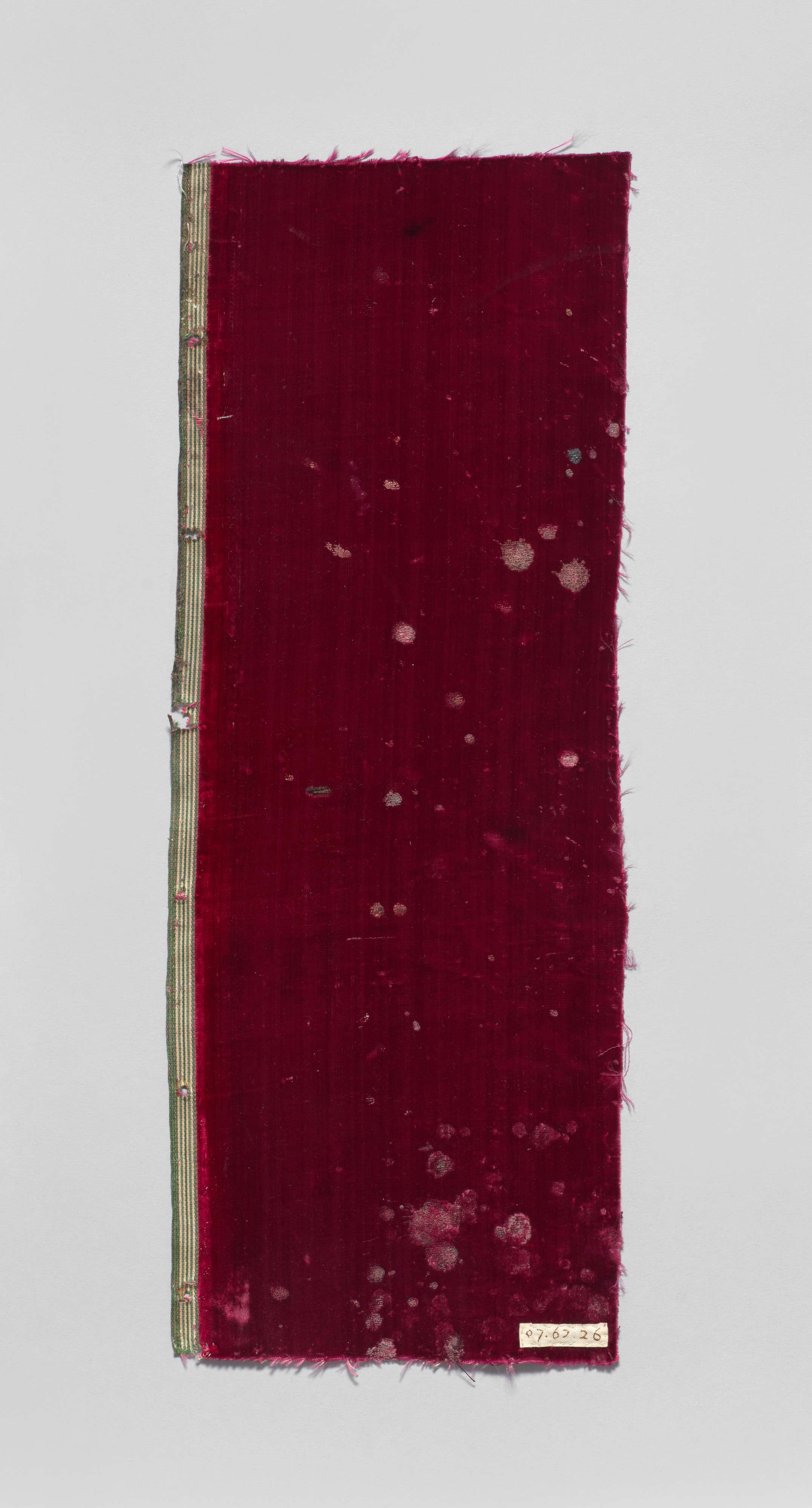
Deconstructing the Global Frontier: Silk as a Conduit for Avant-Garde Structuralism in SS26
The avant-garde is not a destination; it is a perpetual state of becoming. At Zoey Fashion Laboratory, we do not merely observe the future of fashion—we architect it. For the SS26 season, our analysis focuses on a singular artifact: Piece, a garment born from the Global Frontier and crafted from the most paradoxical of materials—Silk. This is not a study of drapery or romanticism. This is a manifesto for structural innovation, where the softest medium becomes the most aggressive tool for redefining the human silhouette.
The Global Frontier represents a geographical and conceptual erasure of borders. It is a synthesis of digital nomadism, bio-futurism, and post-industrial craftsmanship. Piece is not a dress, a coat, or a top; it is an architectural proposition. It challenges the very notion of wearability by treating the body as a scaffold for an evolving form. In an era of climate anxiety and digital saturation, Piece offers a tactile antidote: a garment that moves, breathes, and reconfigures itself without compromising its avant-garde integrity.
Material Paradox: Silk as Structural Armor
Silk has historically been relegated to the realms of luxury, fluidity, and sensuality. In the context of Piece, it is weaponized. Through a proprietary process of structural laminating and thermal bonding, the silk is transformed into a material that retains its organic luster while achieving a tensile strength comparable to technical textiles. This is not a compromise; it is a liberation. The fabric is no longer passive; it becomes an active participant in the garment’s architecture.
The Global Frontier origin of the silk is critical. Sourced from wild mulberry silkworms in a bio-regenerative farm spanning the borders of Japan, China, and a floating platform in the Pacific, the material carries a genetic memory of displacement and adaptation. This silk is not uniform; it possesses micro-gradations in thickness and iridescent color shifts that mimic the aurora borealis. When manipulated, it creates a visual dissonance—soft yet rigid, ancient yet futuristic. This paradox is the foundation of the SS26 avant-garde study.
Futuristic Silhouettes: The Non-Euclidean Body
Traditional silhouettes are bound by symmetry and gravity. Piece rejects both. The garment’s design is based on non-Euclidean geometry, where seams do not follow the natural curves of the body but instead create hyperbolic planes and toroidal folds. The result is a silhouette that appears to warp space around the wearer. From the front, the garment suggests a sharp, angular shoulder line that extends into a biomorphic wing; from the side, it collapses into a spiral of compressed silk that mimics a fractal pattern.
Key structural innovations include:
1. The Kinetic Spine: A central seam runs from the nape of the neck to the lower back, embedded with micro-articulated silicone nodes. These nodes allow the silk to flex and lock into position, enabling the wearer to alter the garment’s volume and silhouette in real time. The spine transforms Piece from a static object into a dynamic sculpture.
2. The Inflatable Casing: Hidden within the interior of the silk are air-tight chambers that can be inflated via a discreet hand pump. This creates volumetric bursts—a sudden expansion of the hip, a ballooning of the sleeve—that challenge the viewer’s perception of the body. The inflation system is controlled by a biometric sensor that responds to the wearer’s heart rate, making the garment a reactive extension of the self.
3. The Negative Space Weave: Sections of the silk are laser-cut into lattice structures that reveal the skin beneath. These cuts are not decorative; they are structural apertures that reduce material weight while creating tension lines that pull the garment into a new form. The negative space acts as a visual counterpoint to the inflated volumes, establishing a dialogue between absence and presence.
Structural Innovation: The Architecture of Disassembly
At the heart of Piece is the principle of deconstructive reconfiguration. The garment is not a single, finished object but a kit of parts. The silk is segmented into modular panels connected by magnetic clasps and biodegradable hooks. The wearer can disassemble the garment into three distinct components: a corset-like bodice, a floating train, and a detachable hood. Each component can be worn independently or combined with other pieces from the SS26 collection, creating an infinite variety of silhouettes.
This modularity is not merely functional; it is a philosophical statement. In a world of fast fashion and planned obsolescence, Piece demands an active relationship between the wearer and the garment. It is an object of resistance against the disposable. The silk, treated with a self-healing polymer, can repair minor tears through exposure to UV light, extending the garment’s lifespan indefinitely.
Contextual Analysis: The Avant-Garde as a Living Archive
Piece exists within a lineage of avant-garde couture that includes the radical deconstruction of Rei Kawakubo, the architectural rigor of Iris van Herpen, and the bio-futurism of Anrealage. However, it diverges from these predecessors in its emphasis on user agency. Where traditional avant-garde garments often impose a singular vision on the wearer, Piece invites collaboration. The wearer is not a mannequin; they are a co-creator of the form.
The Global Frontier context further enriches this narrative. The silk’s origin—a borderless, regenerative ecosystem—mirrors the garment’s ability to transcend geographic and temporal boundaries. Piece is not a souvenir of a specific culture; it is a prototype for a future where materials and forms are not constrained by national identity. It is a cosmopolitan artifact that speaks to the fluidity of the 21st-century self.
Conclusion: The Imperative of the Avant-Garde
For Zoey Fashion Laboratory, Piece is not a final product but a provocation. It challenges the industry to abandon the tyranny of the seasonal trend and embrace the permanent revolution of form. The use of silk—a material historically associated with tradition and luxury—as a vehicle for structural aggression is a deliberate subversion. It proves that the avant-garde is not about rejecting the past but recontextualizing it for a future that is already here.
In SS26, Piece stands as a testament to the power of material intelligence and architectural thinking. It is a garment that does not fit the body; it creates a new body. It is a garment that does not follow the frontier; it defines it. This is the definitive avant-garde study for a season that demands not just innovation, but transformation.