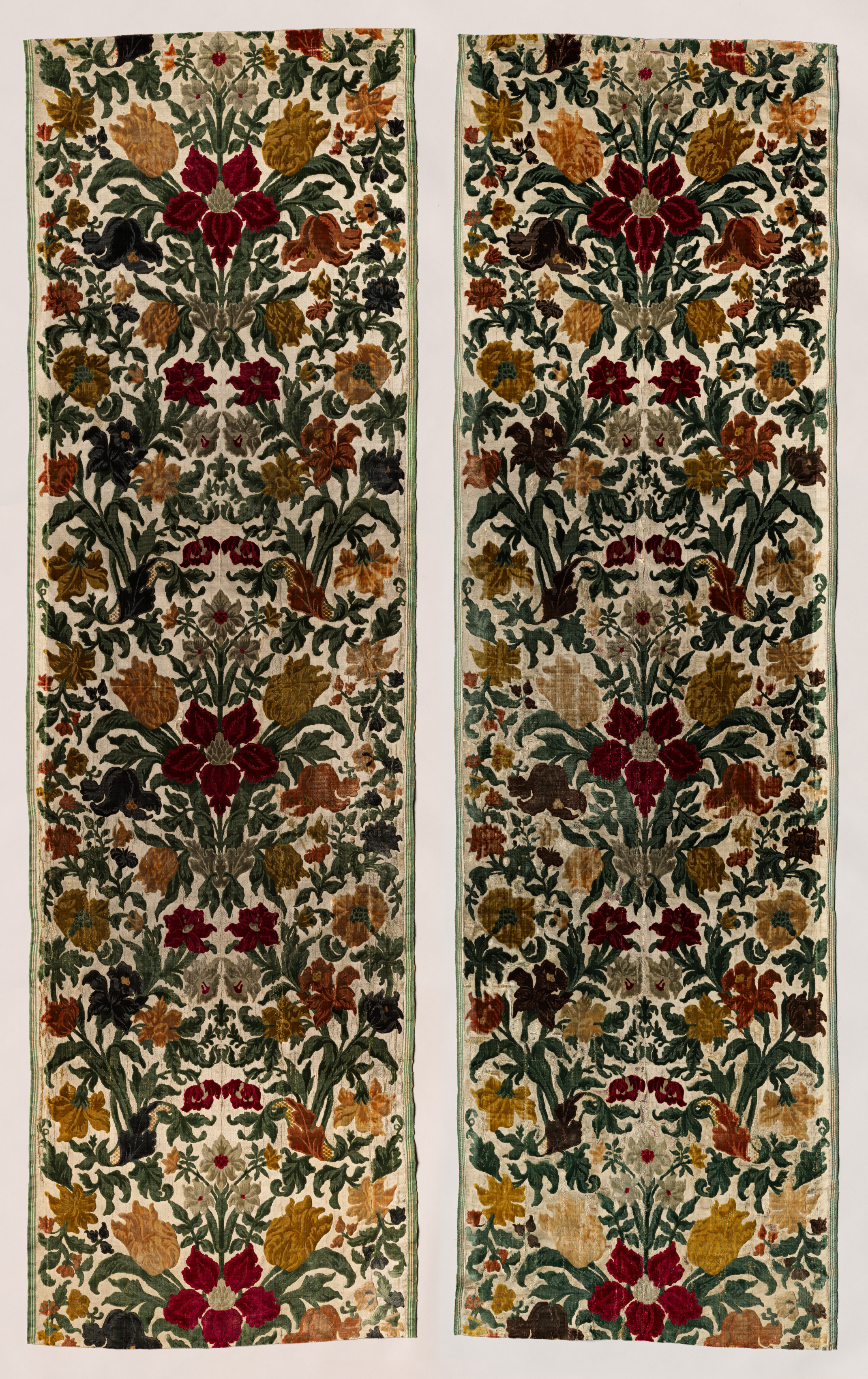
Deconstructing the New DNA: A Technical Analysis of Genoese Floral Velvet Lengths for Zoey Fashion Lab
At Zoey Fashion Lab, our mission is to interrogate the very fabric of fashion—literally. We do not merely source textiles; we deconstruct their history, their structure, and their potential for radical transformation. Our latest acquisition, a series of floral velvet lengths originating from Genoa, Italy, presents a compelling case study. These silks, woven with a sophisticated interplay of cut, uncut, and voided velvet techniques, are not simply luxurious remnants of a bygone era. They represent a New DNA Strand—a genetic code that, when spliced with avant-garde design, can yield garments that are both historically resonant and fiercely futuristic.
I. The Genoese Genetic Code: Technical Precision in Velvet Construction
Genoa, or Genova, was a powerhouse of velvet production from the 15th through the 17th centuries. Its looms produced some of the most technically complex and visually opulent velvets in Europe. To understand our material, we must first decode its technical DNA. The fabric in question is a silk velvet, a term that already implies a luxury substrate. The silk base provides a luminous, smooth ground, while the pile—the raised surface—is created through an intricate weaving process using a second warp.
The defining characteristic of these lengths is their trifecta of pile techniques: cut, uncut, and voided. This is not a simple pattern; it is a deliberate, sculptural manipulation of surface and depth.
Cut Velvet (ciselé): In areas of cut velvet, the loops of the pile warp are sliced open during weaving, creating a dense, plush, and highly reflective surface. This technique is used to define the primary floral motifs—the petals, leaves, and stems of the design. The cut pile catches light, creating a sense of three-dimensional volume and opulence. It is the "positive" space of the pattern, the assertive, tactile element.
Uncut Velvet (terry or bouclé): In contrast, uncut velvet leaves the pile loops intact. This creates a lower, more matte, and subtly textured surface. The uncut loops produce a granular, almost beaded effect that diffuses light. In our Genoese lengths, uncut velvet often forms the secondary background or the internal details of the floral forms—the veins of a leaf or the stamen of a flower. This creates a tactile chiaroscuro, a play between glossy plushness and matte texture that adds extraordinary visual complexity.
Voided Velvet (à fonds d'or or à fonds d'argent): Perhaps the most technically daring element is the voided areas. Here, the pile is entirely absent, leaving only the flat silk ground weave exposed. In some historic examples, this ground was woven with gold or silver thread (à fonds d'or/argent), but in our lengths, it is a lustrous, unadorned silk. The voided sections define the negative space—the background between the floral clusters. This creates a dramatic contrast: the dense, plush, and patterned areas float against a flat, shimmering void. It is a technique of absence and presence, a deliberate silence in a conversation of textures.
II. The Floral Motif: A Baroque Lexicon Deconstructed
The floral pattern itself is not a literal botanical illustration. It is a stylized, baroque lexicon of forms: sinuous, asymmetrical, and deeply intertwined. The motifs—pomegranates, thistles, acanthus leaves, and stylized blossoms—are arranged in a continuous, undulating pattern that often defies a single focal point. This is a dynamic, non-hierarchical composition, a visual field that encourages the eye to wander.
For Zoey Fashion Lab, this is critical. We do not treat these motifs as sacrosanct. Instead, we view them as design elements to be fragmented, scaled, and re-contextualized. The baroque floral, with its inherent drama and movement, is the perfect raw material for avant-garde deconstruction. A single, oversized blossom can become a sculptural shoulder piece. The voided background can be cut away to reveal a contrasting underlayer. The uncut velvet loops can be left raw, frayed, or even partially sheared to create a distressed, post-industrial finish.
III. The New DNA Strand: Avant-Garde Applications for Zoey Fashion Lab
How do we translate this 16th-century technical marvel into a 21st-century avant-garde statement? The answer lies in rupture and recombination. We will treat the velvet not as a finished fabric, but as a genetic sequence to be spliced, edited, and expressed in new forms.
1. Deconstruction and Negative Space: The voided velvet technique is our starting point. We will amplify this concept by physically cutting away the pile in unexpected places, creating new voids that disrupt the original pattern. A jacket might have the velvet pile removed from the shoulders, leaving only the silk ground, which is then backed with a sheer, iridescent organza. This creates a ghostly, skeletal garment where the floral pattern is both present and absent.
2. Textural Collision: The interplay of cut, uncut, and voided surfaces is a textural symphony. We will introduce a fourth element: intentional abrasion. Using laser cutting or hand-sanding, we will selectively shear the cut pile in certain areas, creating a distressed, worn-in effect that contrasts with the pristine, untouched sections. This speaks to the patina of time, a core concept in avant-garde design. The garment becomes a record of its own creation and potential decay.
3. Asymmetric Draping and Reconstruction: The weight and drape of silk velvet are both luxurious and challenging. We will not use it in conventional, structured silhouettes. Instead, we will cut the lengths into irregular, geometric panels—circles, trapezoids, and sharp angles—and reassemble them using exposed, industrial seams. A single sleeve might be constructed from three different sections of the velvet, each showcasing a different pile technique, creating a collage of texture and pattern. The floral motifs will be deliberately misaligned, creating a sense of deliberate dissonance.
4. Hybridization with Non-Traditional Materials: The velvet will not stand alone. We will fuse it with neoprene, recycled plastics, and metallic mesh. A floral velvet panel might be inset into a neoprene bodice, creating a jarring juxtaposition of baroque opulence and athletic functionality. Alternatively, the voided areas can be filled with a translucent, heat-bonded polymer, creating a fossilized or petrified effect—a preservation of the floral form in an alien medium.
IV. Conclusion: The Future is Woven in the Past
The Genoese floral velvet lengths are not a nostalgic artifact. They are a repository of technical intelligence—a manual on how to manipulate light, texture, and space with thread. For Zoey Fashion Lab, they represent a New DNA Strand precisely because they are so deeply encoded with the past. By deconstructing their cut, uncut, and voided logic, we can extract the core principles of sculptural fabric manipulation and re-express them in a language that is radical, disorienting, and deeply contemporary. The result will be garments that are not merely worn, but experienced—a tactile, visual, and conceptual dialogue between the artisan looms of Genoa and the avant-garde laboratory of the future.