Technical Deconstruction: The Crossbow Bolt as Avant-Garde Framework
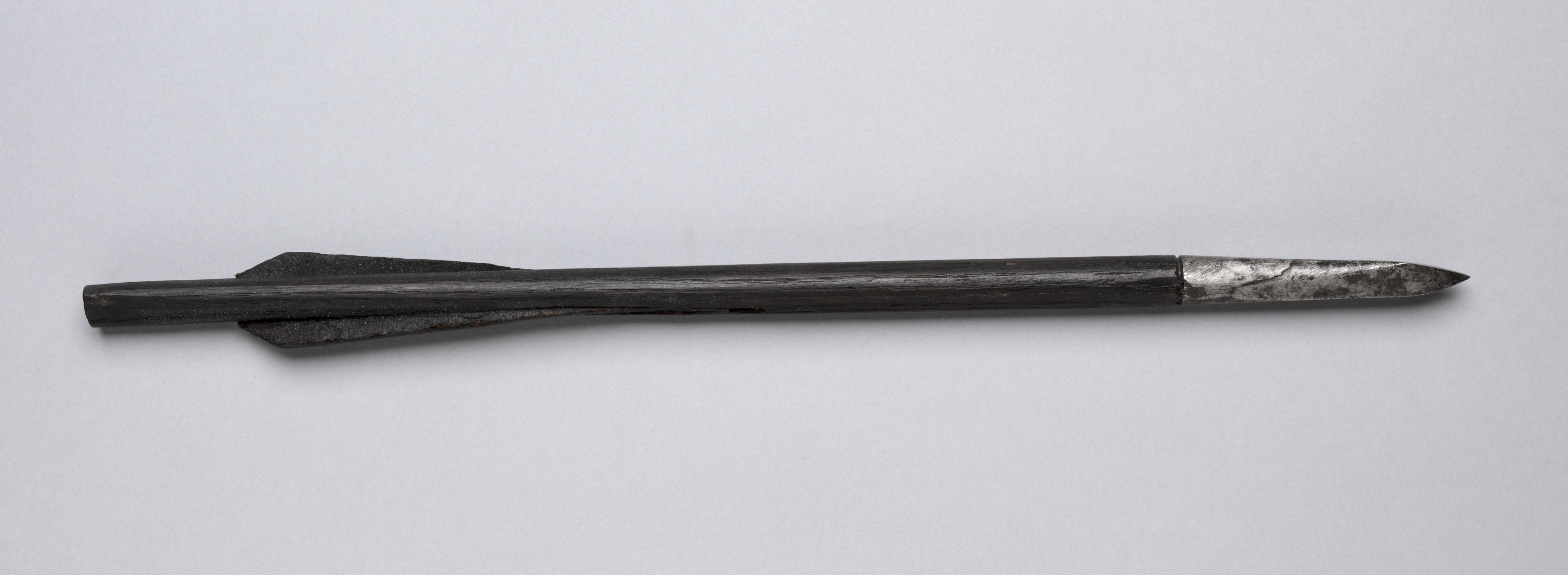
The provided subject, Crossbow Bolt (Origin: Germany. Technical: wood, leather, steel), presents not merely an object but a concentrated thesis on tension, release, and lethal precision. Its reference to a New DNA Strand within an Avant-garde style directive is profoundly apt. We are not replicating medieval armory; we are extracting its genetic code to synthesize a new sartorial organism. The crossbow bolt is a perfect, pressurized system—a synergy of natural and forged materials awaiting kinetic release. Our task is to halt that release, to freeze the moment of potential energy, and translate it into a wearable architecture of intention.
Material Genome: Wood, Leather, Steel
These are not arbitrary components; they represent a fundamental triad of structure, connection, and penetration.
Wood (The Core & The Spine): Traditionally ash or birch, the shaft is the foundational element. In our deconstruction, wood transforms from a cylindrical shaft into the principle of rigid, lightweight linearity. This translates to silhouettes built on strong, clean lines—perhaps through exaggerated shoulder spines that extend into sharp, minimalist collars, or through bodices structured with internal boning that follows the body's verticality yet refuses to curve. The "grain" of the garment becomes paramount, directing seams and patterns in a single, forceful direction. We might use laminated veneers, polished to a high sheen, as architectural panels integrated into a garment's back or as a structured cuff, always emphasizing the innate strength and organic origin of the line.
Leather (The Grip & The Fletching): Leather serves two critical functions: it provides the user's grip on the bolt and, as fletching, stabilizes its flight. In the Zoey Lab context, leather becomes the element of tactile interface and controlled drag. Imagine a garment where the wearer's points of contact—a cinched waist, a fastened cuff, a harness—are rendered in supple, tensioned leather, representing the "grip." Conversely, fletching inspires movement and stabilization. This could manifest as asymmetric leather flaps or fins attached to a sleeve or hip, designed not for flutter but for deliberate, aerodynamic disruption of the silhouette. Leather here is functional sculpture, creating friction against space itself.
Steel (The Point & The Penetration): This is the uncompromising terminus, the purpose-made tip. Steel in our collection symbolizes focused extremity and cold refinement. We move away from literal sharpness toward a language of severe, polished points and hardened edges. This could be the sharp plunge of a neckline that culminates in a geometric metal clasp, the tapered, metallic tip of a blazer's lapel, or hardware that is integral, not accessory—a closure system that looks like a mechanized arrowhead. The steel element introduces a sense of calibrated threat and flawless execution, the final, decisive note in the garment's composition.
Structural Blueprint: The DNA of Tension
The true genius of the crossbow bolt lies in its state of loaded potential. It is a tool designed for a specific, singular moment of transformation. This is our core avant-garde narrative.
The Principle of Loaded Asymmetry: A bolt nocked and ready is a picture of asymmetric tension—the rear notched, the front aimed. Garments can embody this through asymmetric closures, diagonal zippers that suggest a path of release, or hemlines that are dramatically higher in the front and elongated in the back. The wearer becomes the carrier of this poised energy.
Integration of the "Rail": A bolt does not fly freely; it is guided by a rail. This inspires garments with integrated guiding lines—seams that are emphasized with piping or LED fibers (a modern interpretation of steel's gleam) that run along the body, directing the eye and suggesting a predetermined, flawless trajectory of form. A dress could feature a single, central "rail" seam from neck to hem, perfectly bisecting the body.
Modularity & The Quiver Concept: A bolt is part of a system. Referencing the "New DNA Strand," we can propose a modular clothing system. Separate pieces—a structured wood-core spine (a vest), leather stabilizer panels (detachable sleeves or skirts), steel-pointed stoles—can be "nocked" together via innovative fasteners, allowing the wearer to assemble their own singular silhouette, much like selecting a bolt for a specific purpose.
The New DNA Strand: Synthesizing the Avant-Garde Organism
The final collection must feel like a family of related forms, a new species born from this deconstruction. The aesthetic is biomechanical elegance.
Imagine a full-length coat where the back is a sheer, tension-stretched membrane (like a bowstring) over a polished wooden spine. A leather harness crosses the torso, securing the coat at a single, off-center steel point. A gown features a fletched leather appendage that arcs from the shoulder, not as a cape but as a stabilizer, its lines clean and purposeful. Trousers are cut with an internal leather grip at the waist and taper to a stiff, slightly pointed hem—the steel-point analogy—interacting precisely with footwear.
The color palette derives from the materials: bleached wood tones, matte graphite, burnished saddle, and the stark white of ash fletching, punctuated by the unforgiving shine of polished or blackened steel. Textures are crucial—the grain of wood, the pull-up of leather, the mirror of steel—all in stark, respectful contrast.
In conclusion, the German Crossbow Bolt provides a formidable genetic template. By isolating and recombining its material essences and its physics of tension, Zoey Fashion Lab can engineer an avant-garde collection that is both primal and precision-engineered. It will be clothing that does not merely adorn the body but armors it with potential, framing the wearer as both the archer and the arrow—a complete, poised system of deliberate intent.