Deconstructing the Temporal Gaze: Hermann von Wedigh III as a Catalyst for SS26 Avant-Garde Silhouette
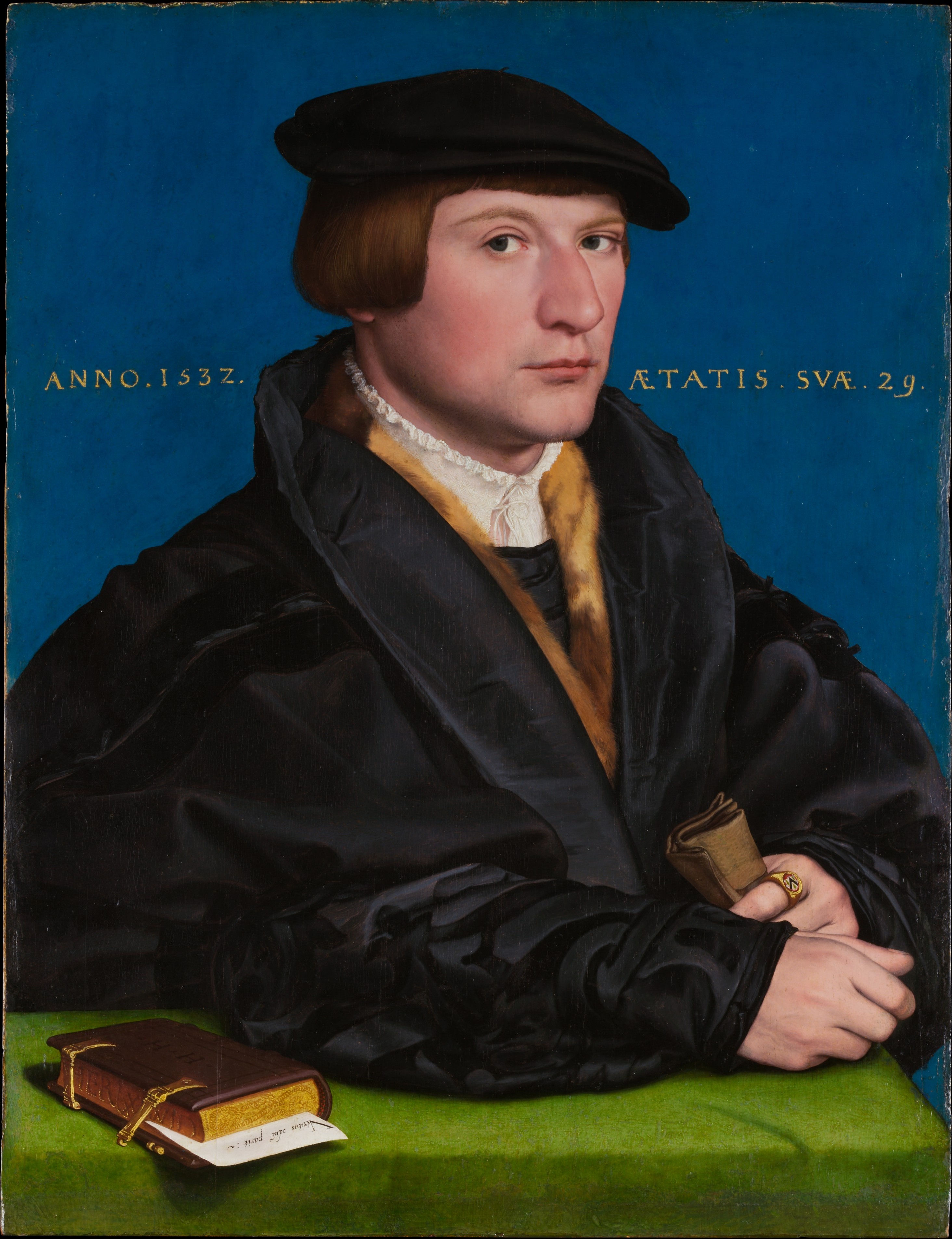
The Renaissance portrait of Hermann von Wedigh III, rendered in oil and gold on oak, is not merely a relic of 16th-century mercantile identity. For the SS26 collection at Zoey Fashion Laboratory, it serves as a foundational text—a blueprint for a new kind of structural innovation that collapses time, materiality, and the very definition of the human form. The subject’s rigid posture, the meticulous layering of his black velvet doublet, the stark white of his collar, and the gilded, almost holographic, light on his face present a paradox: absolute stillness and latent kinetic energy. Our mission is to extract the futuristic silhouettes from this historical chrysalis, translating its formal constraints into a language of liberation.
The Armature of Restraint: Reimagining the Doublet as Exoskeleton
The doublet worn by von Wedigh is a masterpiece of compression. It is a second skin, a cage of fabric that defines the torso’s geometry. For SS26, we reject the doublet as a garment of social restriction. Instead, we re-engineer it as a wearable exoskeleton. The oil and gold medium suggests a surface that is both matte and reflective. We will achieve this through a composite of recycled carbon fiber and liquid-crystal-infused silk organza. The silhouette will not drape; it will cantilever. The shoulder line, traditionally a point of support, becomes a launching pad.
We propose a “Gilded Cage” bodice: a series of interlocking, hand-carved oak panels—sourced from sustainably managed forests—are laser-cut to mimic the grain of the original painting. These panels are not sewn but connected via magnetic, gold-leafed titanium joints. The result is a silhouette that is simultaneously rigid and fluid, capable of locking into a static pose or articulating into a dynamic, angular form. The waist is cinched not by a belt, but by a geodesic compression frame that extends into a flared, asymmetrical peplum, echoing the painting’s stark contrast between the subject’s broad shoulders and narrow hips. This is not a return to historical costume; it is a forward-facing architecture of the body.
The Collar as Void: Negative Space and the Holographic Gaze
Perhaps the most arresting element of the portrait is the white collar—a crisp, geometric halo that isolates the head from the dark, volumetric body. In our avant-garde analysis, this collar is not a decoration but a portal. It represents the void, the negative space that defines form. For SS26, we transform this into a “Temporal Ruffle”—a structure that is both absent and present. Using a technique we call “vapor-layering”, we will create a collar of micro-perforated, electrospun polyurethane that is bonded to a memory-wire frame. When at rest, it collapses into a flat, two-dimensional disk. When activated by body heat or a subtle gesture, it inflates into a three-dimensional, translucent halo that projects a digital, gold-toned light field—a direct translation of the painting’s gilded highlights.
This silhouette innovation forces a re-evaluation of the neckline. The torso beneath is left deliberately exposed, sheathed in a second-skin of black, bio-ceramic-infused latex that mimics the oil’s deep, absorbing blacks. The void between the collar and the body becomes a stage for the wearer’s movement, a breathing space that challenges the traditional hierarchy of garment over form. The collar is no longer an accessory; it is an environmental interface, a wearable architecture that manipulates the surrounding air.
The Gilded Hand: Deconstructing the Painted Gesture
Von Wedigh’s hands are painted with a particular, almost disembodied precision. They are not active; they are displayed. One hand rests on a skull, the other holds a glove. These are objects of contemplation, not utility. For our futuristic silhouettes, we deconstruct the hand as a functional appendage and re-imagine it as a structural counterweight. We introduce the “Memento Mori Gauntlet”—a single, elongated sleeve that extends past the fingertips, terminating in a rigid, gold-leafed oak claw. This is not a glove; it is a prosthetic that alters the wearer’s center of gravity.
The silhouette of the arm is radically asymmetrical. One arm is bare, encased in a sheer, liquid-metal mesh that catches light like the painting’s gold ground. The other is encased in this sculptural gauntlet, which is attached to the bodice via a series of tension cables. The effect is a dynamic imbalance—the wearer’s posture is forced into a new, deliberate stance, a living sculpture that references the painting’s frozen moment. The gauntlet can be detached and reattached at different points on the exoskeleton, allowing for a modular, customizable silhouette that shifts from static to kinetic. This is the ultimate expression of structural innovation: a garment that does not follow the body but redefines its potential.
Material Alchemy: Oil, Gold, and the Digital Frontier
The original medium—oil and gold on oak—is a study in static opulence. Our material palette for SS26 is a study in dynamic transformation. The “oil” is translated into a bio-resin that is self-healing and responsive to pressure. The “gold” is not a pigment but a photovoltaic thread woven into the fabric, capable of harvesting ambient light to power the holographic collar and the magnetic joints of the exoskeleton. The “oak” is not wood but a mycelium-based composite that is grown into the desired shape, then treated with a gold leaf that is also a conductive surface.
This alchemy allows for a garment that is not merely worn but inhabited. The silhouette changes throughout the day. In low light, the gold threads are dormant, the structure is matte and heavy. In bright light, the threads activate, the structure appears to float, and the collar glows. The garment becomes a living document of its environment, a direct descendant of the painting’s play between the opaque and the luminous. The futuristic silhouette is not about looking like a machine; it is about becoming a dynamic, responsive system.
Conclusion: The Portrait as a Blueprint for Tomorrow
Hermann von Wedigh III, in his oil and gold stillness, offers a radical proposition for SS26: that the most futuristic silhouettes are born from the most rigorous historical constraints. By deconstructing his doublet into an exoskeleton, his collar into a void, and his hands into counterweights, we do not recreate the past. We accelerate it. The result is a collection that is both a tribute to the precision of Renaissance portraiture and a manifesto for a new kind of wearable architecture—one that is modular, responsive, and unapologetically structural. This is not fashion as adornment. This is fashion as a temporal intervention.