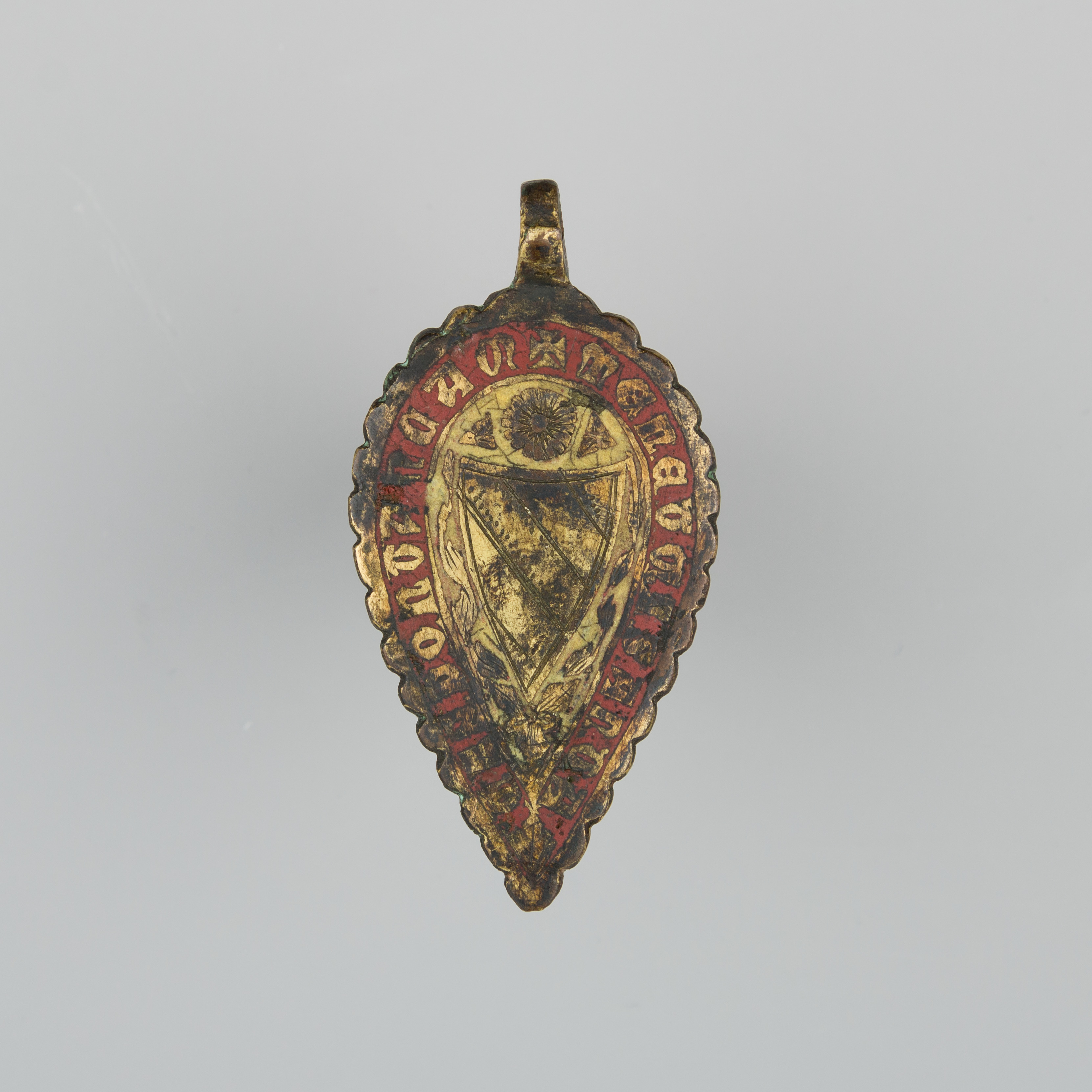
The Deconstructed Heraldry: A Study in Copper, Gold, and Enamel for SS26
The avant-garde couture landscape for Spring/Summer 2026 is poised at a critical inflection point—a moment where the tactile memory of ornamentation collides with the cold precision of digital-era silhouettes. In this context, the Spanish-origin badge or harness pendant, rendered in copper, gold, and enamel, emerges not as a mere accessory but as a foundational architectural unit. This analysis deconstructs the object’s potential to redefine structural innovation, moving beyond traditional jewelry logic to become a core component of a futuristic, deconstructive garment system.
Materiality as a Narrative of Time
The triad of materials—copper, gold, and enamel—offers a rich, dialectical tension. Copper, with its inherent patina and conductive warmth, grounds the piece in earthly, industrial origins. It whispers of oxidization, of time’s passage, and of a raw, unpolished futurism. Gold, conversely, introduces a layer of sovereign ambition, a nod to the heraldic traditions of Spanish craftsmanship, yet here it is not ostentatious but strategic—used for fine filigree or as a gilded edge that catches light at hyper-specific angles. Enamel, in its vitreous, almost digital sheen, provides the final paradox: a surface that is simultaneously ancient (cloisonné techniques) and hyper-modern (luminous, screen-like reflections). For SS26, this material palette suggests a garment that ages and evolves with the wearer, where the copper’s patina becomes a living surface, the gold remains a constant beacon, and the enamel acts as a frozen moment of color—a pixelated memory.
From Badge to Exoskeleton: Restructuring the Silhouette
The conventional function of a badge—a marker of identity, rank, or allegiance—is subverted in this avant-garde context. Instead, the pendant or badge becomes a strategic load-bearing node within a deconstructed garment. Imagine a sheer, architectural mesh bodysuit, its structure defined not by seams but by a network of these pendants. Each copper-gold-enamel piece is not merely pinned; it is integrated via hidden magnetic clasps or micro-chainmail loops, creating a dynamic, adjustable exoskeleton. The silhouette shifts: a pendant placed at the sternum pulls the fabric into a sharp, angular décolletage; a series of them along the spine forms a rigid, vertebral crest that flares outward, mimicking the silhouette of a futuristic coat of arms. This is not decoration; it is structural re-engineering, where the pendant dictates the garment’s volume, tension, and flow.
The Harness as a Cartographic System
When the badge evolves into a harness pendant, it unlocks a new cartography of the body. The harness itself is reimagined not as leather straps but as a web of ultra-fine, gold-plated copper chains—almost invisible, yet tensile. The enamel badges serve as waypoints, or anchors, at key anatomical junctures: the clavicle, the iliac crest, the acromion. For SS26, this creates a futuristic silhouette defined by negative space. The garment is not a covering but a suspension system. The body becomes the landscape, and the pendant-harness complex maps its topography. A large, central enamel badge at the solar plexus might emit fine gold threads that radiate outward, connecting to smaller copper nodes along the ribs, effectively creating a second, ethereal skin that floats millimeters above the actual skin. This is structural innovation at its most radical: a garment that is almost entirely absent, yet defines form through tension and suspension.
Deconstructive Aesthetics: The Fragment as Whole
The Spanish heritage of the badge—often associated with religious or military iconography—is deliberately fractured. In this avant-garde analysis, the pendant is not a complete symbol but a fragment of a larger, unknown language. The enamel might feature a single, abstracted geometric motif—a half-circle, a broken line—that is repeated across multiple pendants in a modular system. The wearer becomes a curator, arranging these fragments to create a unique heraldic code. This deconstructive approach rejects narrative closure. The copper may be intentionally distressed, the gold applied in asymmetrical patches, the enamel chipped to reveal the metal beneath. This is not decay but archaeology of the future—a piece that looks as if it has been excavated from a post-human civilization, then reassembled.
Luminosity and the Digital Gaze
For SS26, the interaction of these materials with light is paramount. The enamel’s high-gloss surface becomes a reflective screen, catching and distorting the environment. When multiple pendants are worn in a cluster, they create a kaleidoscopic effect, fragmenting the viewer’s gaze. The gold, particularly when used as a fine wire or micro-beading, catches ambient light and creates a subtle, moving constellation on the garment’s surface. The copper, with its matte, oxidized finish, absorbs light, creating depth and shadow. This interplay is not merely aesthetic; it is a functional commentary on surveillance and visibility. The garment becomes a device that controls how the wearer is seen—reflecting, absorbing, and distorting light in equal measure.
Conclusion: A Blueprint for the Avant-Garde Body
The Spanish copper, gold, and enamel badge or harness pendant is far more than a decorative artifact. It is a manifesto for structural innovation in SS26. Its materiality speaks to a future that honors craft while embracing decay. Its integration into an exoskeletal harness redefines the silhouette as a dynamic, adjustable system of tension and release. Its deconstructive aesthetics elevate the fragment to a principle of design, allowing the wearer to author their own heraldic identity. For Zoey Fashion Laboratory, this object is not a final product but a generative seed—a catalyst for garments that are part architecture, part armor, part cartography. The future of couture lies not in draping fabric but in suspending meaning, and this pendant, with its ancient materials and futuristic potential, is the perfect node from which to begin that suspension.