Deconstructing the Velvet Fragment: A Technical and Aesthetic Analysis for Zoey Fashion Lab
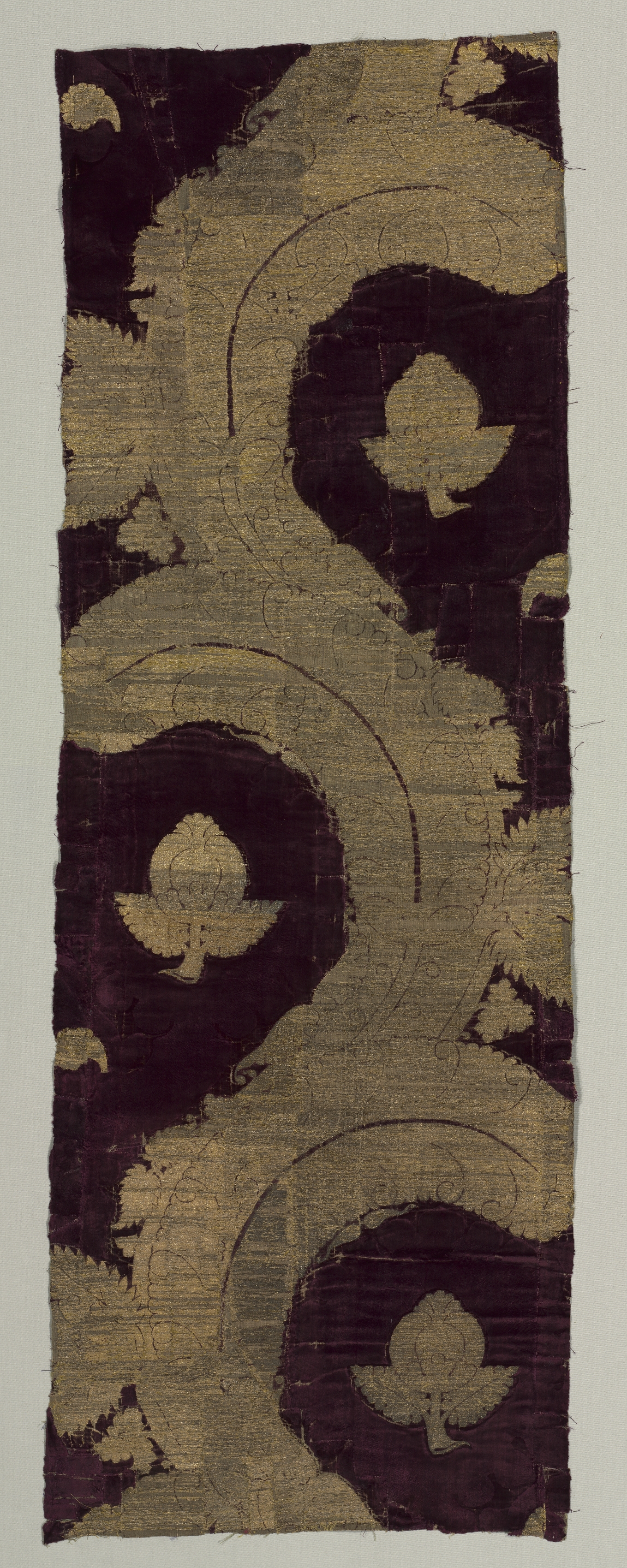
This analysis, prepared for the Chief Fabric Deconstructionist at Zoey Fashion Lab, examines a singular velvet fragment of Italian origin, dating to the early 15th century. The specimen, cataloged under the reference “New DNA Strand,” presents a unique opportunity to extract design principles and material intelligence for our avant-garde collections. The fragment is technically composed of cut, voided, and brocaded velvet, utilizing silk and gold thread. This report will dissect its structural, textural, and visual properties, proposing a methodology for translating its historical DNA into contemporary, disruptive fashion language.
Technical Composition: The Interplay of Cut, Voided, and Brocaded Velvet
The fragment’s technical complexity is its most defining feature. Cut velvet provides the foundational pile, created by shearing loops of silk to produce a dense, plush surface. This pile, in its original state, would have absorbed light, offering a deep, almost liquid depth. However, the fragment is not a uniform field of pile. Voided velvet introduces deliberate negative space. By selectively cutting or omitting the pile during weaving, the ground weave—a plain or twill silk—is exposed. This creates a stark contrast between the soft, raised pile and the flat, often lustrous ground. The voided areas function as a kind of “erasure,” disrupting the velvet’s inherent softness with a graphic, almost architectural precision.
Further complexity arises from brocading. Gold thread, typically a gilded silver strip wrapped around a silk core, is woven into the fabric in supplementary wefts. This technique is not integral to the velvet structure but is added as an embellishment, floating on the surface to create metallic motifs. The gold thread, now tarnished with age, originally would have provided a brilliant, reflective counterpoint to the matte silk pile. The combination of these three techniques—cut, voided, and brocaded—results in a fabric that is simultaneously tactile, optical, and three-dimensional. For Zoey Fashion Lab, this suggests a deconstructive approach to surface: we can manipulate pile height, create intentional voids, and introduce metallic elements as disruptive, rather than decorative, accents.
Material DNA: Silk and Gold as Avant-Garde Agents
The materials themselves—silk and gold—carry specific behavioral properties that inform our deconstruction. Silk, a protein fiber, is inherently hygroscopic, meaning it absorbs and releases moisture, altering its drape and weight. In the fragment, the silk pile has likely compressed over centuries, losing some of its original spring. This compression is a form of “memory” that we can exploit. For avant-garde designs, we can treat silk to intentionally create uneven pile heights, simulating aged or distressed textures. The gold thread, while visually rigid, is actually a fragile composite. Its metallic surface can be chemically patinated or mechanically abraded to reveal the silk core beneath, introducing a concept of degradation as aesthetic.
The “New DNA Strand” reference suggests a genetic metaphor. The fragment’s material code—the specific weave structure, the ratio of pile to void, the placement of gold—can be considered a set of instructions. Our task is to mutate this code. For example, we can isolate the voided areas and amplify them, creating large, irregular gaps in the fabric that expose the body or underlying layers. The gold thread motifs can be extracted and recontextualized as independent, floating elements, perhaps as embroidered patches or laser-cut appliqués. This process of genetic modification moves the fragment from a historical artifact to a living, evolving design system.
Visual and Textural Analysis: The Fragment as a Disruptive Surface
Visually, the fragment would have presented a highly structured pattern, likely featuring symmetrical floral or geometric motifs typical of Renaissance Italian velvets. The voided areas would have defined these motifs, while the gold brocading added hierarchical emphasis. For avant-garde application, we reject this symmetry. Instead, we propose a deconstructed pattern mapping. The fragment’s design can be scanned, digitized, and then algorithmically distorted. Pile heights can be randomized. Voided areas can be expanded asymmetrically. Gold thread can be applied in chaotic, non-repeating trajectories, mimicking the randomness of biological growth.
Texturally, the contrast between the soft, dense pile and the flat, smooth ground is a primary design element. We can exaggerate this by using differential finishing. For instance, the silk pile can be treated with a micro-sanding process to create a suede-like nap, while the voided areas are polished to a high sheen. The gold thread can be left raw and uncoated, creating a rough, oxidized surface. This creates a fabric that is not uniform but rather a series of tactile events—some areas inviting touch, others repelling it. This aligns with avant-garde principles of discomfort and challenge, where the garment’s surface becomes a site of tension.
Application to Zoey Fashion Lab’s Avant-Garde Aesthetic
To translate this fragment into a contemporary collection, we propose three key strategies:
1. Deconstructive Layering: The fragment’s structure—pile, void, and metallic overlay—can be replicated as separate, wearable layers. A base garment in flat, voided silk can be overlaid with a detachable, cut-velvet shell, and then accented with gold-thread appliqués that are free-floating or loosely attached. This allows the wearer to “reconstruct” the fabric’s complexity, echoing the fragment’s original three-dimensionality.
2. Material Hybridization: Introduce non-traditional materials into the velvet structure. For example, replace some silk threads with synthetic monofilament or recycled metallic yarns. This creates a hybrid velvet that retains the historical pile but disrupts its tactile and visual consistency. The voided areas can be filled with transparent or reflective materials, creating a sense of depth and illusion.
3. Pattern as Process: Instead of replicating the original pattern, use the fragment’s design as a starting point for a generative algorithm. The algorithm can produce infinite variations of pile heights, void shapes, and gold placements. Each garment becomes a unique iteration, a “mutation” of the original DNA. This aligns with the avant-garde emphasis on singularity and non-reproducibility.
Conclusion: The Fragment as a Living Archive
The Italian velvet fragment is not a static relic but a dynamic archive of material intelligence. Its technical complexity—cut, voided, and brocaded—offers a rich vocabulary for deconstruction. By treating its silk and gold components as mutable agents, and by applying a genetic metaphor to its pattern and structure, we can generate a collection that honors its historical origins while pushing toward a radically new aesthetic. For Zoey Fashion Lab, this fragment serves as a blueprint for disruption, proving that the past can be a source of radical innovation when approached with a deconstructive, avant-garde lens.