Deconstructing the Band: Bobbin Lace as a Structural Frontier for SS26
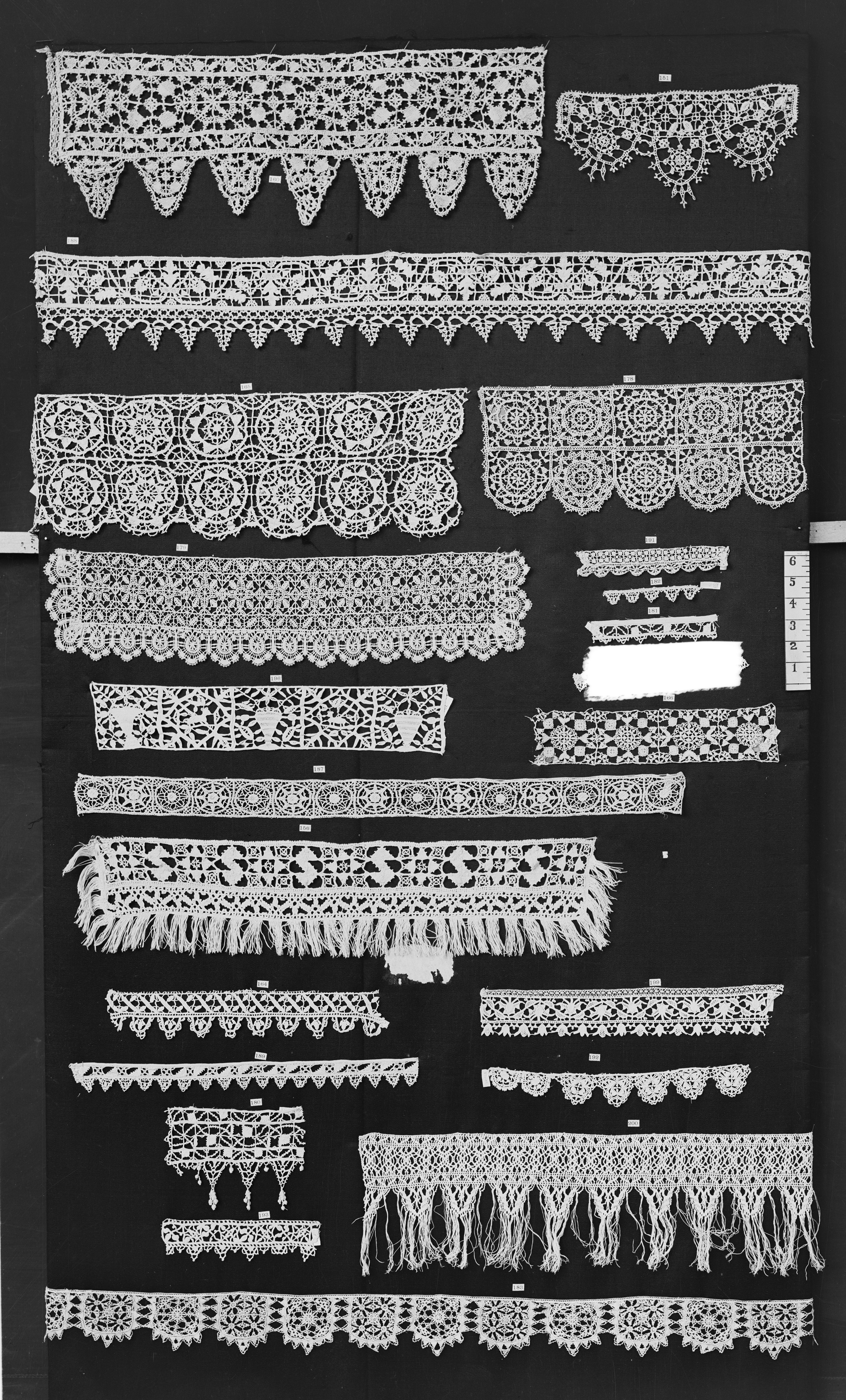
The band—a seemingly primitive, utilitarian element of textile construction—has long been relegated to the margins of fashion, functioning as a mere fastener, a trim, or a stabilizing edge. In the avant-garde lexicon, however, the band represents a fundamental unit of architectural potential: a line of tension, a boundary of form, a conduit for movement. For the SS26 season, Zoey Fashion Laboratory reimagines the band not as a subordinate component but as the primary generative force of a new silhouette. Drawing from the global frontier’s most intricate handcraft—bobbin lace—we propose a paradigm shift: the band becomes a scaffold, a webbed exoskeleton, and a living membrane that defines the body’s future geometry. This is not lace as delicate nostalgia; this is lace as engineered structure, a paradox of fragility and strength that redefines the very concept of the band.
From Edge to Exoskeleton: The Band as Structural Lattice
Traditional bobbin lace, with its intricate network of twisted and crossed threads, is inherently a system of bands—parallel, diagonal, and intersecting lines that create a continuous, open fabric. In the context of SS26, we exploit this inherent geometry to construct futuristic silhouettes that are simultaneously rigid and fluid. The band is no longer a passive border; it becomes an active structural element, a self-supporting lattice that can be molded into three-dimensional forms. Consider a bodice constructed entirely from wide, densely worked bobbin lace bands, each one a structural rib that curves to follow the torso’s contours. These bands are not sewn onto a base fabric; they are the fabric. The negative space between the bands—the voids inherent in lace—becomes a deliberate design feature, creating a see-through architecture that reveals the body while simultaneously encasing it in a geometric cage. This is the deconstructive aesthetic pushed to its logical extreme: the garment is reduced to its essential lines, a series of bands that articulate the body’s movement without enclosing it.
Material Paradox: The High-Tensile Lace Band
The materiality of bobbin lace is critical to this innovation. Traditionally made from linen, cotton, or silk, these fibers are supple and delicate. For SS26, we engineer a hybrid material: a bobbin lace woven with a core of high-tenacity nylon or recycled carbon-fiber filaments, encased in a sheath of organic cotton. This creates a lace that retains the tactile softness and intricate hand of the artisanal craft while possessing the tensile strength of a structural cable. The band, when worked in this composite, can be tensioned like a bridge cable. We propose a series of tensioned lace bands that wrap diagonally across the body, from shoulder to hip, creating a dynamic, asymmetrical silhouette. These bands are not static; they are anchored at specific points (a metal grommet at the clavicle, a resin clasp at the sacrum) and can be adjusted to alter the garment’s volume and tension. The result is a living garment that responds to the wearer’s posture, a futuristic exoskeleton that breathes and flexes.
Silhouette Innovation: The Band as a Generative Curve
The band, in its most radical application, becomes a tool for generating entirely new silhouettes. We move beyond the body-hugging grid to explore volumetric lace bands that create architectural protrusions and negative spaces. Imagine a skirt formed not from a continuous fabric but from a series of concentric, graduated lace bands that spiral outward from the waist. Each band is a separate element, connected by invisible monofilament or micro-magnets, allowing them to float and shift independently. As the wearer moves, the bands separate and reconfigure, creating a constantly changing silhouette—a dynamic, kinetic sculpture. This is the band as a generative curve, a line that defines volume through its absence. The effect is both ethereal and industrial, a deconstructive silhouette that challenges the notion of a fixed garment shape. The band is no longer a boundary; it is a generator of possibility.
Deconstructive Aesthetics: The Band as a Rupture
The avant-garde deconstructive tradition, pioneered by figures like Rei Kawakubo and Martin Margiela, often involves taking apart a garment to expose its construction. The band, in this context, becomes a site of deliberate rupture. We propose a collection of garments where the bands are deliberately unfinished, frayed, or partially detached. A jacket’s shoulder seam is replaced by a single, wide bobbin lace band that connects the front and back panels, leaving a gap of exposed skin or a secondary transparent layer. The band becomes a scar, a visible suture that celebrates the process of making. This is not a flaw; it is an aesthetic statement. The frayed edges of the lace band—the loose threads and broken loops—are treated as decorative elements, echoing the global frontier’s appreciation for the beauty of imperfection, the wabi-sabi of the handmade. The band, in its deconstructed state, becomes a powerful symbol of the tension between creation and decay, a futuristic meditation on the fragility of structure.
Contextualizing the Band: A Standalone Avant-Garde Study
This analysis, a standalone avant-garde study, positions the band as the central protagonist of Zoey Fashion Laboratory’s SS26 proposition. It is a deliberate departure from the season’s dominant trends of digital prints and oversized, soft tailoring. Instead, we offer a rigorous, material-driven exploration that honors the handcraft of bobbin lace while pushing it into a speculative, futuristic realm. The band, in its various incarnations—as structural lattice, tensile cable, generative curve, and deconstructive rupture—becomes a unifying language for a new kind of garment architecture. It is a language that speaks to the global frontier’s hybrid identity: a fusion of ancient technique and advanced engineering, of organic fiber and synthetic strength, of the local and the planetary. The band is the thread that connects the past to the future, a simple line that, when woven with intent, can redefine the very boundaries of the body and the garment itself. In the hands of the avant-garde, the band is not a limit; it is a beginning.