Deconstructing the Rumal: An Avant-Garde Blueprint for SS26
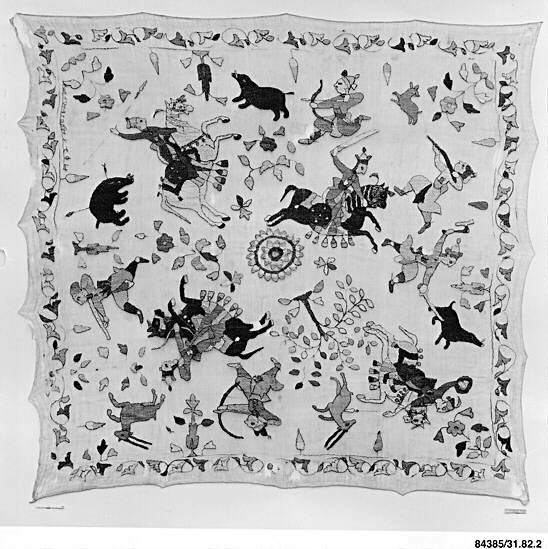
The Chamba Rumal, a textile relic from the Himalayan foothills of Himachal Pradesh, is traditionally a square of silk and cotton, embroidered with tinsel and metal threads to depict mythological narratives. For the SS26 season, this historical artifact undergoes a radical transformation within the Zoey Fashion Laboratory. It is no longer a passive, decorative surface but a living, structural membrane—a proto-futuristic canvas that challenges the dichotomy between soft drapery and rigid architecture. This analysis dissects the Rumal’s material DNA and reconfigures it as a standalone, avant-garde garment system, focusing on three core pillars: silhouette as algorithm, tinsel as tensile structure, and metal as kinetic joint.
1. Silhouette as Algorithm: The Non-Euclidean Drape
The traditional Rumal’s square geometry is a constraint that the avant-garde mind must subvert. For SS26, the Rumal is not cut but folded, pleated, and tensioned into non-Euclidean forms. Imagine a hyper-cylindrical torso constructed from multiple Rumals, each acting as a modular panel. The silk’s inherent fluidity is counterbalanced by the cotton’s structural memory, allowing for asymmetrical, cantilevered volumes that defy gravity. The silhouette becomes a living algorithm: the garment’s shape is determined by the wearer’s movement and the ambient air pressure, creating a dynamic, ever-shifting form. This is not a dress; it is a wearable parametric system where the Rumal’s edges are not hemmed but left raw, fraying into organic tendrils that mimic the dendritic patterns of the original embroidery. The silhouette rejects the human body as a static mannequin, instead treating the figure as a conductor of spatial energy. The result is a futuristic, almost alien silhouette—a soft, pulsating exoskeleton that references both the Himalayan landscape and a post-humanist aesthetic.
2. Tinsel as Tensile Structure: The Luminous Armature
Tinsel, traditionally a decorative metallic thread, is reimagined as a tensile structural element. In the Chamba Rumal, tinsel is used for surface embellishment, but in our SS26 laboratory, it becomes the skeleton of the garment. By weaving tinsel into a lattice of high-tension threads, we create a lightweight, flexible armature that can be stretched across the body. This tinsel grid acts as a photonic web, catching and refracting light to produce a shimmering, holographic effect. The garment’s surface is no longer a flat plane but a three-dimensional matrix of light and shadow. The tinsel threads are not sewn; they are tensioned between metal grommets, creating a structure that is both rigid and pliable. This allows for morphing silhouettes: the same garment can be compressed into a dense, crystalline form or expanded into a wide, ethereal cape. The tinsel’s reflectivity also serves a sensory function, making the wearer a mobile light source, interacting with the environment in real-time. This is a direct subversion of the Rumal’s original purpose as a static, devotional object, transforming it into a dynamic, interactive interface.
3. Metal as Kinetic Joint: The Biomechanical Integration
The metal threads and occasional metal sequins in the Rumal are not merely decorative; they are biomechanical connectors. In our avant-garde interpretation, these metal elements are extruded into micro-hinges, rivets, and ball joints that articulate the garment’s movement. Imagine a sleeve constructed from multiple Rumal panels, each connected by a metal grommet that allows for 360-degree rotation. The metal acts as a kinetic joint, enabling the garment to fold, twist, and lock into precise geometric positions. This transforms the wearer into a cyborg-like figure, where the textile is no longer a passive covering but an active, articulated exoskeleton. The metal elements are also used as counterweights, allowing for dramatic, gravity-defying drapes. For example, a metal chain sewn into the hem of a Rumal can be used to create a cantilevered train that hovers above the ground. This integration of metal as a structural and kinetic component elevates the Rumal from a 2D embroidery to a 4D wearable architecture, where time and movement are integral to the design.
4. Structural Innovation: The Zero-Waste, Modular System
The SS26 Rumal-based garment is engineered as a zero-waste, modular system. Each Rumal is a self-contained module that can be detached, reconfigured, or replaced. The silk and tinsel are treated with a memory-shape polymer that allows the fabric to retain its folded shape when heated, enabling the wearer to “program” the garment’s silhouette. The cotton base is laser-cut into precise geometric patterns, creating a lattice of negative space that reduces weight and increases airflow. The metal elements are not merely sewn but laser-welded into the tinsel grid, forming a seamless, continuous structure. This modularity allows for infinite customization: the wearer can add or remove panels to suit their environment, from a compact, urban form to an expansive, ceremonial silhouette. The garment becomes a living archive of its own history, with each fold and crease recording the wearer’s interactions. This is the ultimate expression of the avant-garde: a garment that is not a final product but a process, a system, and a statement.
Conclusion: The Rumal as a Post-Humanist Artifact
The Chamba Rumal, when deconstructed and reimagined through the lens of Zoey Fashion Laboratory, ceases to be a historical relic. It becomes a prototype for the future—a garment that merges traditional craftsmanship with computational design, tactile memory with kinetic intelligence. The futuristic silhouette is not a rejection of the past but an evolution, where the Rumal’s embroidery becomes a language of light and movement. The structural innovation lies not in new materials but in the reconfiguration of existing ones: silk as a tensile membrane, tinsel as a luminous armature, and metal as a kinetic joint. For SS26, the Rumal is not just worn; it is inhabited, performed, and transformed. It is a garment that challenges the boundaries of fashion, art, and technology, standing as a definitive statement of avant-garde couture. This is not a revival; it is a revelation.