Deconstructing the Velvet Fragment: A 15th-Century Italian Silk as a Catalyst for Avant-Garde Design
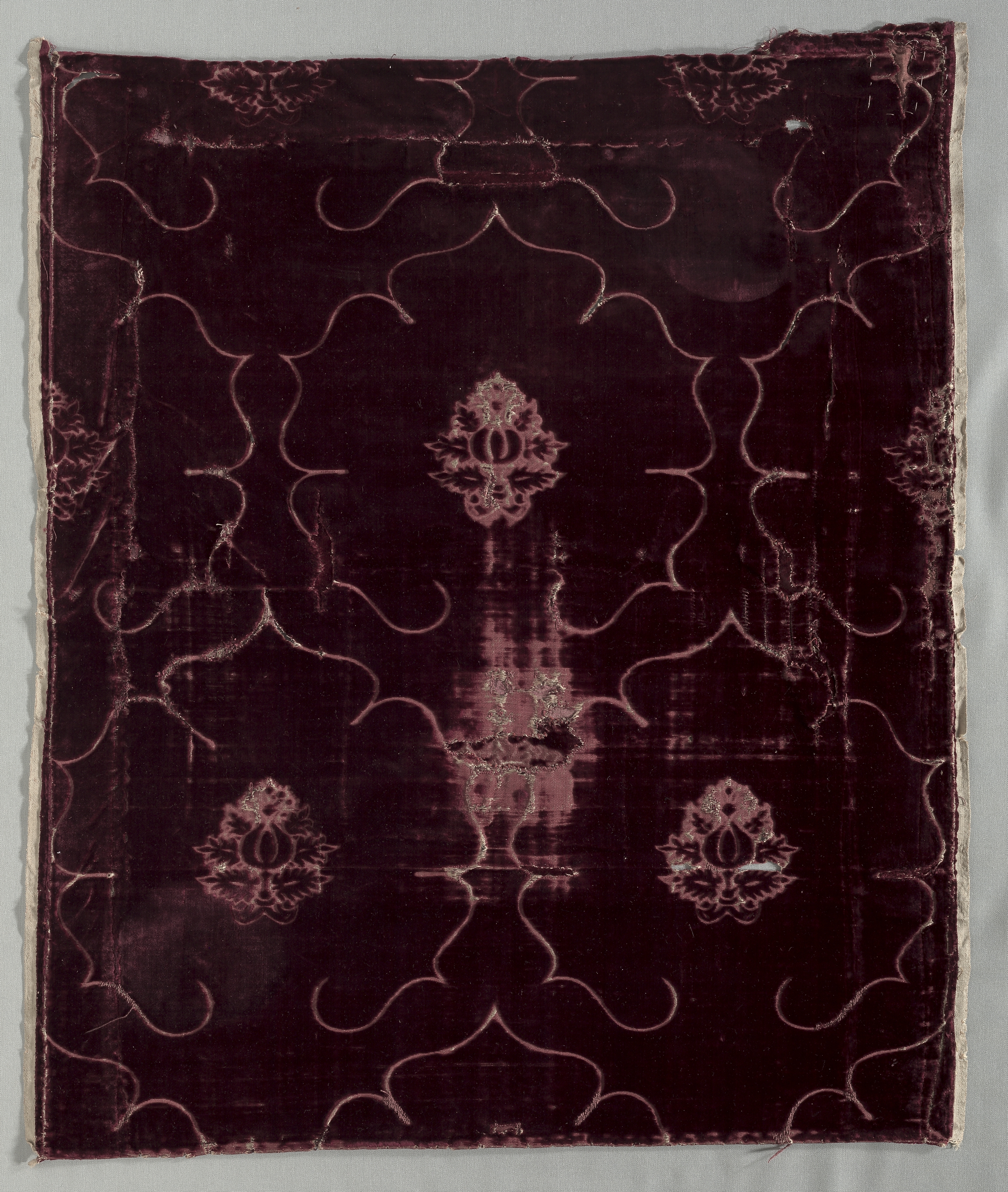
As the Chief Fabric Deconstructionist for Zoey Fashion Lab, I am tasked with dissecting historical textiles not merely as artifacts, but as living blueprints for radical innovation. The subject of this analysis is a fragment of 15th-century Italian velvet—specifically, a cut and voided silk velvet. This piece, referenced as a "New DNA Strand" within our lab’s taxonomy, represents a pivotal moment in textile history. Its technical mastery and aesthetic language offer a profound foundation for an avant-garde reinterpretation, challenging us to extract its core principles and translate them into a form that speaks to the future of fashion.
Technical Analysis: The Architecture of Cut and Voided Velvet
The fragment’s construction is a marvel of pre-industrial engineering. Cut velvet refers to the process where loops of silk pile are sheared open, creating a dense, plush surface that catches light with a deep, almost liquid sheen. This is contrasted with voided velvet, where areas of the pile are deliberately omitted, leaving the flat ground weave exposed. The result is a dynamic interplay of texture and depth—a tactile and visual dialogue between the raised, luminous pile and the recessed, matte ground.
From a deconstructionist perspective, this is not a simple fabric; it is a system of tension and release. The pile represents compression, density, and opulence, while the voided areas signify absence, negative space, and restraint. The 15th-century Italian weavers achieved this through a complex loom technique involving two warp beams: one for the ground and one for the pile. The voided sections were created by selectively cutting the pile warp, a process requiring immense skill and precision. For Zoey Fashion Lab, this technical duality becomes a conceptual tool. We can deconstruct this binary by isolating the pile and ground as separate design elements—perhaps using laser-cut technology to replicate the voided effect on modern substrates, or by weaving the pile with conductive fibers to create a fabric that responds to touch, transforming the historical "void" into a zone of interactive potential.
Historical Context: The Velvet as a Cultural Artifact
In 15th-century Italy, particularly in cities like Florence, Venice, and Genoa, velvet was a symbol of wealth, power, and religious devotion. It adorned the robes of nobility, the vestments of clergy, and the interiors of palaces. The cut and voided technique was often employed to create intricate patterns—pomegranates, acanthus leaves, and heraldic motifs—that communicated status and spirituality. The silk itself was a precious commodity, imported along the Silk Road, and its labor-intensive production made velvet more valuable than gold.
However, our deconstructionist approach rejects the notion of fabric as mere decoration. Instead, we view this velvet as a record of human labor, trade, and desire. The fragment’s wear patterns, its faded edges, and the subtle distortions in its weave tell a story of use, movement, and eventual decay. For the avant-garde collection, we can harness this narrative by incorporating impermanence as a design principle. Imagine a garment that deliberately frays, or a textile that changes color with exposure to light, echoing the historical fading of the original. This transforms the velvet from a static object into a living document, engaging the wearer in a temporal dialogue with the past.
The "New DNA Strand" Framework: Translating Historical DNA into Avant-Garde Form
Our lab’s reference to this fragment as a "New DNA Strand" is intentional. We treat the velvet’s structural and aesthetic properties as genetic code—a set of instructions that can be recombined, mutated, and expressed in novel ways. The avant-garde style demands a rupture with convention, but it must be grounded in a rigorous understanding of the source material. Here are the key genetic sequences we extract from the 15th-century velvet:
- The Pile-Ground Dichotomy: The core structural relationship between dense pile and flat void. In an avant-garde context, this can be reimagined as a binary system—for example, a garment where one side is heavily textured (pile) and the other is sleek (void), or a modular piece where panels of pile and void can be rearranged by the wearer.
- The Light-Capture Mechanism: The velvet’s ability to absorb and reflect light in a way that creates depth and movement. Modern iterations could use photochromic or thermochromic dyes that shift color in response to environmental stimuli, replicating the historical velvet’s dynamic visual effect through a contemporary, technological lens.
- The Motif as Code: The 15th-century patterns were not arbitrary; they were encoded with meaning. For the avant-garde, we can replace botanical motifs with digital or abstract symbols—QR codes, data visualizations, or glitch patterns—that speak to our era’s obsession with information and surveillance.
- The Material Hierarchy: Silk was the ultimate luxury fiber. Our deconstruction challenges this hierarchy by hybridizing silk with non-traditional materials—recycled plastics, metallic threads, or even biodegradable polymers. This creates a tension between the historical value of silk and the contemporary urgency of sustainability.
Avant-Garde Applications: From Fragment to Future Garment
Based on this analysis, I propose three concrete design directions for Zoey Fashion Lab’s upcoming collection:
Direction 1: The Dissected Velvet Gown
A floor-length gown constructed from separate panels of cut velvet and voided velvet, held together by visible, structural seams. The pile panels are laser-cut to mimic the 15th-century pomegranate motif, but the pattern is distorted, as if pixelated. The voided panels are made from a transparent, iridescent organza, creating a ghost-like effect. The garment is designed to be worn in layers, allowing the wearer to reveal or conceal the voided sections, thus controlling the interplay of density and absence.
Direction 2: The Responsive Velvet Bodice
A form-fitting bodice that integrates shape-memory alloys within the velvet pile. When the wearer’s body temperature rises, the pile lifts, creating a three-dimensional, sculptural effect. When cool, the pile lies flat, returning to its original voided pattern. This garment references the historical velvet’s ability to capture light, but it does so through a kinetic, biophilic mechanism, making the fabric a living extension of the body.
Direction 3: The Deconstructed Velvet Coat
An oversized coat that is deliberately unfinished—raw edges, exposed seams, and patches of unravelled silk. The voided areas are replaced with recycled polyester mesh, creating a translucent, industrial contrast to the lush velvet. The coat is adorned with embroidered QR codes that link to digital archives of 15th-century Italian textiles, turning the garment into a wearable museum. This piece challenges the notion of luxury, embracing decay and imperfection as aesthetic values.
Conclusion: The Velvet as a Living Archive
The 15th-century Italian velvet fragment is not a relic to be preserved in a glass case. It is a living archive of technique, culture, and material wisdom. By deconstructing its DNA, Zoey Fashion Lab can unlock a new language of design—one that respects the past while violently reimagining its future. The avant-garde is not about rejection; it is about transformation. This velvet, with its cut and voided depths, its light and shadow, its history of labor and luxury, offers the perfect starting point for a collection that is both deeply rooted and radically forward. Our task is to listen to the fabric’s whispers, decode its structure, and then, with surgical precision, cut it open to reveal the new.