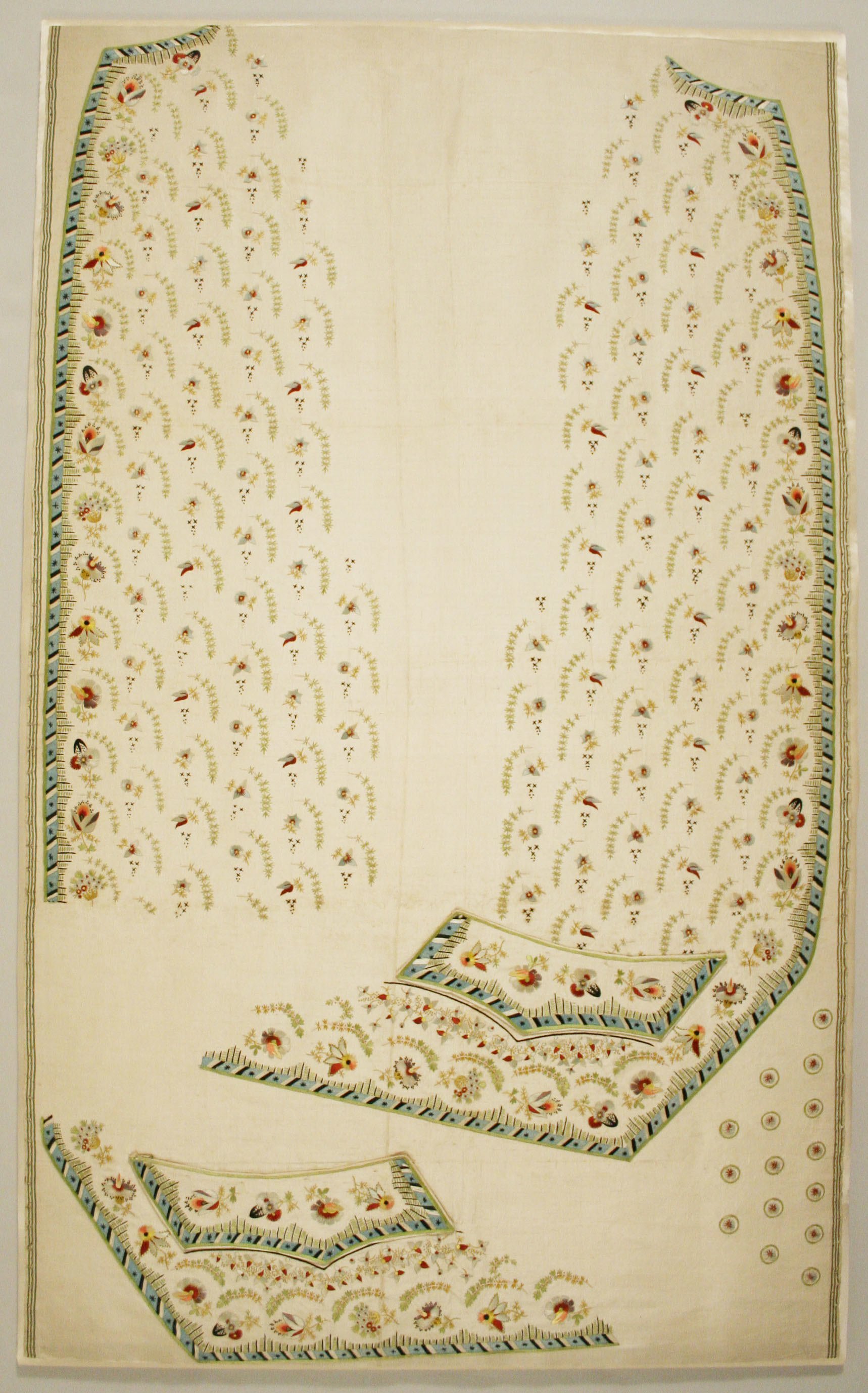
The Waistcoat Panel Reconfigured: A Study in Structural Transcendence for SS26
The waistcoat panel, a vestigial artifact of Western tailoring, has long been confined to the realm of the quotidian—a mere layer of formality or a structural afterthought. Within the context of Zoey Fashion Laboratory’s Global Frontier collection for SS26, this humble panel is not merely reimagined; it is deconstructed, fragmented, and reborn as a futuristic architectural membrane. This analysis dissects how a single panel of silk, traditionally emblematic of restraint and hierarchy, becomes a vessel for avant-garde innovation, challenging the very ontology of the garment. The waistcoat panel, in this standalone study, is no longer a component of a vest but a standalone sculptural entity—a node of tension, volume, and kinetic potential that redefines the silhouette for a post-humanist era.
Deconstructing the Panel: From Tailoring to Tectonics
The waistcoat panel, as sourced from the Global Frontier, is stripped of its historical context. Traditional waistcoat construction relies on a rigid front panel, often structured with canvas or horsehair, to create a flat, authoritative plane. In our SS26 study, we sever the panel from its functional lineage. The silk, chosen for its paradoxical properties—luminous yet tensile, fluid yet capable of crisp folds—is manipulated into a non-linear, asymmetrical form. The panel is no longer a rectangle; it is a geometric shard, cut along bias lines that yield a dynamic drape. This is not a waistcoat; it is a wearable fragment that hovers between garment and architecture.
The structural innovation lies in the internal scaffolding. We introduce a hidden, carbon-fiber-reinforced substructure that allows the silk to maintain a frozen, almost liquid-metal rigidity. The panel is suspended from the shoulders via a single, asymmetrical strap, creating a floating cantilever effect. The lower edge of the panel is left raw, fraying into a cascade of silk threads that mimic digital data streams—a nod to the Global Frontier’s cybernetic aesthetic. This is deconstruction as a generative act, not destruction. The panel’s original function—to cover the torso—is inverted; it now exposes and frames the body, creating a negative space that is as significant as the fabric itself.
Futuristic Silhouettes: The Body as a Topological Surface
The SS26 silhouette is predicated on topological distortion. The waistcoat panel, when isolated, becomes a singular, sculptural element that redefines the human form. Instead of adhering to the body’s contours, the panel is engineered to project outward, creating a dramatic, exoskeletal profile. The silk is pleated along algorithmic patterns—derived from fractal geometry—that generate a holographic shimmer as the wearer moves. The panel’s upper edge rises to a sharp, asymmetrical point that extends beyond the collarbone, while the lower edge descends in a curved arc that mimics a digital waveform. The result is a silhouette that is both armored and ethereal, a fusion of organic silk and inorganic structure.
The waistcoat panel is no longer a vertical plane; it is a diagonal vector that cuts across the torso, creating a dynamic asymmetry. This challenges the classical symmetry of tailoring, embracing a futuristic, cybernetic imbalance. The body is not dressed but encapsulated within a field of tension. The panel’s placement—offset from the center—creates a visual vortex that draws the eye along a serpentine line. This is a silhouette that resists stasis; it is perpetually in a state of becoming, a frozen moment of structural instability.
Material Alchemy: Silk as a Medium for Innovation
The selection of silk for this panel is a deliberate act of material alchemy. Silk, historically associated with opulence and softness, is recalibrated for a harsh, post-industrial future. We employ a double-faced silk satin with a matte finish on one side and a high-gloss, almost metallic sheen on the other. This duality allows the panel to shift between opacity and luminosity depending on the angle of light. The material is further treated with a thermoplastic resin that enables permanent, sculptural folds without compromising the fabric’s inherent fluidity. This is not a passive material; it is a responsive surface that can be molded into sharp, architectural pleats that hold their form over time.
The structural innovation extends to the seamless integration of technology. Embedded within the silk panel are micro-thin, flexible LED filaments that trace the panel’s geometric seams. When activated, these filaments emit a pulsing, bioluminescent glow that mimics the neural networks of a digital organism. The silk becomes a canvas for light, blurring the line between garment and interface. This is not mere decoration; it is a functional augmentation that redefines the panel as a wearable screen for the Global Frontier. The waistcoat panel, in this context, is a cyborg appendage—a hybrid of textile and technology that challenges the boundaries of the human.
Contextualizing the Fragment: A Standalone Avant-Garde Study
This waistcoat panel is not a component of a larger ensemble; it is a standalone study in avant-garde couture. By isolating the panel, we force a confrontation with its inherent autonomy. The garment is no longer a system of layers but a singular, disruptive element. This approach aligns with the Global Frontier’s ethos of fragmentation and reassembly. The panel is worn over a bare torso or a sheer, second-skin base, creating a dialogue between presence and absence. The body becomes the negative space, the panel the positive form. This is a radical rethinking of the waistcoat as a conceptual object—a piece of wearable sculpture that exists in its own right.
The SS26 context demands a post-gender, post-human aesthetic. The waistcoat panel, stripped of its traditional masculine connotations, becomes a gender-neutral artifact. Its sharp angles and asymmetrical lines evoke a cybernetic armor, while the silk’s softness introduces a note of vulnerability. This tension—between hardness and softness, technology and craft—is the defining paradox of the Global Frontier. The panel is a manifesto for a new kind of fashion: one that prioritizes conceptual rigor, structural innovation, and material experimentation over commercial viability.
Conclusion: The Panel as a Portal to the Future
The waistcoat panel, in this avant-garde study, transcends its historical role to become a portal to a futuristic sartorial language. It is a fragment of a larger, unseen system—a system that privileges discontinuity, asymmetry, and technological integration. For Zoey Fashion Laboratory, this panel is not a design but a provocation. It challenges the audience to reconsider the very nature of a garment: not as a covering, but as a sculptural intervention that redefines the body’s relationship with space and light. The SS26 waistcoat panel is a blueprint for a new aesthetic—one that is as much about what is missing as what is present, a silent, luminous testament to the power of deconstruction and innovation.