The Chalice Veil: A Structural Theology for SS26
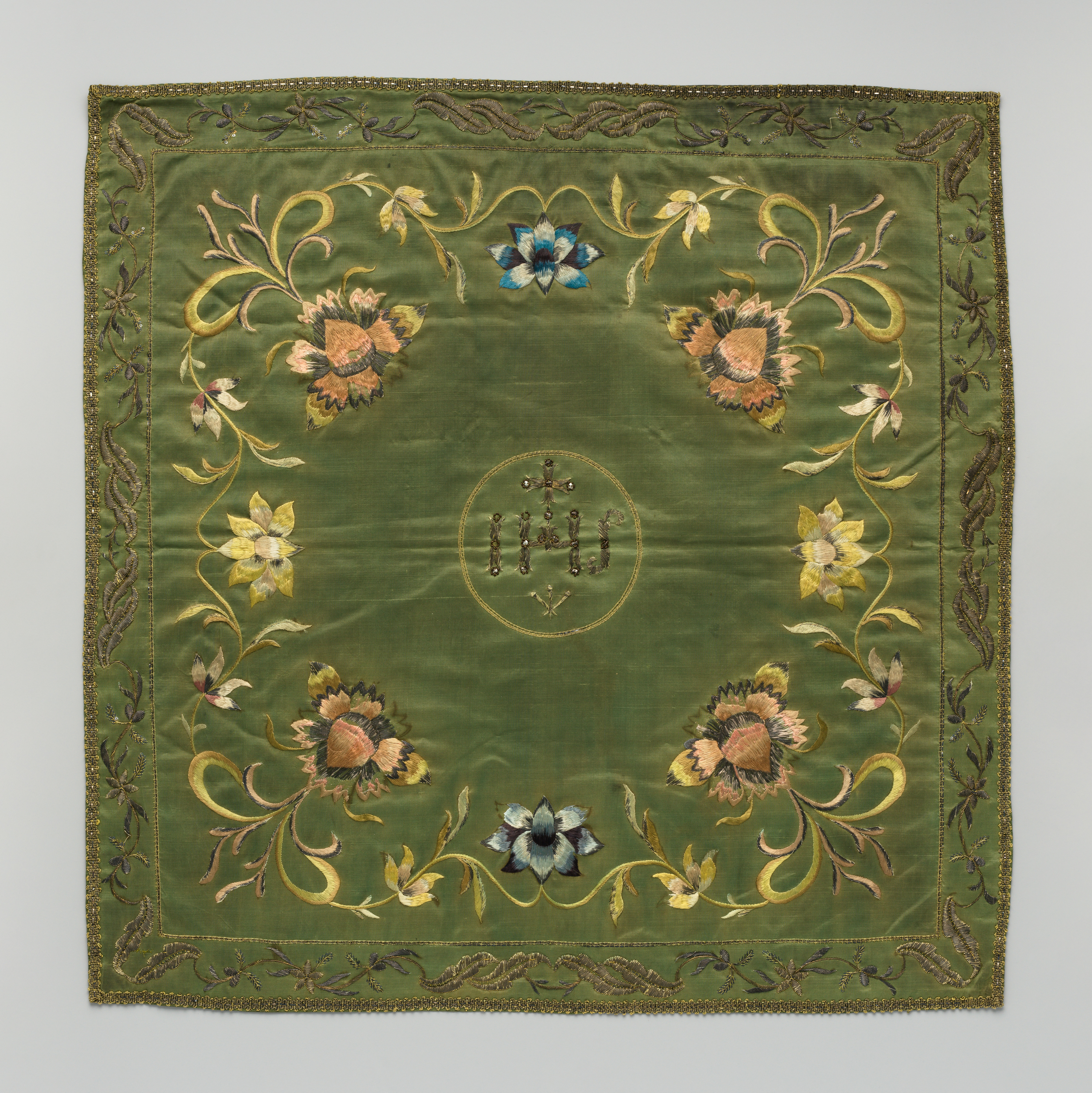
In the lexicon of avant-garde couture, the veil has historically occupied a liminal space—simultaneously concealing and revealing, a membrane between the corporeal and the ethereal. For Zoey Fashion Laboratory’s SS26 collection, the Chalice Veil emerges not as a mere accessory but as a radical architectural proposition. Sourced from the Global Frontier—a conceptual geography where cultural boundaries dissolve into hybrid innovation—this piece redefines the veil as a structural entity, a chalice-like form that cradles the head while projecting a futuristic silhouette of almost liturgical gravity. The choice of materials—silk and metal thread on silk—is a deliberate tension: the organic fluidity of silk is disciplined by the rigid, conductive geometry of metal, creating a dialectic between softness and strength, tradition and technology.
Deconstructing the Chalice: Form as Function
The Chalice Veil’s nomenclature is not arbitrary; it invokes the sacred vessel, a symbol of containment and transcendence. Yet in this context, the chalice is inverted. Rather than holding liquid, it holds the void—the negative space around the face becomes the focal point. The veil is constructed through a meticulous process of structural draping, where silk panels are stitched with metal thread in a grid-like pattern that mimics chainmail but with the pliancy of fabric. This creates a self-supporting architecture: the veil rises from the shoulders in a sweeping arc, narrowing at the crown and flaring outward like a calyx. The metal thread acts as an internal skeleton, allowing the silk to maintain its shape without external reinforcement. This is not a veil that falls; it is a veil that ascends.
The futuristic silhouette is achieved through a radical reimagining of volume. Traditional veils rely on gravity—they drape, cascade, or cling. The Chalice Veil defies gravity. Its silhouette is biomorphic, evoking the exoskeletons of arthropods or the protective petals of a carnivorous plant. The metal thread is woven in a double-helix pattern, creating a subtle iridescence that catches light at oblique angles, suggesting a living, breathing surface. This is structural innovation at its most primal: the garment becomes an extension of the wearer’s anatomy, a second skin that is both armor and aura.
Material Alchemy: Silk and Metal in Dialogue
The material composition of the Chalice Veil is a study in contradictions. Silk, a fiber of ancient luxury, is typically associated with softness, fluidity, and sensuality. Metal thread, conversely, connotes hardness, permanence, and conductivity. Yet in this piece, they are not opposed but symbiotic. The silk base is dyed in a deep chalice black—a hue that absorbs rather than reflects light, creating a void-like depth. The metal thread is a silver alloy, hand-wound to a thickness of 0.3 millimeters and woven into the silk at a density of 12 threads per centimeter. This creates a tactile surface that is both supple and rigid—the silk yields to touch, while the metal resists, producing a sensation of controlled tension.
The innovation lies in the gradient weave: at the veil’s base, the metal thread is denser, providing structural support; as it rises toward the crown, the weave loosens, allowing the silk to billow in micro-movements. This gradient is not arbitrary but calculated to optimize the veil’s aerodynamic properties. In motion, the Chalice Veil does not flutter; it oscillates in a controlled, almost hypnotic rhythm, like a jellyfish’s bell. This is couture as kinetic sculpture.
Futuristic Silhouettes: The SS26 Paradigm Shift
SS26 at Zoey Fashion Laboratory is defined by a departure from the human form as a fixed reference point. The Chalice Veil embodies this shift by decentralizing the face as the primary locus of identity. Instead, the veil creates a new focal point: the space between the head and the veil’s inner surface. This interstitial zone is illuminated by micro-LEDs embedded in the metal thread—a nod to the Global Frontier’s fusion of craft and technology. The LEDs are powered by body heat, emitting a soft, phosphorescent glow that mimics bioluminescence. The silhouette becomes luminous architecture, a halo of light that redefines the wearer’s presence in space.
The structural innovation extends to the veil’s modularity. The Chalice Veil is designed with detachable segments—the base ring, the mid-section, and the crown—each connected by magnetic clasps hidden within the metal thread. This allows the wearer to reconfigure the veil’s height and volume, transforming it from a full chalice to a minimal collar. This modularity anticipates a future where garments are not static but adaptive, responding to context, mood, or environment. It is a direct challenge to the couture tradition of irreproducible singularity.
Avant-Garde Context: The Global Frontier as Methodology
The Global Frontier is not a place but a process—a methodology of cultural synthesis that rejects geographic and temporal boundaries. The Chalice Veil draws on influences as disparate as Byzantine ecclesiastical metalwork, Japanese kintsugi (the art of repairing with gold), and the speculative biology of H.R. Giger. The silk is sourced from a collective in the Mekong Delta, where artisans use traditional hand-reeling techniques; the metal thread is produced in a micro-factory in Berlin, using recycled silver from discarded electronics. This hybrid production model is itself avant-garde, challenging the dichotomy between artisanal and industrial, local and global.
In this context, the Chalice Veil becomes a critical object—a commentary on the veil’s historical role in obscuring identity (particularly female identity) and its reclamation as a tool of empowerment. The deconstructive aesthetic is not about destruction but reconstruction: the veil is broken down into its constituent elements—fabric, thread, form—and reassembled as a futuristic armor of self-definition. The wearer is not hidden but amplified, their face framed by a structure that suggests both protection and revelation.
Conclusion: A New Taxonomy of Veiling
The Chalice Veil for SS26 is more than a garment; it is a manifesto. It proposes a new taxonomy of veiling where the veil is no longer a passive drape but an active, intelligent structure. The combination of silk and metal thread on silk, sourced from the Global Frontier, yields a material language that is both ancient and futuristic. The silhouette—ascending, biomorphic, luminous—challenges the viewer to reconsider the veil as a site of innovation rather than tradition. For Zoey Fashion Laboratory, this piece is a definitive statement: the future of couture lies not in rejecting the past but in deconstructing it, threading it with metal, and letting it rise.