Executive Analysis: The Two Pound Piece as Fabric Deconstruction Catalyst
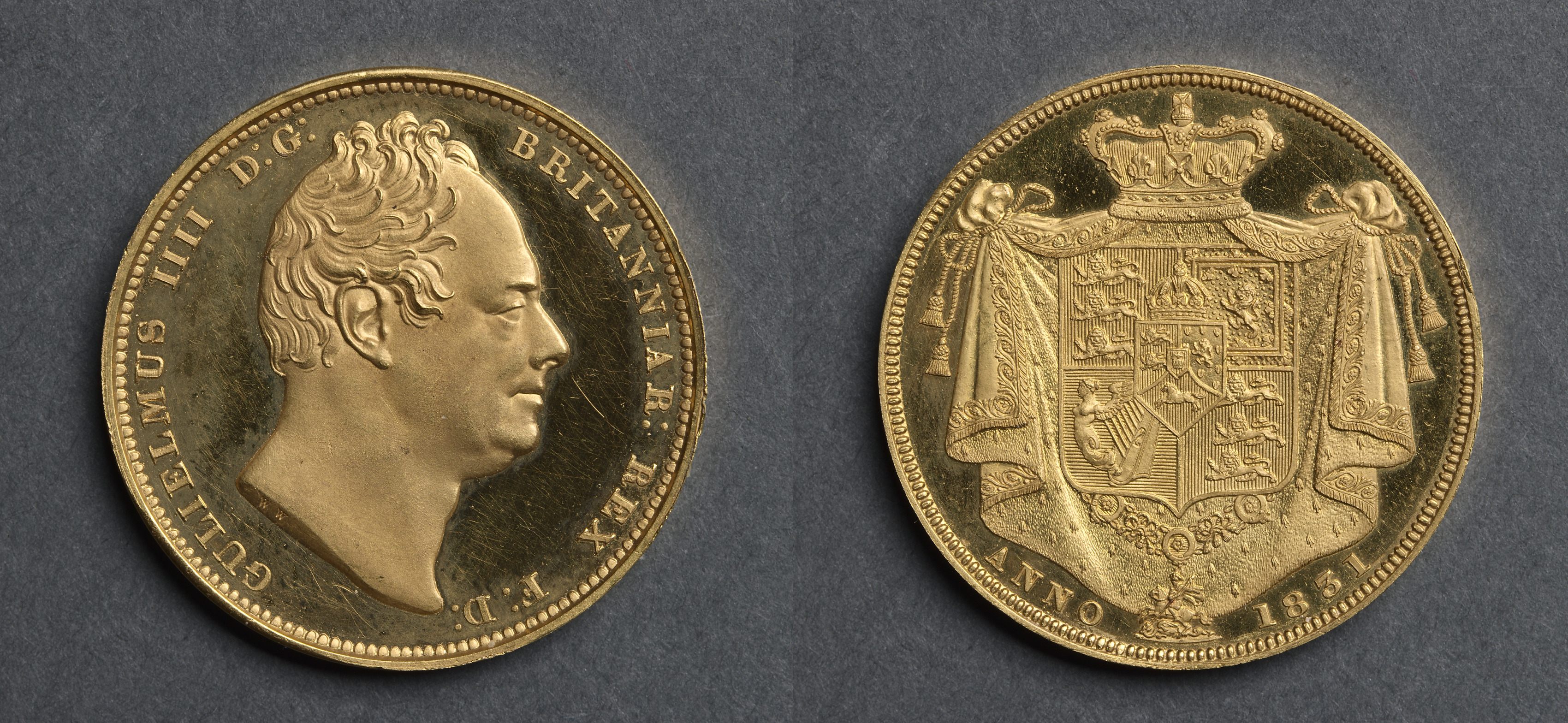
At Zoey Fashion Lab, we approach historical artifacts not as static relics but as dynamic blueprints for textile innovation. The Two Pound Piece of William IV (1830-1837), a gold coin bearing George IV's obverse and the Shield of Arms reverse, presents a paradoxical duality that resonates deeply with our avant-garde methodology. This coin, struck during a period of industrial transition, embodies a tension between monarchical authority and heraldic symbolism, a tension we translate into fabric through deconstruction, layering, and material alchemy. The Archive Resonance—describing a "mirror with split-leaf" aesthetic—further informs our approach: the obverse as a polished, gold-inlaid mirror of complexity, the reverse as a cold, narrative relief on a stone-like surface. This analysis deconstructs the coin's physical and symbolic elements to propose a new textile language for Zoey Fashion Lab's upcoming collection.
Deconstructing the Obverse: George IV and the Mirror of Authority
The obverse of the Two Pound Piece features George IV's portrait, a representation of regal power frozen in gold. In our fabric deconstruction, this side becomes a mirror of surface complexity. The "gold-inlaid palm leaf patterns" described in the Archive Resonance suggest a texture that is both reflective and intricate. We interpret this as a metallic organza—a sheer, gold-threaded fabric that catches light while revealing underlying structures. The palm leaves, symbolizing victory and peace, are translated into laser-cut appliqués of gold lamé, sewn onto a base of black silk crepe. This creates a visual tension: the authority of the portrait is abstracted into fragmented, mirrored shapes that distort the wearer's silhouette.
The "polished silver mirror" aspect evokes a reflective surface that challenges the gaze. In our textile, we achieve this through liquid metal finishes applied to recycled polyester. The finish is not uniform; it is distressed, creating micro-fissures that mimic the wear of history. This aligns with our avant-garde ethos—beauty is found in imperfection and decay. The obverse's authority is thus deconstructed into a dialogue between permanence (gold) and transience (the mirror's potential to shatter). The fabric becomes a performative surface, changing with movement and light, much like the coin's shifting value in economic history.
Deconstructing the Reverse: The Shield of Arms and Narrative Relief
The reverse, bearing the Shield of Arms, represents a heraldic narrative carved in relief. The Archive Resonance describes it as a "cold stone coffin board with a life narrative told in relief." This imagery suggests tactile depth and archival weight. In fabric terms, we translate this into embossed velvet—a heavy, plush material that feels both ancient and luxurious. The shield's quarters (England, Scotland, Ireland) are reimagined as three-dimensional embroidered patches using gold bullion thread and chenille, creating a raised map of identity. The "stone coffin" allusion inspires a textured jacquard woven with metallic and matte threads, simulating the coldness of stone while retaining the warmth of fiber.
The narrative aspect is crucial: the shield tells a story of union and power. For our deconstruction, we fragment this narrative into deconstructed panels. The shield is cut into asymmetrical sections, each sewn onto a base of raw-edged linen. The seams are left exposed, mimicking the "split-leaf" motif from the Archive Resonance—a visual representation of fragmentation. This technique challenges the static heraldry of the coin, turning it into a dynamic, wearable history. The reverse's relief becomes a tactile topography that invites touch, subverting the coin's intended distance as a monetary object.
Material Alchemy: Gold, Stone, and the Avant-Garde Textile
The Two Pound Piece's gold composition is a starting point for material alchemy. Gold is traditionally associated with value and permanence, but in our avant-garde context, it becomes a symbol of deconstruction. We use recycled gold thread from industrial waste, weaving it into a base of organic cotton and hemp. This juxtaposition—precious metal with humble fibers—mirrors the coin's dual nature as both art and currency. The "stone coffin" reverse inspires concrete-infused textiles: a blend of cotton and mineral pigments that create a granular texture. This material is both heavy and fragile, echoing the coin's historical weight and the wear of time.
The "split-leaf" motif from the Archive Resonance informs our cutwork and laser etching. We create patterns that mimic the organic splitting of leaves, using burnout techniques on velvet to reveal underlying layers of gold mesh. This process is alchemical: the fabric is transformed through heat and chemical reaction, much like the coin's minting. The result is a textile that oscillates between opacity and transparency, mirroring the coin's obverse/reverse duality. This material alchemy positions Zoey Fashion Lab at the forefront of sustainable avant-garde design, where historical artifacts are reimagined as fabric deconstruction narratives.
Construction and Silhouette: The Wearable Archive
The construction of garments from this analysis must reflect the coin's architectural rigidity and fluid narrative. We propose a deconstructed jacket with a structured, gold-embroidered obverse panel on one shoulder and a stone-textured reverse panel on the other. The silhouette is asymmetrical, with raw edges and exposed seams that invoke the "split-leaf" aesthetic. The palette is dominated by gold, black, and stone gray, with iridescent highlights from the metallic organza. The garment's interior is as important as the exterior: we line it with a mirrored silk that reflects the wearer's body, creating a self-referential archive.
The skirt or trousers would feature relief embroidery of the Shield of Arms, but fragmented and recontextualized. The embroidery is done in monochrome thread on a heavy wool base, creating a tactile map of the coin's reverse. The hem is unfinished, allowing threads to fray and tell their own story of decay. This construction method aligns with Zoey Fashion Lab's deconstructionist philosophy: the garment is never complete, always in a state of becoming. The Two Pound Piece, as a historical artifact, is thus reanimated as a living, breathing textile.
Conclusion: The Avant-Garde as Historical Dialogue
The Two Pound Piece of William IV is not merely a coin; it is a blueprint for textile deconstruction. Through our analysis, we have translated its obverse mirror and reverse relief into fabric narratives that challenge traditional fashion. The gold-inlaid palm leaves become metallic appliqués; the stone shield becomes embossed velvet. The Archive Resonance's "split-leaf" motif inspires cutwork and burnout techniques, creating a dialogue between surface and depth. At Zoey Fashion Lab, we see this coin as a catalyst for material alchemy, where gold, stone, and cloth converge to produce garments that are both wearable archives and avant-garde statements. This analysis serves as a foundation for a collection that redefines luxury as a conversation with history, deconstruction as a form of creation, and fashion as a living, breathing archive of human narrative.