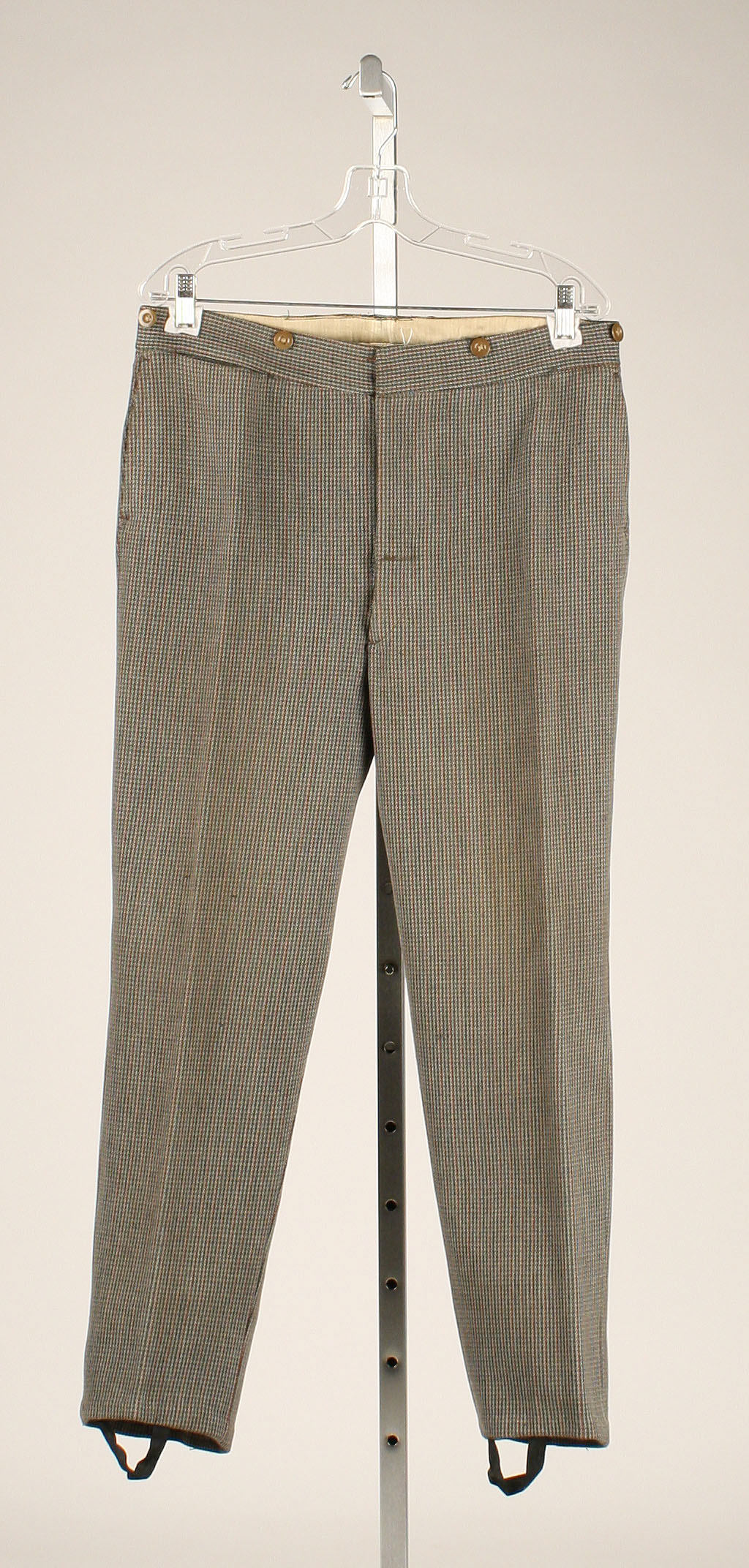
The Deconstruction of Line: American Wool Trousers as Avant-Garde Architecture for SS26
The trouser, a foundational garment in the Western wardrobe, typically signifies utility, discipline, and the banal rhythm of daily life. However, within the crucible of the Zoey Fashion Laboratory, this quotidian object undergoes a radical transmutation. For the SS26 season, we are not merely designing trousers; we are engineering wearable sculptures that challenge the very notion of the leg as a singular, vertical entity. Drawing from a distinctly American lineage—a heritage of denim, workwear, and frontier pragmatism—we are subverting these roots with a futuristic, structuralist lexicon. The chosen medium? Pure, uncompromising wool. This material, often associated with tradition and warmth, becomes the canvas for a manifesto on deconstructive silhouette and kinetic innovation.
Material as Method: The American Wool Paradox
The decision to ground this avant-garde study in American wool is a deliberate act of conceptual friction. Wool, in its conventional application, suggests comfort, drape, and a certain pastoral nostalgia. Yet for SS26, we are treating wool not as a soft textile but as a structural composite. By manipulating its weave density and applying heat-set pleating techniques borrowed from industrial fabrication, we transform the wool into a material that can hold a sharp, cantilevered edge. This is not the wool of a Savile Row suit; it is the wool of a spacesuit’s outer shell. The American origin of the fiber—sourced from ranches in the Pacific Northwest and the high plains of Wyoming—imbues the collection with a rugged, unadorned honesty. This wool possesses a natural memory, a capacity to retain a crease or a fold under extreme tension, which we exploit to create volumetric, non-anatomical forms that defy gravity.
Silhouette Subversion: The Futuristic Leg
The core thesis of this collection is the rejection of the trouser as a simple bifurcated tube. Instead, we propose the “Deconstructed Bifurcation”—a silhouette that fractures the leg into multiple, intersecting planes. The traditional inseam is abolished. In its place, we introduce a series of floating panels and tensioned straps that create a negative space between the fabric and the body. The trousers do not follow the leg; they orbit it. Imagine a garment where the front rise is a rigid, cantilevered shelf, projecting outward from the hip like a minimalist architectural canopy, while the back rise is a fluid, cascading train that pools at the ankle. This asymmetry is not decorative; it is a functional exploration of kinetic equilibrium. As the wearer moves, the wool panels shift, creating a dynamic, ever-changing silhouette that oscillates between the solid and the ethereal.
Furthermore, we introduce the “Aero-Taper”—a silhouette that begins with an exaggerated, almost bell-shaped volume at the hip, then contracts violently at the knee before expanding again into a wide, fluted hem. This three-phase structure, inspired by aerodynamic principles and the geometry of a turbine blade, creates a visual rhythm that is both aggressive and elegant. The wool, treated with a micro-ribbon finish, catches light in a way that emphasizes these abrupt transitions, making the garment appear to be in a state of constant, frozen motion. This is not a trouser for sitting; it is a trouser for striding into an unknown, techno-organic future.
Structural Innovation: The Articulated Exoskeleton
To realize these radical silhouettes, we have developed a proprietary construction method termed “Articulated Wool Webbing.” This technique involves bonding wool panels to a lightweight, flexible lattice of recycled industrial nylon, creating a composite that can be both rigid and pliable. The key innovation lies in the “Pressure-Fold Joints”—precisely engineered creases that act as hinges, allowing the trouser to collapse into a flat, geometric plane when static, and then expand into a three-dimensional volume when the wearer moves. This is a direct challenge to the linear, static nature of traditional trouser construction.
Consider the “Cantilevered Cargo Pocket.” In a conventional garment, a pocket is a simple pouch. Here, it is a structural element: a rigid, trapezoidal volume that projects from the thigh, supported by a hidden internal frame of carbon-fiber rods. This pocket does not hold objects; it holds space. It is an architectural protrusion that redefines the lateral silhouette of the leg, creating a visual counterweight to the garment’s vertical thrust. The closure is not a zipper or a button but a magnetic compression system that seals the pocket with a clean, silent click, reinforcing the high-tech, industrial aesthetic.
Deconstructive Aesthetics: The Unfinished Line
The avant-garde imperative demands a celebration of process. Our SS26 trousers embrace the “Unfinished Hem” as a design principle. Raw edges are not serged or hemmed; they are left to fray, creating a deliberate, textural contrast against the precision of the engineered folds. This is not sloppiness but a philosophical statement: the garment is eternally in a state of becoming. We also introduce “Negative Seam Construction,” where the seams are turned outward and left exposed, revealing the internal architecture of the garment. These seams are not hidden; they are celebrated as lines of force, mapping the garment’s structural logic onto its surface. The result is a garment that reads as a blueprint for a future body—a hybrid of the organic and the mechanical.
Conclusion: The Trousers as a Manifesto
For SS26, the Zoey Fashion Laboratory presents not a collection of trousers but a series of propositions for the future of human movement. The American wool, in its rugged honesty, grounds these propositions in a tangible reality, while the deconstructive silhouettes and structural innovations launch them into the speculative realm. These garments are not for the passive observer; they demand a wearer who understands that fashion is a form of critical engineering. The trouser is no longer a covering; it is a device for reimagining the relationship between the body, space, and time. This is the definitive avant-garde study: a fusion of material integrity, architectural audacity, and a relentless, uncompromising vision of what a leg can become.