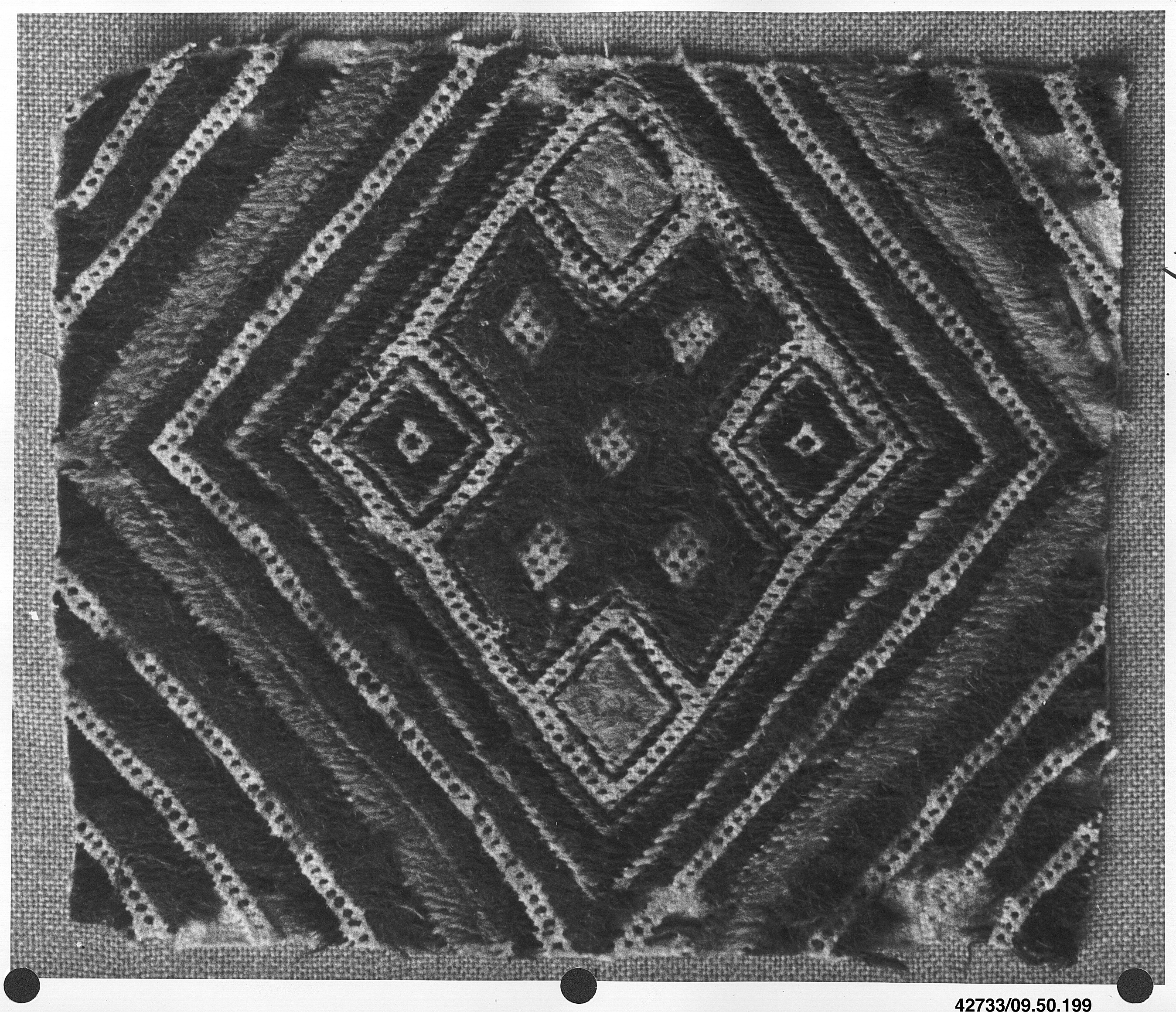
Deconstructing the Global Frontier: Peasant Fragment as Avant-Garde Architecture for SS26
The sartorial lexicon of the Global Frontier has long been a repository of raw, unmediated human experience. At Zoey Fashion Laboratory, we do not merely reference history; we dissect it, reassemble its fragments, and project them into a future where garment construction becomes a dialogue between memory and innovation. The subject of this definitive analysis—a peasant costume fragment, rendered in wool on canvas—serves as a provocative starting point for our SS26 avant-garde study. This is not a nostalgic revival but a radical recontextualization. The fragment, by its very nature, is incomplete, a cipher for labor, geography, and time. Our task is to transform this humble relic into a blueprint for futuristic silhouettes and structural innovation, challenging the very notion of what a garment can be.
Fragment as Foundational Code: The Wool-on-Canvas Paradox
The materiality of the peasant fragment—wool on canvas—presents a compelling paradox. Wool, a fiber of warmth and organic irregularity, meets canvas, the rigid, utilitarian substrate of painting and industrial workwear. This marriage is not one of comfort but of tension. For SS26, we reimagine this hybrid as a structural membrane. The wool, felted and compressed, becomes a sculptural skin, while the canvas acts as a tensile armature. The fragment’s frayed edges and asymmetrical tears are not flaws; they are strategic apertures that allow for a new kind of movement—a kinetic deconstruction that breathes with the body. The original garment’s function—protecting the peasant from the elements—is subverted into a futuristic armor of vulnerability, where exposure and enclosure coexist. This is the first principle of our avant-garde study: the fragment is not a memory but a generative algorithm.
Futuristic Silhouettes: The Geometry of Incompleteness
The silhouette derived from this peasant fragment rejects the totalizing forms of traditional couture. Instead, we propose a fragmented geometry that operates in three dimensions. The original costume’s boxy, functional shape is exploded into a series of floating planes and suspended volumes. Consider a jacket that begins as a traditional peasant smock, but whose back panel is replaced by a cantilevered canvas structure, extending outward like a wing. The wool is laser-cut into lattice patterns, revealing the canvas beneath, creating a play of opacity and transparency that shifts with the wearer’s motion. The sleeves, detached and reattached via magnetic couplings, hang as independent architectural appendages, referencing the fragment’s original disrepair. This is not a silhouette of the body but of the space around it—a negative-space couture where the garment’s absence is as significant as its presence. For SS26, we see this silhouette as a response to the Global Frontier’s inherent displacement: the peasant’s journey becomes a visual metaphor for a world in flux, where identity is assembled from disparate parts.
Structural Innovation: The Canvas Armature and Wool Matrix
Structural innovation is the core of this analysis. The wool-on-canvas fragment demands a new engineering language. We propose a dual-system construction: the canvas serves as a rigid, exoskeletal frame, while the wool functions as a malleable, organic matrix. This is achieved through a process of structural felting, where wool fibers are needle-punched directly into the canvas substrate, creating a composite material that is both flexible and unyielding. The fragment’s original stitches—coarse, utilitarian—are reinterpreted as visible, oversized seams that act as load-bearing lines. We introduce thermoplastic inserts into the canvas, allowing for heat-set shaping that locks the garment into asymmetrical, gravity-defying forms. Imagine a skirt that flares not from the waist but from a single hip, its volume maintained by a hidden canvas cage, while the wool drapes in irregular, organic folds. The fragment’s torn edges are treated with a polymer sealant, transforming them into rigid, sculpted borders. This is not tailoring; it is garment architecture, where every seam and stitch is a structural decision.
Deconstructive Aesthetics: The Language of Labor and Luxury
The avant-garde deconstruction of this peasant fragment elevates labor to a luxury aesthetic. The rough, uneven texture of the wool, often associated with poverty, is juxtaposed against the precision of the canvas armature. We employ a technique of controlled abrasion, where sections of the wool are deliberately worn down to the canvas, creating a visual timeline of use and decay. This is not a distressed look but a narrative of resilience. The fragment’s original patches and mends are amplified into decorative motifs, using metallic threads and micro-suede inserts to create a patchwork of opulence. The color palette—earthy ochres, faded indigos, and raw canvas white—is punctuated by iridescent foil applications that catch light like fragments of a forgotten future. The peasant’s garment, once anonymous, becomes a signature of individuality. Each piece in this SS26 study will be unique, its deconstruction algorithmically generated to ensure no two fragments are identical. This is mass customization at its most avant-garde, where the wearer becomes a co-author of the garment’s history.
Contextualizing the Standalone Study: A Manifesto for SS26
This analysis is not merely a design proposal but a manifesto for Zoey Fashion Laboratory’s SS26 collection. The peasant costume fragment, sourced from the Global Frontier, is a symbol of the uncelebrated, the overlooked. By subjecting it to high-concept garment architecture, we challenge the fashion industry’s obsession with novelty and perfection. The fragment’s incompleteness is its power; it invites the wearer to imagine the missing pieces. In a world saturated with digital copies and AI-generated designs, this study reasserts the primacy of tactile, material innovation. The wool-on-canvas hybrid becomes a canvas for new possibilities—a future where garments are not produced but evolved. The structural innovations—the canvas armature, the thermoplastic shaping, the visible seams—are not just technical feats but philosophical statements. They assert that beauty lies in the raw, the unfinished, the functional. For the discerning client of Zoey Fashion Laboratory, this is not a costume but a wearable sculpture, a fragment of a larger, ongoing dialogue between the past and the future. The peasant’s labor, encoded in the wool and canvas, is transformed into a luxury of meaning, a testament to the enduring power of deconstructive aesthetics.