Deconstruction of the Left Arm Elements: A Zoey Fashion Lab Analysis
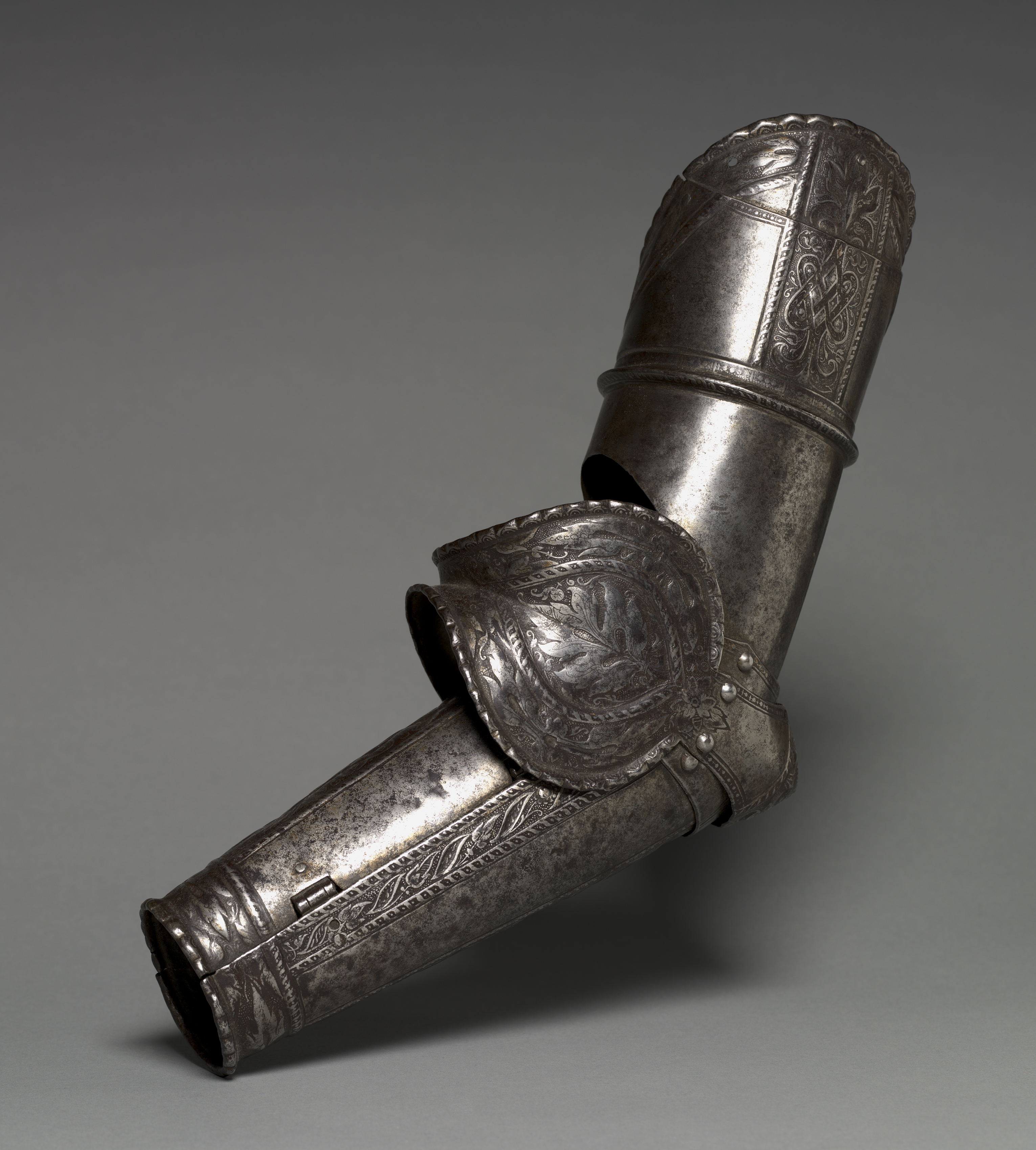
At Zoey Fashion Lab, our methodology for deconstruction transcends mere disassembly; it is a forensic investigation into the soul of a garment or artifact. The subject—a left arm armor ensemble from Augsburg, Germany, comprising the lower cannon, couter, and rerebrace—is not a relic of war but a fossilized gesture of protection. Crafted from etched and lightly embossed steel with traces of gilding and leather, this piece embodies a paradox: the rigid, unforgiving geometry of defense married to the fleeting, organic decay of time. Our analysis, framed within the New DNA Strand reference, recontextualizes this historical artifact as a blueprint for avant-garde fashion, where the past is not preserved but mutated into a new, provocative syntax.
Materiality and Surface: The Etched Narrative
The steel surface, etched with intricate patterns, speaks to a dual language of decoration and function. The etching, likely achieved through acid or tooling, creates a topography of light and shadow. In our avant-garde lens, this is not mere ornamentation but a codex of vulnerability. The traces of gilding, now faded to whispers of gold, suggest a former opulence that has been eroded by time. We interpret this as a deliberate aesthetic of decadent decay, where the gilding acts as a memory of luxury, now subsumed by the patina of history. The leather, used for articulation and padding, introduces a tactile contrast: the cold, unyielding steel versus the warm, supple hide. This juxtaposition is a core tenet of our deconstruction—the armor is not a monolith but a composite of conflicting materials, each with its own lifespan and narrative.
For the avant-garde designer, these surface treatments offer a template for hybrid textures. The etched patterns can be translated into laser-cut overlays on synthetic fabrics, creating a similar play of light and shadow. The gilding, in its fragmented state, inspires the use of metallic foils that are intentionally distressed, applied in irregular patches to evoke a sense of archaeological discovery. The leather, with its natural grain and wear, suggests the integration of organic materials like treated suede or even bio-based leathers, emphasizing the impermanence of structure. The overall effect is a surface that tells a story of use, abuse, and resilience—a narrative that avant-garde fashion craves.
Structural Geometry: The Armor as a Second Skeleton
The lower cannon, couter, and rerebrace form a segmented exoskeleton that mirrors the human arm's anatomy. The lower cannon encases the forearm, the couter articulates at the elbow, and the rerebrace protects the upper arm. This segmentation is not arbitrary; it is a functional response to movement. The couter, with its fluted or embossed contours, allows for flexion while maintaining protection. In our deconstruction, we see this as a precursor to modern ergonomic design, where form follows motion. The embossing—light, yet deliberate—creates structural ridges that reinforce the steel without adding weight. This is a lesson in efficiency: the armor is both a shield and a sculptural object.
Translating this to avant-garde fashion, we propose a reimagining of the arm as a site of architectural expression. The segmented plates can be reinterpreted as modular components in a garment, using materials like carbon fiber, molded plastics, or even 3D-printed resins. The couter's articulation inspires hinged joints in sleeves, allowing for dramatic silhouettes that transform with movement. The rerebrace's length and curvature suggest a shoulder extension, akin to a pauldron but rendered in lightweight, translucent materials. The overall silhouette is one of controlled chaos: rigid lines that soften at the joints, creating a dynamic interplay between protection and exposure. This is armor as a second skeleton, not for battle but for the theater of the street.
Historical Context and the New DNA Strand
Augsburg, a center of armor production in the 16th century, was known for its technical precision and artistic ambition. This armor would have been worn by a noble or knight, serving as both protection and status symbol. However, the New DNA Strand reference in our analysis reframes this history. We treat the armor not as a finished object but as a genetic code—a sequence of design elements that can be spliced, mutated, and recombined. The etched patterns are a visual genome; the gilding is a recessive trait of opulence; the leather is a connective tissue of flexibility. By isolating these elements, we create a new lineage for fashion that is neither nostalgic nor futuristic but anachronistic in the most deliberate way.
This approach aligns with the avant-garde's rejection of linear time. The armor's left arm elements become a fragment of a larger narrative, a synecdoche for the entire body of work. The traces of gilding, for instance, are not flaws but intentional markers of decay, suggesting a beauty in imperfection. The leather, worn and cracked, speaks to the corporeality of the wearer. In our fashion application, this translates to garments that age with the wearer, incorporating elements like oxidizable metals, biodegradable fabrics, or even embedded sensors that track wear patterns. The armor is no longer a static artifact but a living system, a DNA strand that evolves with each iteration.
Avant-Garde Application: From Armor to Attitude
To realize this analysis, Zoey Fashion Lab proposes a collection titled "Exoskeleton Remnant." The left arm elements serve as the primary motif, deconstructed into wearable forms. The lower cannon becomes a forearm gauntlet in etched silver mesh, layered over a sheer, skin-toned base. The couter is reimagined as a detachable elbow cage in blackened steel, hinged with leather straps that allow for movement. The rerebrace transforms into a shoulder harness that extends into a cape, using the embossed ridges as structural supports. The gilding is echoed in gold leaf appliqués on the mesh, applied in irregular patterns to mimic the original decay.
The overall aesthetic is one of industrial elegance—a nod to the armor's martial origins but softened by the avant-garde's embrace of the abject. The leather is left raw, with visible stitching and burnishing, emphasizing the handcrafted nature of the piece. The steel is treated with a patina that recalls the original etching, but with a modern twist: the patterns are abstract, almost digital, suggesting a glitch in the historical record. The result is a garment that is both armor and art, a statement on the fragility of protection and the beauty of decay.
Conclusion: The Armor as a Catalyst
The left arm elements from Augsburg are not a historical curiosity but a catalyst for avant-garde innovation. Through our deconstruction, we have extracted a lexicon of materiality, geometry, and narrative that challenges conventional fashion. The etched steel, gilded traces, and leather articulations become a new DNA strand—a code that can be rewritten to create garments that are both timeless and timely. This analysis affirms Zoey Fashion Lab's commitment to recontextualizing the past as a living, breathing influence, not a museum piece. In the hands of the avant-garde, this armor is no longer a relic of war but a blueprint for a new kind of armor: one that protects not the body, but the spirit of rebellion and reinvention.