Deconstructing the Southern Song Dragon: An Avant-Garde Analysis for Zoey Fashion Lab
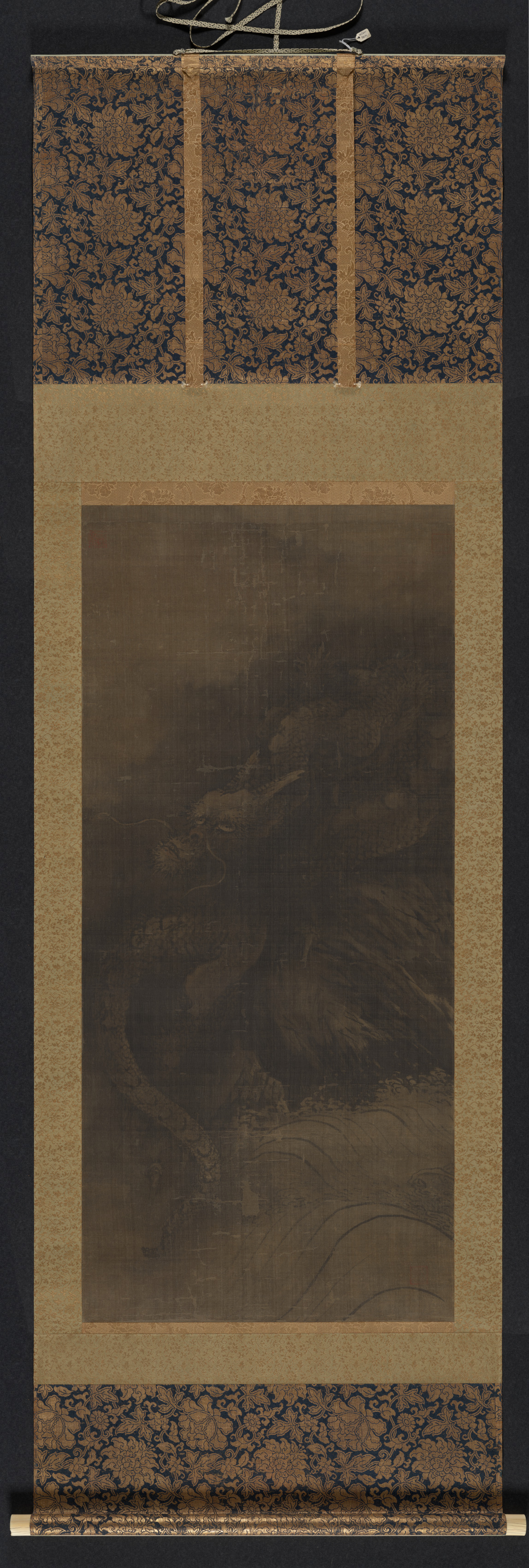
At Zoey Fashion Lab, we approach historical artifacts not as relics, but as living blueprints for future design. The subject of this analysis—a Chinese dragon from the Southern Song dynasty (1127-1279), rendered as a hanging scroll in ink on silk—offers a profound case study in the deconstruction of tradition. This piece, a masterwork of restrained power, is not merely a depiction of a mythical beast; it is a coded language of movement, energy, and cultural identity. Our task is to translate this ancient visual DNA into a new, avant-garde strand of fashion, one that honors its origins while violently reimagining its form.
I. The Original Code: Anatomy of the Southern Song Dragon
The Southern Song dragon is distinct. Unlike the more rigid, formalized dragons of earlier dynasties, this creature embodies a lyrical, almost calligraphic fluidity. The ink-on-silk technique is paramount here. The artist did not merely outline the dragon; they breathed life into it through the variable density of ink—from deep, black, almost solid masses representing scales and claws, to pale, misty washes that suggest its ethereal body merging with clouds and water. The dragon’s form is a continuous, undulating line, a single, unbroken breath of the brush. This is not a static beast; it is a vortex of wind and water, its serpentine body coiling through space with a rhythm that mimics the natural forces of a storm or a river’s current.
Key structural elements for our deconstruction include:
- The Coil: The body’s S-curves and spirals create a tension between expansion and contraction. This is a dynamic of potential energy, a spring waiting to release.
- The Claws: Sharp, angular, and deliberately placed. They are not just weapons; they are anchors in the void, points of contact with the material world.
- The Head: A composite of multiple animals—camel, deer, ox—yet unified by a fierce, intelligent gaze. The whiskers and mane are extensions of the ink’s flow, blurring the boundary between creature and atmosphere.
- The Negative Space: The silk itself is not a background; it is an active participant. The empty spaces are the wind, the clouds, the void through which the dragon moves. This is a dialogue between presence and absence.
II. The New DNA Strand: Avant-Garde Translation
Our avant-garde approach rejects literal reproduction. We are not creating dragon-print silk dresses. Instead, we are extracting the structural and energetic principles of the Southern Song dragon and encoding them into a new fashion language. The reference to a "New DNA Strand" is critical: we are splicing the ancient visual genome with contemporary materials, silhouettes, and construction techniques. The result is a collection that feels both ancient and alien, familiar yet unsettling.
1. Deconstructing the Coil: Asymmetrical Draping and Kinetic Structures
The dragon’s coiling body translates directly into asymmetrical, spiraling silhouettes. Imagine a coat that is not cut flat but constructed from a single, continuous piece of fabric that wraps the body in a helix. The fabric’s weight and tension would create a dynamic, ever-shifting form, mimicking the dragon’s movement. We might use memory foam or shape-memory alloys embedded within the textile to allow the garment to hold certain curves and then release them with body heat, creating a living, breathing piece. The coil is not a print; it is a structural principle.
2. Translating the Claws: Sharp, Geometric Accents and Hardware
The dragon’s claws, with their abrupt angularity, become sharp, metallic hardware—not as decoration, but as functional elements. Think of zipper pulls shaped like talons, or shoulder pads that are not padded but are instead sharp, cantilevered structures of carbon fiber or laser-cut acrylic. These elements are placed at strategic points—the shoulder, the hip, the wrist—to disrupt the flow of the garment, creating moments of tension and release. They are the points where the garment "grips" the body or the environment.
3. Reimagining the Head: Composite Silhouettes and Masking
The dragon’s composite head—a fusion of disparate animal parts—inspires hybrid silhouettes. A hood might be constructed to evoke both a deer’s antlers and a lion’s mane, using layered, asymmetrical panels of stiff organza and matte neoprene. The "gaze" of the dragon is recreated through optical illusion and lensing: embedded micro-LEDs or reflective surfaces that catch and distort light, creating a sense of alertness and intelligence. The mask is not a costume; it is a reconfiguration of the face as a landscape of power.
4. Activating Negative Space: Transparency, Deconstruction, and Layering
The most radical translation is perhaps of the negative space. The silk’s emptiness, the void through which the dragon moves, becomes transparency, deconstruction, and deliberate absence. Garments are sliced open, revealing the body or underlayers. Sheer mesh panels are placed not to show skin, but to create a sense of depth and movement, like clouds parting. Seams are left raw, hems are unfinished, and linings are exposed. This is not sloppiness; it is a deliberate celebration of the void as a structural element. The garment is defined as much by what it is not as by what it is.
III. Materiality and Process: The Ink as a Metaphor
The original ink-on-silk technique is a process of controlled spontaneity. The artist could not erase; every brushstroke was final. Our avant-garde fabrication process must honor this. We will use digital printing on biodegradable silks with algorithms that mimic the variable density of ink—not to reproduce the dragon image, but to create abstract, flowing patterns of light and dark that echo the original’s energy. We will also experiment with indigo dyeing and shibori techniques, where the fabric is bound, stitched, and compressed before dyeing, creating unpredictable, organic patterns that mirror the ink’s bleeding and pooling.
Construction will emphasize zero-waste pattern cutting, where the garment’s shape is derived from the fabric’s width, much like the scroll’s dimensions dictated the dragon’s composition. Each piece is a negotiation between the designer’s intent and the material’s inherent properties. The result is a collection that is both highly conceptual and deeply tactile, a dialogue between the ancient hand and the machine.
IV. Conclusion: The Dragon as a Living System
This analysis is not an end, but a beginning. The Southern Song dragon, when deconstructed, reveals itself not as a symbol but as a system of dynamic relationships: between line and void, solid and wash, creature and environment. Zoey Fashion Lab’s avant-garde translation is not about wearing a dragon; it is about embodying its principles of motion, tension, and transformation. The new DNA strand we have spliced is a code for garments that breathe, coil, and react—a fashion that is not static decoration but a living, kinetic art form. This is the future of design: not copying the past, but extracting its deepest logic and re-encoding it for a new world.