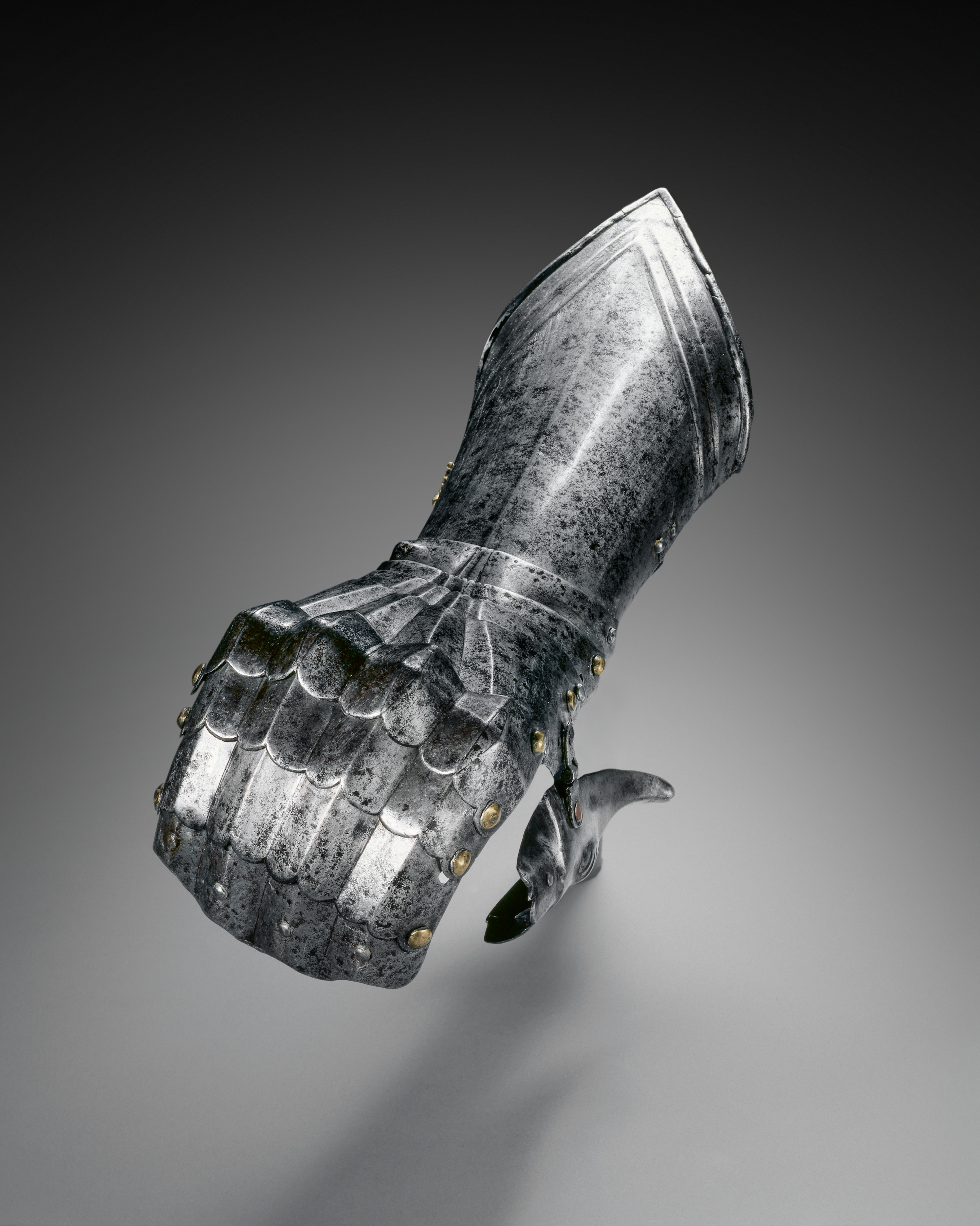
Introduction to the Artifact: The Gothic Mitten Gauntlet
As the Chief Fabric Deconstructionist for Zoey Fashion Lab, I am tasked with dissecting historical garments and armor to extract their core structural, material, and aesthetic DNA. Today’s subject is a singular artifact: the Gothic Mitten Gauntlet for the Right Hand, originating from South Germany or Austria, specifically the Innsbruck region, and dating to the late 15th Century. Crafted from steel, this gauntlet represents a pinnacle of medieval armor technology, but its relevance to our avant-garde lab extends far beyond battlefield utility. This analysis will deconstruct the gauntlet’s technical composition, its cultural and functional context, and how its structural principles can be reimagined as a New DNA Strand for contemporary, avant-garde fashion design.
Technical Deconstruction: Material and Structural Analysis
Steel as a Textile Substitute
At first glance, steel seems antithetical to fabric. However, in the context of Zoey Fashion Lab, we view all materials as potential textiles. The steel of this gauntlet is not a monolithic sheet; it is a composite of multiple articulated plates, each meticulously shaped and riveted. The metallurgical composition—likely a low-carbon steel hardened through quenching and tempering—provides a rigid yet surprisingly flexible structure. The gauntlet’s surface exhibits a subtle, hand-hammered texture, which catches light in a manner akin to a fine jacquard weave. This textural quality is the first thread in our new DNA strand: hardness rendered as texture.
Articulation and Movement
The gauntlet’s genius lies in its articulation. The mitten-style construction—where the fingers are enclosed in a single, curved plate except for the thumb—is a marvel of ergonomic engineering. The lames (overlapping steel strips) at the wrist and knuckles are riveted to leather straps, allowing for flexion while maintaining protection. This interplay between rigid plates and flexible joints mirrors the tension between structure and drape in avant-garde fashion. For our lab, this translates into a design principle: segmented rigidity. We can replicate this using laser-cut thermoplastics, carbon fiber, or even layered resin-infused fabrics that mimic the gauntlet’s ability to move as a single, cohesive unit while retaining structural integrity.
Fastening and Closure Systems
The gauntlet was secured to the arm via a leather strap with a buckle, often hidden beneath an additional plate. This closure system is both functional and decorative. The rivets—small, domed metal fasteners—serve as both structural anchors and visual accents. In avant-garde terms, these rivets can be reinterpreted as ornamental functionalism: every fastening point becomes a design element. Think of exaggerated, oversized rivets on a sculptural sleeve, or magnetic closures that echo the gauntlet’s secure fit without the weight of steel.
Cultural and Functional Context: The Gothic Aesthetic
The Late 15th Century Innsbruck Style
South German and Austrian armorers, particularly those in Innsbruck, developed a distinctive Gothic style characterized by fluted surfaces, pointed forms, and intricate etched or engraved decorations. This gauntlet likely features subtle fluting—parallel grooves that both strengthen the plate and catch light, creating a visual rhythm. This is not mere decoration; it is a structural ornamentation that enhances the object’s performance. For our lab, this principle of functional embellishment is crucial. We can apply fluting to fabric through pleating, shirring, or even 3D-printed textile overlays, creating garments that are both visually dynamic and structurally sound.
Symbolism of the Right Hand
The gauntlet is for the right hand, the hand of action, weaponry, and authority. In medieval iconography, the right hand was associated with divine power and knightly virtue. This symbolic weight transforms the gauntlet from mere protection into a statement of agency. In our avant-garde context, this hand-specific design can inspire asymmetric fashion—a single, exaggerated sleeve or a gauntlet-like cuff that commands attention. The right-hand focus also suggests a narrative: the wearer is a protagonist, ready to act. This narrative layer is a vital component of our new DNA strand, infusing garments with storytelling potential.
The New DNA Strand: Translating Steel to Avant-Garde Fabric
Structural Principles as Design Language
The Gothic Mitten Gauntlet offers a blueprint for hybrid construction. Its combination of rigid plates and flexible joints can be translated into a fabric system where hard and soft elements coexist. Imagine a jacket with articulated shoulder panels made from laser-cut leather or molded silicone, riveted to a base of stretch neoprene. The mitten form itself—a single, sculptural enclosure for the fingers—can inspire gloves, sleeves, or even full bodices that encase the body in a protective, yet mobile, shell. This is the core of our new DNA strand: armor as fashion architecture.
Texture and Light Play
The gauntlet’s hammered and fluted surfaces create a dynamic interaction with light. For our lab, this translates into textural innovation. We can develop fabrics that mimic this effect through metallic coatings, pleated organza, or even embedded fiber optics that shift color with movement. The goal is to capture the luminosity of steel without its weight, using materials like aluminum-coated nylon or liquid crystal thermochromic films. The gauntlet’s visual rhythm becomes a template for surface design that breathes and changes.
Ergonomics and Wearability
Despite its intimidating appearance, the gauntlet was designed for practical use. The ergonomic curvature of the hand plate and the precisely placed articulation points ensure that the wearer can grip a sword or reins. In avant-garde fashion, wearability is often sacrificed for silhouette. Our new DNA strand demands a balance: garments that are sculptural yet functional. We can achieve this through parametric design, using 3D scanning to map the body’s movement and then creating articulated panels that flex with it. The gauntlet teaches us that protection and mobility are not mutually exclusive.
Conclusion: Reimagining the Gauntlet for the Future
The Gothic Mitten Gauntlet from late 15th-century Innsbruck is far more than a historical artifact. It is a masterclass in material intelligence, structural articulation, and symbolic design. By deconstructing its steel form, we have extracted a new DNA strand for Zoey Fashion Lab: one that values rigidity as a textile, ornament as function, and the hand as a narrative center. Our avant-garde collections can now draw from this medieval blueprint, creating garments that protect, empower, and transform the wearer. The gauntlet’s legacy is not in its weight, but in its principles—and those principles are now woven into the fabric of our future designs.