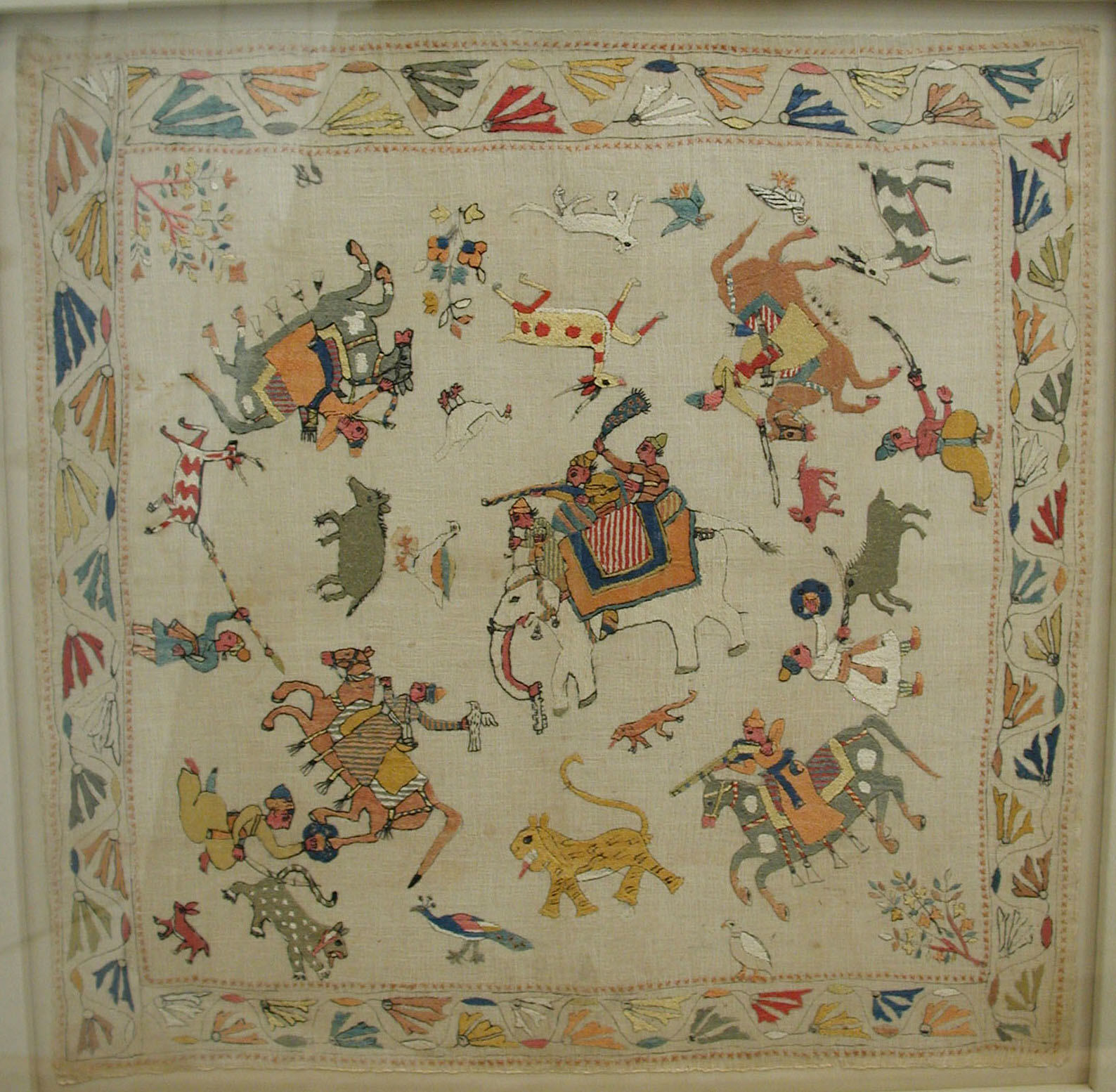
The Architectural Membrane: Deconstructing the Cover as Futuristic Silhouette
In the lexicon of avant-garde couture, the Cover is no longer a mere functional layer—it is a structural manifesto. For SS26, Zoey Fashion Laboratory redefines the cover as a dynamic, architectonic membrane that challenges the binary between protection and exposure. This analysis deconstructs the garment’s DNA: a fusion of cotton, silk, and flat metal thread, woven into a plain-weave base and elevated through embroidered interventions. The result is a silhouette that oscillates between the organic and the engineered, a futuristic skin that reimagines the body as a living scaffold.
Material Alchemy: Cotton, Silk, and Flat Metal Thread
The selection of materials is a deliberate act of tectonic subversion. Cotton, typically associated with comfort and domesticity, is here treated as a ground plane—a neutral canvas that absorbs and anchors the narrative. Silk, with its liquid luminosity, introduces a kinetic tension; it drapes and flows, yet its sheen evokes a digital, almost holographic quality. The flat metal thread, however, is the structural disruptor. Unlike round metallic yarns that catch light uniformly, the flat thread creates a dichroic effect, reflecting and absorbing light in sharp, angular planes. This interplay produces a chameleonic surface that shifts from matte to mirror, depending on the viewer’s angle—a commentary on the mutable nature of identity in a hyper-connected world.
The plain weave, often dismissed as rudimentary, is here elevated to a grid of resistance. The warp and weft form a Cartesian lattice, but the embroidery disrupts this order. Threads are pulled, twisted, and anchored at irregular intervals, creating tensile pockets that mimic the tension of a suspension bridge. The cotton and silk yarns are interlaced with the metal thread in a counterpoint rhythm: the organic fibers yield, while the metal resists. This produces a fabric that is simultaneously supple and rigid, a soft armor that protects without constricting.
Futuristic Silhouettes: The Body as a Structural Frame
The SS26 cover abandons traditional tailoring in favor of asymmetric draping and modular construction. The silhouette is defined by exaggerated shoulders that extend beyond the natural line, formed by layered panels of cotton and silk that are stitched with metal thread. These panels are not sewn flat; they are pleated and torqued, creating a spiral dynamic that wraps around the torso. The effect is a torqued helix—a visual echo of DNA strands, suggesting a garment that is alive, evolving, and responsive.
The waist is cinched not by a belt but by a structural corset of embroidered metal thread, which functions as a compression zone. This zone creates a funnel silhouette—broad at the shoulders, narrow at the waist, and expanding again at the hips. The lower half of the cover cascades into asymmetric, knife-pleated panels that mimic the geometry of a geodesic dome. These panels are anchored at the hips with metal-thread rivets, allowing them to swing and pivot with movement. The overall shape is a biomorphic architecture—part carapace, part cocoon—that redefines the human form as a generative structure rather than a passive vessel.
Structural Innovation: Embroidered Tension and Kinetic Draping
The embroidery is not decorative; it is functional tension mapping. Each stitch is a load-bearing element, strategically placed to control the fabric’s drape and resilience. The metal thread is embroidered in concentric rings around the shoulders and neckline, creating a compression ring that lifts the fabric away from the body. This produces a negative space—an air gap that allows ventilation while maintaining the silhouette’s rigidity. The stitching pattern follows a Fibonacci sequence in its spacing, generating a natural fractal that distributes stress evenly across the fabric.
Further innovation lies in the reversible construction. The cover is designed to be worn inside out, revealing a second skin of raw cotton and exposed metal threads. This duality speaks to the deconstructive aesthetic—the garment is never finished, always in a state of becoming. The seams are left exposed, the edges frayed, and the metal threads are occasionally cut and left to curl into spirals, creating a cyborg-like texture. This is a deliberate rejection of the polished, seamless finish of conventional couture; it embraces the beauty of the unfinished, the poetics of the provisional.
Futuristic Context: The Cover as a Digital-Physical Interface
In the SS26 collection, the cover functions as a physical interface between the wearer and the environment. The metal threads are not merely aesthetic; they are conductive, capable of transmitting low-voltage currents that can be activated by touch. This transforms the garment into a wearable sensor—a membrane that responds to the wearer’s gestures and the ambient atmosphere. For instance, the embroidery around the collar can emit a soft, pulsed light when the wearer’s pulse quickens, creating a biofeedback loop that externalizes internal states. This is not science fiction; it is a prototype for empathetic fashion, where the cover becomes a translator of emotion.
The plain weave, in this context, is a data grid. The cotton and silk fibers are the substrate, while the metal threads are the circuitry. The embroidery stitches are the nodes in a network that can be programmed to change color, texture, or shape in response to external stimuli. This is the next frontier of couture: garments that are not static but adaptive, capable of morphing from a protective cover to a communicative surface.
Conclusion: The Cover as a Manifesto for SS26
Zoey Fashion Laboratory’s cover for SS26 is a radical redefinition of what a garment can be. It is not a cover in the traditional sense—a layer that hides or protects. Instead, it is a membrane of possibility, a structural thesis that argues for fashion as a form of living architecture. The interplay of cotton, silk, and flat metal thread, combined with the deconstructive embroidery and futuristic silhouette, creates a garment that is both a sculpture and a system. It challenges the wearer to reconsider their relationship with clothing: not as a passive covering, but as an active partner in the performance of self. In the global frontier of avant-garde design, this cover stands as a beacon—a testament to the power of material innovation and structural audacity.