The Sampler Unraveled: A Deconstructive Lexicon for SS26
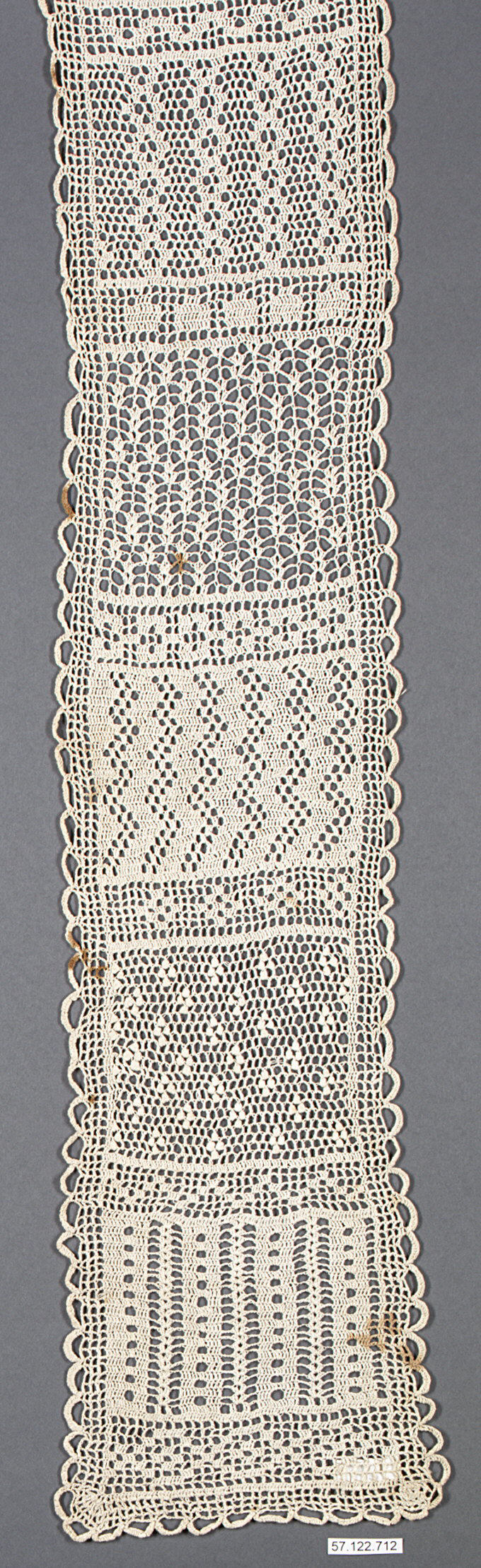
The Sampler, in the lexicon of Zoey Fashion Laboratory, is not a nostalgic artifact. It is a provocation. At the Global Frontier, where cultural memory collides with speculative design, the sampler becomes a radical site of structural innovation. For Spring/Summer 2026, we dissect this humble textile archive—cotton and crochet—to forge a new language of futuristic silhouettes that defy linear time. This is not a revival; it is a reconfiguration.
Deconstructing the Archive: Cotton as Computational Substrate
Cotton, traditionally the fabric of domesticity and comfort, is here reimagined as a computational substrate. In our avant-garde analysis, we treat each thread as data. The sampler’s grid-like structure—its X and Y coordinates of stitch and space—mirrors the logic of early digital matrices. But Zoey Fashion Laboratory rejects mere replication. Instead, we lacerate the cotton base with laser-cut apertures, creating negative-space architecture that breathes like a lung. The garment becomes a second skin, yet one that is deliberately incomplete, exposing the body as a dynamic interface between the organic and the synthetic. The cotton is bleached to a near-luminescent white, then selectively stained with reactive dyes that bloom only under UV light—a ghostly cartography of wear and environment.
Crochet as Quantum Topology: Loops Beyond Labor
Crochet, often dismissed as a craft of repetition, is elevated to a quantum topology. Our designers manipulate the loop structure into non-Euclidean geometries. Each stitch is a node in a self-organizing system. For SS26, we introduce magnetic crochet: yarns infused with ferrous particles that allow the garment to self-drape and reconfigure on the body. A sleeve can unspool into a train, then retract into a collar—a living silhouette that responds to gesture. The traditional sampler pattern—flowers, alphabets, geometric motifs—is glitched. We overlay digital distortions onto the crochet grid: rows that skip, loops that expand into bulbous protrusions, and gaps that form negative-space windows. The result is a fractured taxonomy of form, where the familiar becomes alien.
Futuristic Silhouettes: The Body as a Topological Landscape
The silhouette for SS26 is armored yet fluid. We reject the binary of soft versus hard. The Sampler Ensemble comprises a deconstructed corset built from layered cotton panels, each one a fragment of a larger sampler. These panels are joined by crochet ligaments—thick, rope-like chains that act as both structural supports and decorative elements. The waist is cinched not by boning, but by a tension grid of crochet that tightens or loosens via adjustable toggles. The shoulders are exaggerated into blade-like fins, crocheted in a honeycomb pattern that casts geometric shadows on the skin. The lower body features a asymmetrical skirt that is part sarong, part architectural drape: one side is a solid cotton sheet with a single sampler motif—a star—laser-embossed; the other is a cascade of unraveled crochet tendrils that move like tendrils of a bioluminescent anemone. This is not a garment for static display; it is a performance of entropy.
Structural Innovation: The Rigidity of the Lace
To achieve these futuristic silhouettes, we have engineered a new technique: resin-infused crochet. The cotton yarn is dipped in a biodegradable resin that hardens into a semi-rigid lattice. This allows the crochet to hold its shape—a collar that stands three inches off the neck, a cuff that flares like a trumpet—while still retaining flexibility. The sampler’s grid becomes a load-bearing structure. We also introduce thermal-reactive fibers that change opacity with body heat: a sleeve that is opaque at the elbow but translucent at the wrist. The construction is modular. Each garment is composed of swappable panels—a sampler of samplers—that can be detached and reattached via magnetic snaps hidden within the crochet. The wearer becomes a curator of their own silhouette, able to shift from a padded shoulder to a bare collarbone in seconds. This is radical adaptability.
Contextualizing the Global Frontier: A Dialogue with the Past
The Global Frontier is not a place; it is a temporal threshold. Our sampler draws from a global archive: the Bayeux Tapestry, Kente cloth, Oaxacan embroidery. But we de-contextualize them. The motifs are scrambled—a Tudor rose next to a Maori spiral, a Chinese cloud pattern over a Navajo diamond. This is not cultural appropriation but cultural synthesis. The cotton is sourced from regenerative farms in India, the crochet from artisan cooperatives in Madagascar and Scotland. The garment tells a global story of labor and craft, but it also propels that story forward. The sampler becomes a time capsule that is always being rewritten. The wearer is not a passive vessel; they are an active participant in the narrative.
Conclusion: The Sampler as a Manifesto
In Zoey Fashion Laboratory’s vision for SS26, the Sampler is not an object of nostalgia. It is a manifesto for a new kind of fashion—one that is deconstructive, adaptive, and speculative. The cotton and crochet are not materials; they are agents of transformation. The futuristic silhouettes are not static; they are ecosystems in flux. The structural innovation is not decorative; it is functional and philosophical. This is the avant-garde as it should be: a rupture with the past that still honors its ghosts. The sampler is no longer a record of what was; it is a blueprint for what could be. And at the Global Frontier, that future is already being stitched into being—one loop, one tear, one sampled moment at a time.